







Definition & Meaning
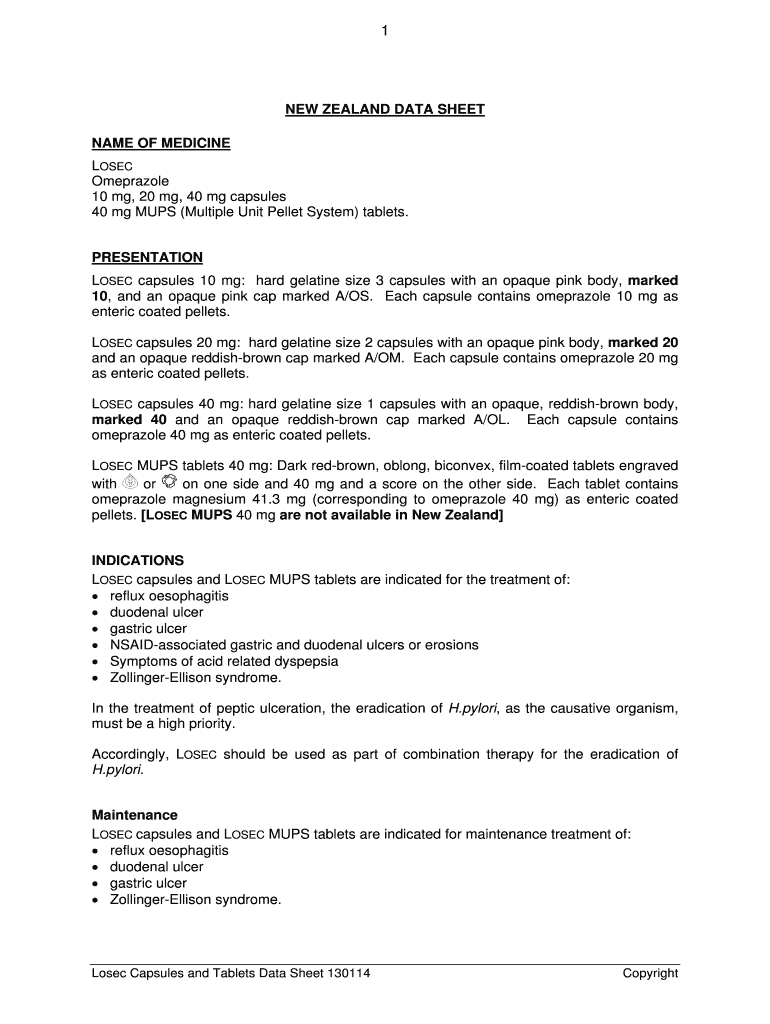
"10 mg, 20 mg, 40 mg capsules" refer to dosage forms of medications typically organized by their active ingredient strength. These variations allow healthcare providers to prescribe the most appropriate dose for a patient's specific condition without significantly altering the treatment regimen. In the context of medications like LOSEC (omeprazole), these dosages are critical for managing conditions related to excessive gastric acid, such as reflux esophagitis and peptic ulcer disease.
Variability in Dosage
- 20 mg: This is often the standard dosage for ongoing management of acid-related conditions. It is typically prescribed for daily maintenance to keep symptoms under control.
- 10 mg: Often utilized for mild cases or maintenance following symptom resolution, providing a lower dose to minimize potential side effects while maintaining therapeutic benefits.
- 40 mg: Prescribed in more severe cases where a stronger dose is necessary to manage symptoms effectively. It can be used short-term depending on the severity and patient response.
How to Use the 10 mg, 20 mg, 40 mg Capsules
Administering medication in capsule form involves specific steps to ensure effectiveness and safety. Instructions often accompany prescriptions to guide patients.
- Follow Prescriptions: Always adhere to healthcare provider’s instructions regarding dosage and frequency.
- Timing: Capsules are usually taken before meals, ideally in the morning for medications impacting gastric acid production.
- Swallow Whole: Capsules should not be crushed or chewed unless specified, as this can alter the release mechanism.
- Hydration: Take with a full glass of water to aid swallowing and ensure proper passage into the stomach.
Special Instructions
- Missed Dose: If a dose is missed, it should be taken as soon as remembered unless it is nearly time for the next dose.
- Storage: Store capsules in a cool, dry place away from direct sunlight to maintain efficacy.
Who Typically Uses the 10 mg, 20 mg, 40 mg Capsules
These dosage forms are often prescribed for adults with conditions requiring regulation of gastric acid production.
- Adults: Primarily use these capsules for managing chronic conditions like GERD or peptic ulcers.
- Elderly: Often require adjusted doses due to metabolic changes and potential interactions with other medications.
- Certain Adolescents: May also be prescribed these dosages under careful medical supervision for specific conditions.


Important Terms Related to 10 mg, 20 mg, 40 mg Capsules
Understanding medical terminology is crucial for safe and effective use.
- Proton Pump Inhibitors (PPIs): Class of drugs that reduce gastric acid production by blocking the enzyme in the wall of the stomach that produces acid.
- Bioavailability: The extent and rate at which the active ingredient is absorbed and becomes available at the site of action.
- Therapeutic Range: The dosage range expected to achieve desired therapeutic effects without causing significant adverse effects.
Legal Use of the 10 mg, 20 mg, 40 mg Capsules
In the United States, these capsules must be prescribed by a licensed healthcare provider. Over-the-counter availability may vary depending on the medication's profile and regulation status.
- Prescription Only: Often necessary for higher doses like 40 mg, given their potent effect.
- Regulatory Compliance: Manufacturers must adhere to FDA regulations to ensure safety and efficacy.
Steps to Complete the Application for 10 mg, 20 mg, 40 mg Capsules
Obtaining these capsules often involves a multi-step process.
- Consultation: Begin with a healthcare provider consultation to assess symptoms and appropriate dosage.
- Prescription: Upon agreement on the treatment plan, receive a prescription tailored to the specific dosage requirement.
- Pharmacist Support: Consult with pharmacists for dispensing and advice on proper usage.
Patient Follow-Up
- Monitoring Efficacy: Regular check-ins with your healthcare provider to monitor symptom control and adjust dosage if necessary.
- Addressing Side Effects: Report any adverse reactions promptly to adjust treatment.
Key Elements of the 10 mg, 20 mg, 40 mg Capsules
Each dosage strength of the capsules contains a specific formulation to ensure the precise delivery of medication.
- Active Ingredient: Omeprazole in LOSEC capsules is the therapeutic component.
- Excipients: Inactive substances act as carriers for the active ingredient, contributing to the capsules' stability and delivery.
- Release Mechanism: Designed to resist stomach acidity until reaching the intestine for proper absorption.
Examples of Using the 10 mg, 20 mg, 40 mg Capsules
These capsules are commonly used in various scenarios vested in clinical treatment plans.
- Gastroesophageal Reflux Disease (GERD): Commonly treated with 20 mg capsules, often adjusted based on symptoms.
- Zollinger-Ellison Syndrome: A higher dosage, such as 40 mg, may be necessary due to severe gastric acid overproduction.
- Helicobacter Pylori Infection: These capsules can be part of a combination therapy to eradicate infection contributing to ulcers.
By providing comprehensive and detailed exploration of the topic, readers can understand the multifaceted application and importance of these capsules in therapeutic settings.




