






Definition and Meaning of Tariff Index 1
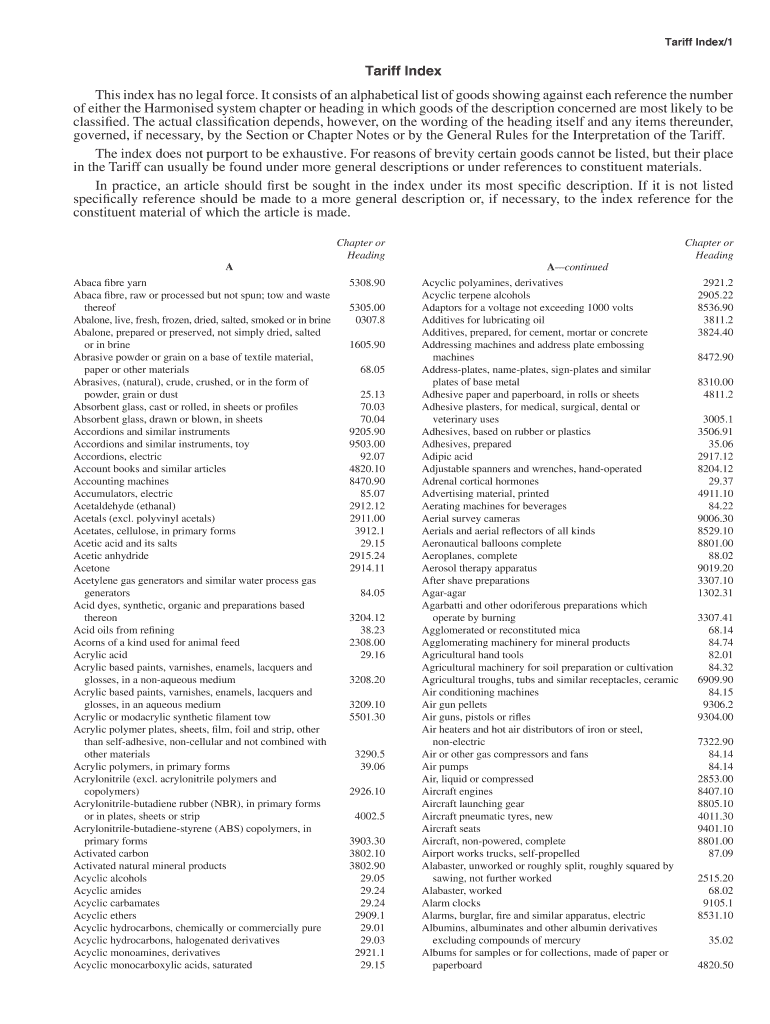
"Tariff Index 1" refers to a detailed alphabetical listing of goods, associated with their respective Harmonized System (HS) chapter or heading numbers. This document serves as a classification guide used primarily for customs and trade purposes. While it aids in identifying the correct categorization for goods moving through international borders, it is important to note that the index itself does not hold legal authority. Instead, it functions as a reference to assist companies and customs agents in locating specific items based on their descriptions, ensuring compliance with import-export regulations.
How to Use Tariff Index 1 Effectively
To utilize Tariff Index 1, users must first identify the goods they are dealing with and their corresponding descriptions. Once the item is located within the index, the Harmonized System code can be found alongside it. This code is crucial for proper classification under customs laws. For example, if a company is exporting electronics, they would search "electronics" in the index, find the related HS code, and ensure their documentation correctly reflects this classification. Using the index correctly minimizes errors in documentation, potentially reducing delays in customs clearance.
Key Elements of Tariff Index 1
Tariff Index 1 consists of several integral components that users must understand:
- Alphabetical Listing: Goods are organized by name to facilitate quick access.
- HS Chapter and Heading Numbers: Each good is paired with a specific Harmonized System code for classification.
- Item Descriptions: Provides brief descriptions to aid in determining the correct classification.
- Explanatory Notes: Includes notes that give additional context or exceptions related to certain items, which is beneficial for accurate classification.
Important Terms Related to Tariff Index 1
Understanding certain terms is essential for navigating Tariff Index 1:
- Harmonized System (HS): An internationally standardized system of names and numbers for classifying traded products.
- Customs Classification: The process of assigning a specific code to a product for import-export purposes.
- HS Code: A code used within the Harmonized System to categorize products.
Advantages of Using Tariff Index 1
Utilizing Tariff Index 1 offers several benefits:
- Accuracy in Classification: Ensures goods are classified correctly, reducing the risk of penalties.
- Streamlined Customs Process: Helps prevent delays by facilitating straightforward customs clearance.
- International Trade Compliance: Assists in maintaining compliance with global trade standards.
Examples of Using Tariff Index 1 in Real-World Scenarios
Consider a scenario where a company exports textiles. By referencing Tariff Index 1, they find the HS code that matches their textile products' specific characteristics. This correct classification not only aids in determining applicable tariffs but also ensures compliance with international trade agreements. Misclassification could result in overpaying duties or encountering customs issues, demonstrating the importance of accurate use of the index.
Legal Use of Tariff Index 1
Although Tariff Index 1 is a critical tool for classification, its legal use is bound by certain guidelines:
- Non-Legal Binding: The index itself does not have legal authority, but it aids in compliance with legally binding customs regulations.
- Customs Declarations: It supports the accurate filling of custom declarations by providing necessary classification info.
Who Typically Uses Tariff Index 1
Tariff Index 1 is widely used by various entities involved in international trade:
- Customs Brokers: Help shippers ensure that goods are correctly classified and documented.
- Logistics Companies: Use the index to coordinate and expedite the movement of goods.
- Exporters and Importers: Rely on accurate enforcement of HS codes to calculate duties and taxes properly.