Definition & Meaning
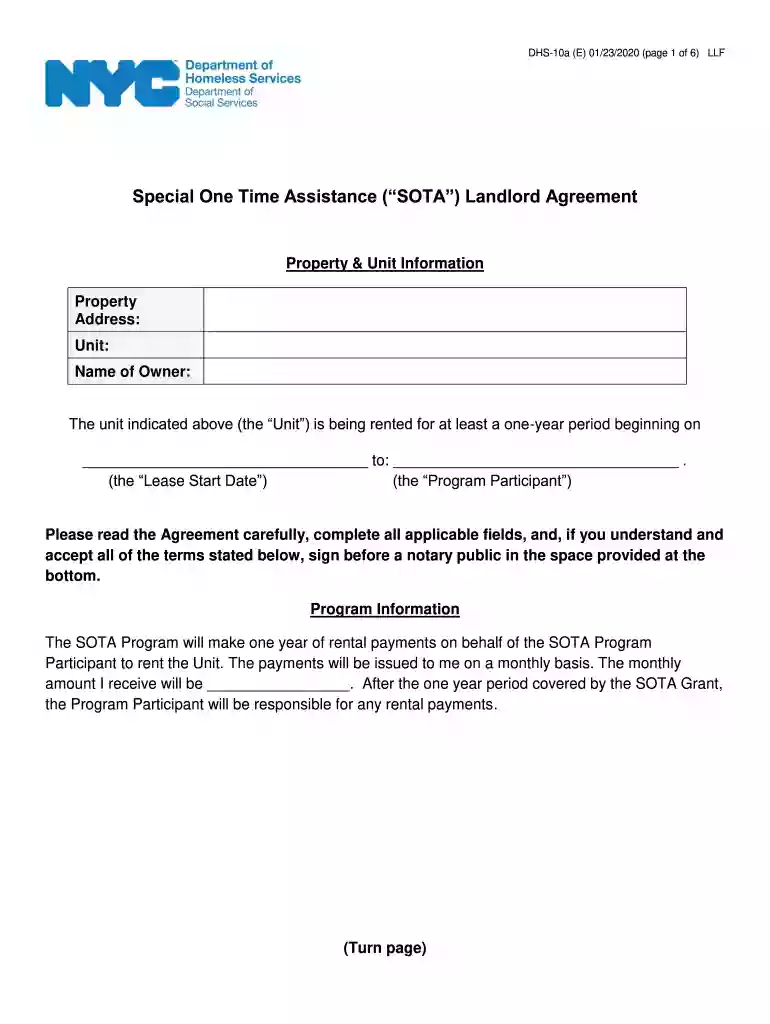
The Special One Time Assistance (SOTA) Landlord Agreement is a formal contract that outlines the arrangement between landlords and tenants participating in the SOTA program. This program is designed to facilitate housing stability by providing one year of rental payments on behalf of eligible participants. The agreement specifies terms and conditions that govern the landlord's obligations, the tenant's rights, and the overall management of the property.
Key Elements of the SOTA Landlord Agreement
An effective SOTA Landlord Agreement comprises several essential components. These include:
- Property and Unit Information: Details about the property, such as address, unit number, and any specific rental terms.
- Landlord Requirements: Obligations such as maintaining the property in a habitable condition and adhering to housing codes.
- Payment Details: Specifies how and when rental payments will be made under the SOTA program.
- Legal Obligations: Includes compliance with tenant rights, lead-based paint regulations, and proper notification to the Department of Social Services (DSS).
Steps to Complete the SOTA Landlord Agreement
Successfully completing the SOTA Landlord Agreement involves a series of steps:
- Review the Terms: Understand all rental terms, landlord obligations, and tenant rights.
- Gather Necessary Information: Collect property details, landlord information, and tenant data.
- Complete the Form: Fill in all required sections, ensuring accuracy and completeness.
- Sign the Agreement: Both landlord and tenant need to provide their signatures to formalize the agreement.
- Submit for Approval: Provide the completed document to the relevant DSS representative for processing.
Who Typically Uses the SOTA Landlord Agreement
The SOTA Landlord Agreement is commonly utilized by:

- Landlords and Property Managers: Those managing rental properties who wish to participate in the SOTA program and secure consistent rental income for one year.
- Tenants: Individuals eligible for the SOTA program, often those requiring temporary assistance to maintain housing stability.
- Department of Social Services: State and local agencies administrating the SOTA program.
Eligibility Criteria
To participate in the SOTA program, landlords and tenants must meet specific eligibility criteria:

- For Landlords: Must be willing to comply with all program requirements, including providing necessary documentation and maintaining the property.
- For Tenants: Must qualify for the program based on income levels and demonstration of financial need.
Legal Use of the SOTA Landlord Agreement
The SOTA Landlord Agreement serves as a legally binding document once signed, ensuring both parties adhere to the agreed terms. This legal standing protects tenant rights and ensures landlords receive timely payments facilitated by the SOTA program. It also holds landlords accountable for property maintenance and compliance with all relevant housing regulations.
Important Terms Related to SOTA Landlord Agreement
Several terms are crucial for understanding the SOTA Landlord Agreement:
- Rental Payments: Refers to the financial compensation made by the program to cover housing costs.
- Tenant Rights: Legal protections afforded to tenants to ensure safe and habitable housing conditions.
- DSS Notification: The requirement for landlords to communicate with the Department of Social Services regarding property changes or tenant issues.
Why Engage in a SOTA Landlord Agreement
Engaging in a SOTA Landlord Agreement provides several advantages:
- Stable Income: Landlords benefit from guaranteed rental payments for a year, reducing financial uncertainty.
- Housing Security: Tenants gain the assurance of having their housing costs covered, allowing for greater financial planning and stability.
- Program Compliance: Meeting the requirements of a recognized assistance program can enhance a landlord's reputation and aid in fostering trust with future tenants.
State-Specific Rules for the SOTA Landlord Agreement
The SOTA Landlord Agreement's implementation may vary based on state-specific regulations:
- Variations in Housing Codes: Different states have unique housing laws that landlords must comply with as part of the SOTA program.
- State DSS Guidelines: Individual states may have additional requirements or forms related to SOTA program participation.
How to Obtain the SOTA Landlord Agreement
Obtaining the SOTA Landlord Agreement involves several steps:
- Contact Local DSS Office: Reach out to the nearest Department of Social Services for the appropriate forms and guidance.
- Visit Official Websites: Access the relevant documents through official government or housing authority websites.
- Download & Print: Ensure you have the latest version of the form for completion and submission.