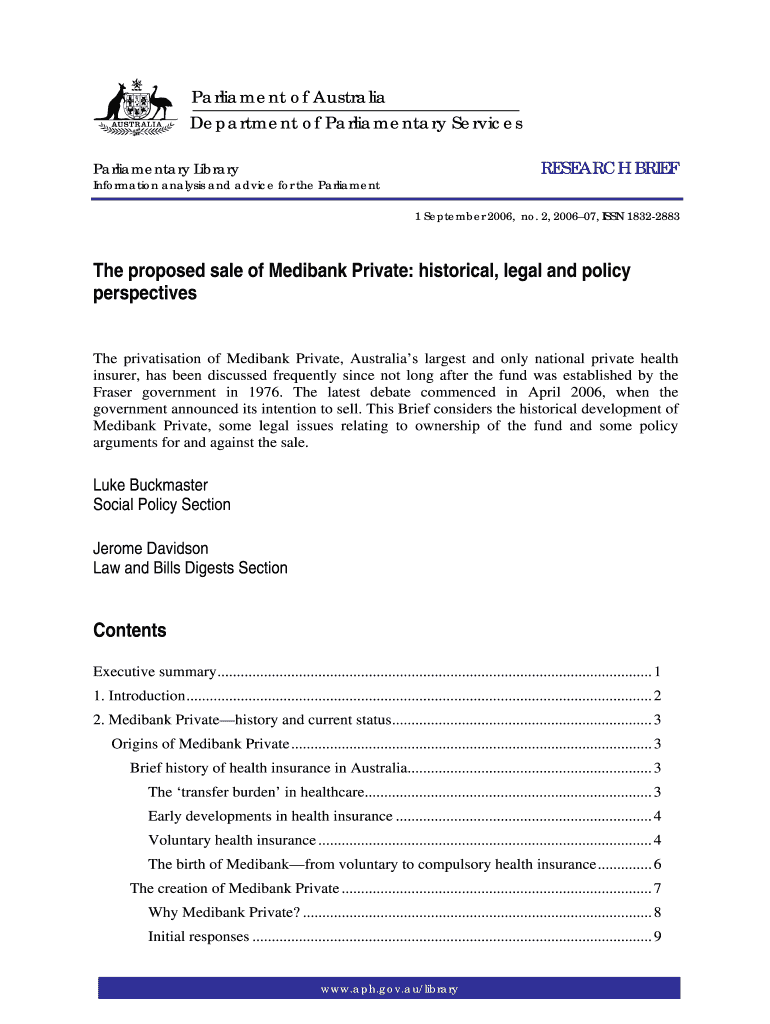







Definition and Meaning of the Proposed Sale of Medibank Private
The proposed sale of Medibank Private refers to the Australian government's plan to privatize Australia's largest national private health insurer, Medibank Private Limited. This entity operates as a government-controlled not-for-profit organization, leaving significant questions about ownership rights and member entitlements. The privatization proposal, announced in April 2006, triggered diverse reactions related to historical, legal, and policy aspects.
Historical Context of the Proposed Sale
The debate over the privatization of Medibank Private began in April 2006, when the Australian government expressed its intention to sell. Historically, Medibank was established to provide Australians with healthcare alternatives and affordability. Over the years, the organization's role as a government-owned entity has been scrutinized, and the potential shift to a privately-owned model raised significant discussions about the impact on consumers and the healthcare system.
Legal Issues Surrounding the Proposed Sale
The sale of Medibank Private involves myriad legal considerations. The transition from a government-owned entity to a private company requires compliance with corporate law and regulatory guidelines. Ownership rights are a significant legal issue, focusing on whether members of the fund hold any ownership stakes. Additionally, prospective buyers must navigate existing legal contracts and obligations inherent to Medibank Private's operations.
Policy Arguments and Considerations
Policy discussions are central to the debate, with arguments both for and against privatization. Proponents suggest that privatization could introduce efficiency through increased competition and innovation. Conversely, critics argue that it might not lower consumer costs or improve service efficiency. The discussion emphasizes the importance of ensuring competition and cost containment while maintaining healthcare accessibility post-sale.
Key Elements of the Proposed Sale
Understanding the pivotal elements of this sale proposal is critical:
- Ownership Structure: The shift from government ownership to private control.
- Regulatory Compliance: Meeting legal and regulatory standards.
- Consumer Impact: Potential changes in service delivery and pricing.
- Member Rights: Clarification of any entitlements or stakes held by current fund members.
Who Typically Uses Information on the Proposed Sale
Information about the proposed sale is relevant for various stakeholders:
- Policy Makers needing to assess public and economic outcomes.
- Legal Experts focusing on regulatory compliance and ownership laws.
- Healthcare Consumers concerned about service continuity and cost implications.
- Investors and Analysts evaluating market potential and risk factors.
Important Terms Related to the Proposed Sale
A clear understanding of key terms enhances comprehension:
- Privatization: Transfer of ownership from public (government) to private.
- Not-for-Profit: Operational model focused on service provision over profit.
- Member Entitlements: Rights or shares that fund members may possess.
- Regulatory Compliance: Adherence to laws and guidelines governing sales and operations.
Examples of Using the Form
The proposed sale affects:
- Healthcare Policies: Influencing future policy amendments.
- Investor Decisions: Determining investment opportunities or risks.
- Consumer Advocacy: Shaping campaigns for or against the sale.
Application Process and Approval Time
The application process involves legislative and corporate approvals. This phase requires:
- Government Legislation: Congressional or parliamentary endorsement.
- Corporate Restructuring: Aligning Medibank Private's operations with private industry standards.
- Timeline: Potential multi-year process requiring thorough due diligence and stakeholder consultation.