






Definition & Importance of the Service Charter
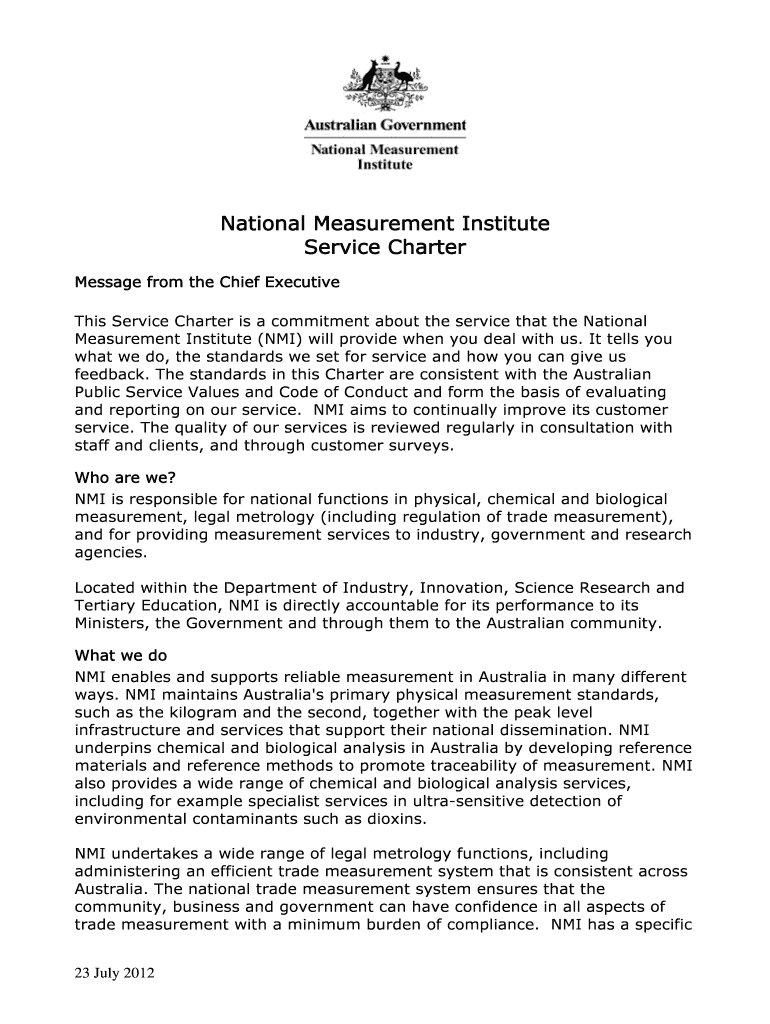
A Service Charter is a formal document that outlines the commitments and standards of service that a national body, such as the National Measurement Institute (NMI), promises to deliver. This document is a testament to the agency's dedication to providing high-quality services while adhering to specific values and guidelines. It clearly defines the responsibilities in areas such as measurement services, customer service standards, and legal compliance. The Service Charter is crucial for maintaining transparency and accountability, ensuring that stakeholders understand what to expect when engaging with the institution.
Core Functions
- Measurement Services: The Service Charter typically includes a detailed description of measurement services offered, covering areas such as physical, chemical, and biological measurements.
- Customer Service Standards: It sets expectations regarding responsiveness, communication channels, and customer interaction.
- Legal Metrology: The charter describes how legal standards are maintained and enforced, ensuring integrity and trust in measurement processes.
Key Elements of the Service Charter
The Service Charter contains critical components that guide the overall functioning and service delivery of the agency. Understanding these elements is essential for anyone interacting with the institution.
Customer Rights and Responsibilities
- Expectation of Quality: Customers should expect accurate and timely services that meet the described standards in the charter.
- Feedback Mechanisms: The charter includes information on how customers can provide feedback or lodge complaints, encouraging a two-way communication channel for continuous improvement.
- Participation and Engagement: Customers have the opportunity and responsibility to engage with the services provided, complying with any procedural requirements.
Internal Review and Improvement
- Continuous Improvement: An essential aspect of the charter is the agency's commitment to regular self-assessment and development based on feedback and global best practices.
- Transparency in Operations: Regular reviews ensure that operations remain transparent and align with evolving standards.
The Steps to Access and Use the Service Charter
Accessing and utilizing the Service Charter involves understanding how it applies to your specific needs and the correct way to engage with the services promised within it.
Accessing the Service Charter
- Visit the Agency's Website: Most national bodies provide digital access to their Service Charter through their official websites.
- Request a Physical Copy: For those preferring a physical document, you can request a copy through mail or by visiting the agency's office, if applicable.
- Online Platforms: Some agencies may offer interactive tools that allow stakeholders to explore different sections of the charter digitally.
Using the Service Charter Effectively
- Determine Relevance: Identify which sections of the charter are relevant to your specific needs or concerns, such as legal metrology or customer service commitments.
- Engage Correctly: Follow the guidelines outlined for providing feedback or engaging with the services offered.
- Compliance and Participation: Ensure that your interaction aligns with the protocols and standards described in the charter.
Legal Use and Compliance
Understanding the legal implications and compliance requirements related to the Service Charter ensures that interactions remain within the set guidelines.
Legal Framework
- Adherence to Regulations: The charter outlines obligations for both the agency and its clients, rooted in established legal frameworks.
- Rights Protection: Ensures that stakeholder rights are respected, providing a clear path for dispute resolution or legal recourse if standards are not met.
Enforcement and Recourse
- Dispute Resolution: The charter includes mechanisms for resolving disputes, ensuring that both agency and customer interests are protected.
- Compliance Requirements: Customers are expected to comply with any applicable rules and provide correct information as part of their interaction.
Who Typically Uses the Service Charter
The Service Charter serves a broad audience, from government agencies to individual consumers, highlighting its importance across different sectors.


Target Audience
- Government Entities and Regulators: They rely on the charter to understand the standards and commitments of the national body.
- Industries and Businesses: Various sectors use the charter to ensure compliance with measurement and quality standards.
- Individual Consumers: They use the charter to understand their rights and how to effectively engage with the services offered.
Stakeholder Benefits
- Standardized Services: Ensures uniformity in services received across different sectors.
- Confidence and Trust: Reinforces trust in the national agency's commitment to high-quality service delivery.
Important Terms Related to the Service Charter
A comprehensive understanding of the terminology associated with the Service Charter can enhance clarity and improve interactions.
Glossary of Terms
- Legal Metrology: Refers to the regulatory structure required to ensure the coherence and accuracy of measurements.
- Public Service Values: Principles guiding the agency’s operations, emphasizing integrity, impartiality, and service quality.
Commonly Used Terms
- Continuous Improvement: The ongoing process of refining operations and service delivery.
- Feedback Mechanisms: Systems in place for receiving and processing input from stakeholders.
Real-World Scenarios & Examples
Examining practical applications of the Service Charter helps demonstrate its relevance in everyday operations and service interactions.
Practical Applications
- Business Compliance: A manufacturing business may refer to the charter for standards in equipment calibration to ensure product quality.
- Public Agencies: Government departments may use the charter as a reference when partnering on initiatives requiring precise measurement standards.
- Consumer Assurance: Individual consumers can reference the charter for clarity on engaging with measurement services and understanding service expectations.
Impactful Outcomes
- Improved Service Delivery: Adoption of best practices and standards directly influences the quality of services provided by the agency.
- Enhanced Stakeholder Relations: The clear communication framework helps improve the relationship between the agency and its stakeholders.
Versions or Alternatives to the Service Charter
A look into different versions and alternatives to the Service Charter provides valuable context for varied applications and adaptations.
Common Alternatives
- International Standards: Some organizations might adhere to global standards as alternatives for parts of their Service Charter.
- Sector-Specific Charters: Other sectors might have tailored charters addressing unique needs beyond the scope of the national body.
Updates and Revisions
- Regular Updates: It's essential to stay informed about updates to ensure current adherence to revised standards.
- Stakeholder Involvement: Feedback from stakeholders often plays a significant role in updates or changes to the charter.