






Definition and Meaning
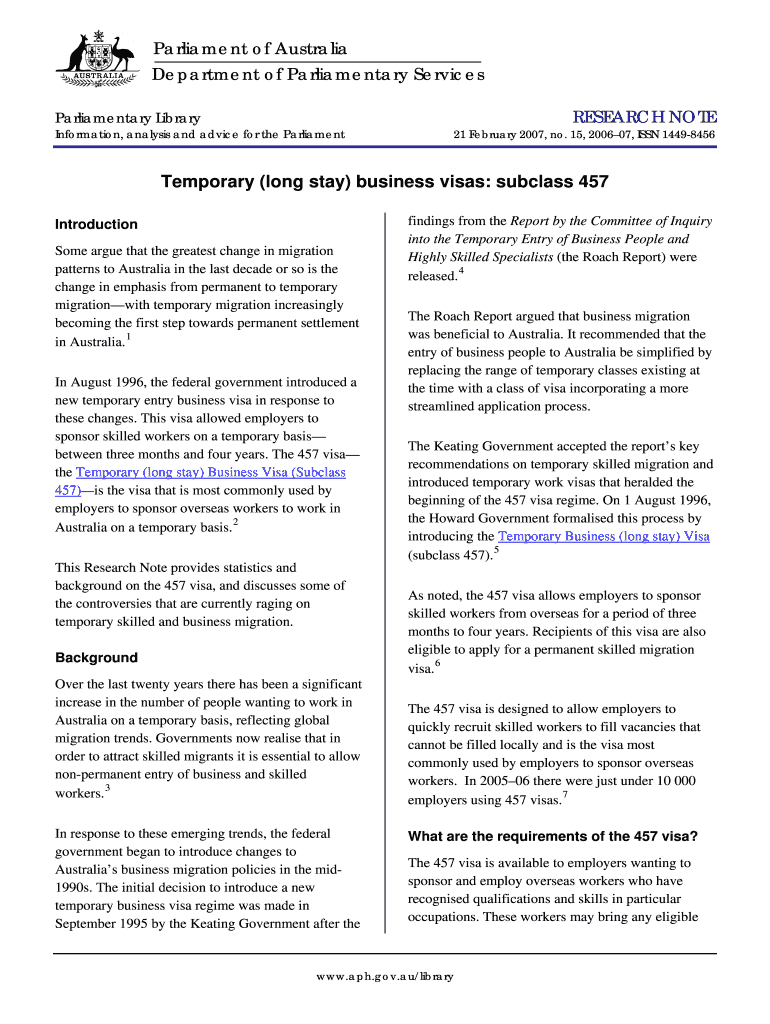
Temporary (long stay) business visas, specifically known as Subclass 457, are a type of visa allowing Australian employers to sponsor skilled overseas workers for temporary employment. Introduced in 1996, these visas are part of Australia’s strategy to address skill shortages by facilitating the migration of foreign talent. Unlike permanent migration, Subclass 457 visas provide a more flexible, short-to-medium-term solution, reflecting a shift in government policy toward temporary work arrangements.
Key Elements of Temporary Business Visas
When considering a Subclass 457 visa, several components are crucial:
- Sponsorship: Employers must be approved sponsors, ensuring they meet obligations related to the employment and welfare of the worker.
- Nomination: The job to be filled must align with those listed on the legislative instrument for skilled occupations.
- Visa Application: Workers must have the necessary skills, experience, and English proficiency to fulfill the role.
Eligibility Criteria
Eligibility for the Subclass 457 visa requires:
- Approval of Sponsorship: Employers must demonstrate financial viability and compliance with workplace laws.
- Occupation Alignment: The position must be on the Skilled Occupation List.
- Skill and Experience Verification: Applicants need adequate skills and qualifications.
- Health and Character Checks: Meeting these requirements is essential for approval.

How to Use Temporary Business Visas
Upon obtaining a Subclass 457 visa, holders can work in Australia for the approved sponsor. It allows:
- Working in Australia: Visa holders can live and work in Australia for up to four years.
- Family Inclusion: Family members can accompany the visa holder and have unrestricted work and study rights.
- Travel Flexibility: Multiple entries into Australia are permitted during the visa period.
Steps to Complete the Visa Application
Navigating the application involves several steps:
- Sponsorship Application: Employers apply to become approved sponsors.
- Occupation Nomination: Employers nominate a position for a skilled worker.
- Visa Application Submission: Workers apply for the visa, providing evidence of identity, skills, and English proficiency.
- Health Checks and Police Clearances: Required for both the applicant and accompanying family members.
Important Terms Related to the Visa
Understanding specific terms is crucial for applicants:
- Skilled Occupation List: A list defining eligible roles for visa nomination.
- Sponsorship Obligations: Conditions that sponsors must fulfill, including salary, work conditions, and reporting changes.
- Transition Pathway: Option for Subclass 457 holders to apply for permanent residence through employer-sponsored visas.
Examples of Using Temporary Business Visas
In practical scenarios, Subclass 457 visas have enabled:
- Tech Companies: Filling software engineering roles.
- Healthcare Facilities: Employing specialized medical professionals.
- Construction Firms: Hiring skilled tradespeople for large projects.
Legal Use and Compliance
Legally compliant use of Subclass 457 visas requires adherence to:
- Work Hours: Regulated under Australian employment laws.
- Salary Benchmarks: Ensuring salaries align with local standards for similar roles.
- Monitoring: Sponsors must comply with monitoring by the Department of Home Affairs, ensuring visa holders are employed and remunerated as stipulated.
Application Process and Approval Time
Achieving approval involves multiple phases with variable timelines:
- Sponsorship Processing: Typically taking several weeks; approval is a prerequisite.
- Nomination Decision: Judged concurrently with the visa application.
- Visa Application Processing: Generally completed within six months, depending on individual circumstances and completeness of documentation.
Business Types That Benefit
Various sectors stand to gain from the strategic use of Subclass 457 visas, including:
- Information Technology: Addressing specific skill shortages in software development.
- Healthcare Services: Filling critical roles in nursing and specialized medical fields.
- Hospitality and Tourism: Supporting peak operational periods with skilled personnel.
Who Issues the Visa
The Department of Home Affairs is responsible for issuing and regulating Subclass 457 visas. Their role includes assessing applications, ensuring compliance with immigration laws, and providing guidance throughout the application process.
State-by-State Differences
While the visa is federally regulated, certain states may have targeted occupation lists, influencing the types of roles eligible for sponsorship. This can affect both the nomination process and the strategic deployment of skilled workers across different regions.