






Understanding Psychiatric Morbidity in Private Households
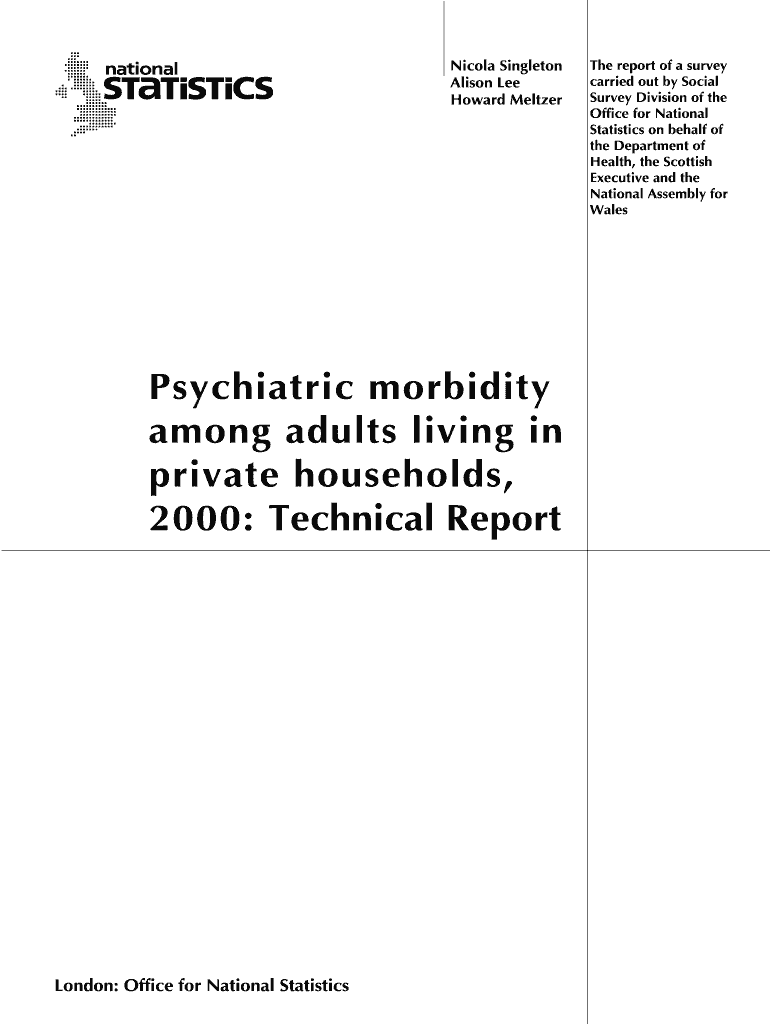
The Psychiatric Morbidity among adults living in private households, 2000: Technical Report offers an in-depth look into the mental health challenges faced by adults in Great Britain. This report, undertaken by the Office for National Statistics, provides essential insight into various mental disorders such as neurotic disorders, psychosis, and substance misuse among others. The primary objective is to inform health policy and improve mental health services.
Methodology and Data Collection
Survey Design and Sampling
- The survey applied a stratified sampling technique to ensure a representative sample of the adult population living in private households across Great Britain. This design aimed to capture a variety of demographic elements, such as age, gender, and socio-economic status.
- Detailed questionnaires and interviews were employed to gather data. Participants were selected at random, providing a broad spectrum of the population's mental health status.
Data Processing and Analysis
- Rigorous data processing techniques were utilized to ensure the accuracy and reliability of the findings. This included data cleaning, coding responses, and applying statistical analysis to interpret the results effectively.
- Advanced statistical methods were used to handle large data sets, allowing for an accurate representation of psychiatric morbidity prevalence.
Key Findings and Implications
Prevalence of Mental Disorders
- The report highlights a significant prevalence of neurotic disorders, affecting a notable portion of the surveyed population. Conditions such as anxiety and depression were among the most reported.
- Substance misuse presented a severe issue, with data showing clear patterns of alcohol and drug misuse impacting mental health adversely.
Implications for Health Policy
- Findings from the report underscore the need for targeted health policies aimed at early intervention and the provision of mental health services.
- Recommendations include the development of community-based support and increasing funding for mental health research and treatment programs.
Legal and Ethical Considerations
Ethical Standards in Research
- The survey was conducted with utmost adherence to ethical guidelines. Informed consent was obtained from all participants, ensuring their understanding and voluntary involvement in the study.
- Confidentiality of respondents was strictly maintained, with all data anonymized to protect participants' privacy.
Legal Framework
- The report aligns with both national and international legal standards regarding mental health research, ensuring compliance with regulations governing the collection and use of sensitive health data.
Practical Applications and User Scenarios
Informing Policymakers and Health Professionals
- Policymakers can utilize the report's findings to design and implement effective mental health strategies tailored to the needs of different population segments.
- Health professionals can draw on the insights to improve diagnosis and treatment plans, aiding in the development of more personalized mental health care.
Public Awareness and Education
- The report serves as a crucial tool for raising awareness about mental health issues among the general public, reducing stigma and encouraging individuals to seek help.
Related Terminology
Important Terms Defined
- Neurotic Disorders: A class of functional mental disorders involving chronic distress but neither delusions nor hallucinations.
- Psychosis: A severe mental disorder where thought and emotions are so impaired that contact is lost with external reality.
- Substance Misuse: The harmful or hazardous use of psychoactive substances, including alcohol and illicit drugs.
Variants and Historical Context
Evolution of the Survey
- Earlier surveys laid the groundwork for the 2000 report, with previous iterations focusing on narrower aspects of mental health. The 2000 survey expanded in scope to provide a comprehensive overview.
- Potential updates and subsequent reports offer continuity, ensuring that mental health services evolve alongside emerging data and trends.
Technological Integration
Digital Report Access
- The document is available in digital formats, providing accessibility for wider dissemination and easier integration into electronic health record systems.
- Compatibility with various data analysis software allows researchers and policymakers to explore the findings further, applying them to specific areas of interest or concern.
The Psychiatric Morbidity report is an essential resource for those involved in mental health services, policy-making, and education. It provides a deep understanding of the mental health landscape, guiding informed decisions and improved mental health outcomes.