






Definition and Meaning
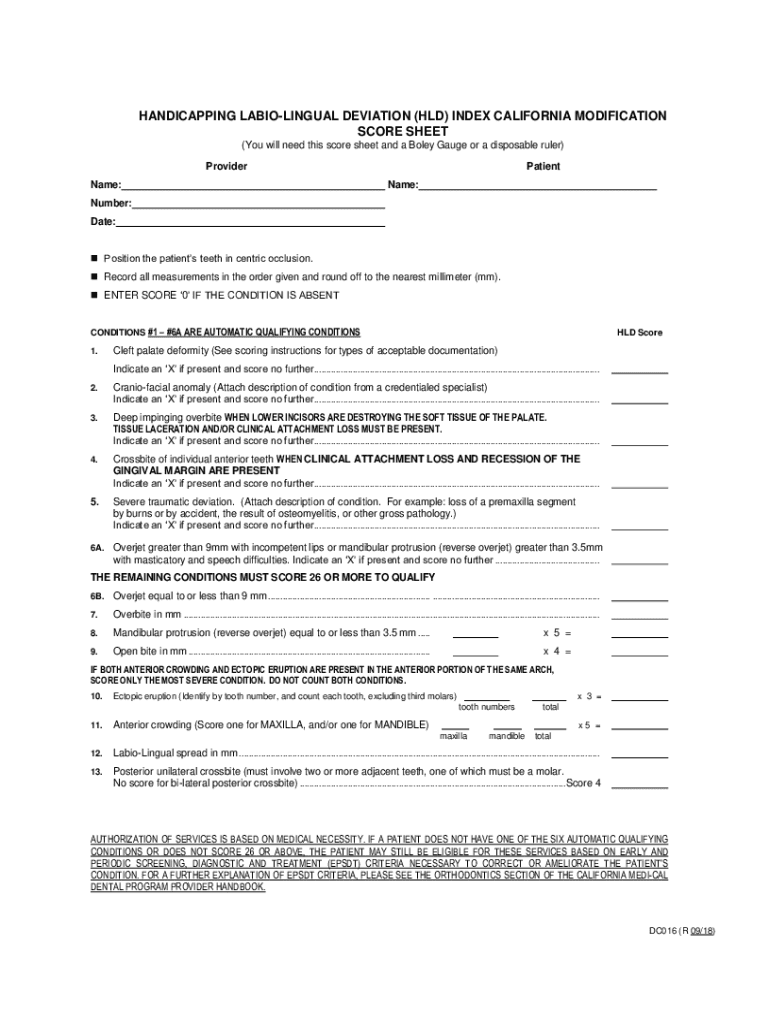
The Medi-Cal Dental Handicapping Labio-Lingual Deviation Index California Modification Score Sheet is a critical tool used in the assessment of orthodontic conditions for patients seeking coverage under the Medi-Cal program in California. This score sheet is designed to quantify various dental anomalies using a specified scoring system, thereby determining the medical necessity for orthodontic services. By evaluating specific dental conditions, such as cleft palate deformities and deep impinging overbites, the score sheet plays a crucial role in deciding eligibility for treatment.
- Dental Anomalies: Includes conditions like cranio-facial anomalies and significant deviations in normal tooth positioning.
- Scoring System: Allows for standardized evaluations and documentation of orthodontic needs.
- Eligibility Determination: Helps clinicians establish whether a patient's condition qualifies for Medicaid-reimbursed orthodontic treatment.
How to Use the Score Sheet
Understanding and utilizing the score sheet effectively requires familiarity with its categories and scoring criteria. The process involves:
- Assessing Anomalies: The evaluator must examine the patient for relevant dental conditions.
- Documenting Findings: Each anomaly is noted and scored according to its severity and medical necessity.
- Calculating Scores: Add the points from individual anomalies to achieve a total score that reflects the patient's orthodontic condition.
Specific Anomalies
- Cleft Palate: Requires clinical observations of gaps in the palate affecting speech and dental alignment.
- Overbites: Detailed measurements using dental tools to quantify the deviation from normal alignment.
Steps to Complete the Score Sheet
Initial Assessment
- Review Medical History: Understanding past dental and medical interventions provides context.
- Conduct a Dental Examination: A thorough visual and physical inspection of the patient's oral cavity.
- Record Measurements: Use precise tools to measure dental deviations and anomalies.
Scoring and Submission
- Complete the Score Sheet: Accurately fill out each section with data from the examination.
- Submit Documentation: Ensure all details are filled in correctly before submission to Medi-Cal authorities for review.
Important Terms Related to the Score Sheet
- Orthodontic Condition: Problems that affect the alignment, function, and appearance of the teeth and jaws.
- Medical Necessity: Criteria determining whether a service is deemed essential for a patient’s health.
- Deviation Index: Quantifies the degree to which dental features deviate from standard norms.
Who Typically Uses the Score Sheet
Primarily used by orthodontists and dentists, this score sheet aids in:
- Clinical Settings: For patient assessment and treatment planning.
- Insurance Claims: Documentation to justify the need for orthodontic services covered under Medi-Cal.


Other Users
- Dental Hygienists: May assist in obtaining initial measurements and patient data.
- Administrative Staff: Ensures paperwork is complete and ready for submission.
Legal Use of the Score Sheet
The score sheet must be used in compliance with both state and federal regulations regarding medical billing and orthodontic evaluations. Legal considerations include:
- Data Privacy: Strict adherence to HIPAA guidelines when handling patient information.
- Accurate Reporting: Ensures all documented conditions reflect true findings to avoid fraud.
Key Elements of the Score Sheet
- Identification Information: Includes patient demographics and baseline health data.
- Specific Anomalies Sections: Separate categories for various conditions with detailed scoring criteria.
Detailed Scoring Criteria
- Points System: Each anomaly is assigned specific points based on severity.
- Aggregate Score: Determines the eligibility threshold for Medi-Cal services.
State-Specific Rules
California has unique requirements that differ from federal guidelines, such as specific scoring thresholds or documentation practices required by Medi-Cal. Familiarity with these ensures proper compliance and maximizes the chance for successful service coverage approval.
- Regulatory Compliance: Knowledge of state-specific Medicaid regulations.
- Scoring Adjustments: Additional considerations for certain anomalies prevalent in California populations.
Examples of Using the Score Sheet
Case Study: Severe Overbite
A twelve-year-old patient with a pronounced overbite assessed by:
- Dental Templates: Using bite templates to measure the degree of deviation.
- Scoring: Assigning points based on the calculated overlap.
Case Study: Cleft Palate
Infant patient with a visible cleft palate:
- Initial Observations: Documentation of palate gap size and associated speech issues.
- Score Calculation: Points awarded to reflect impact on chewing and speech.
Eligibility Criteria
To qualify for treatment under Medi-Cal using this score sheet, a patient must:
- Score Above Threshold: A minimum score indicating substantial medical necessity.
- Documented Impact: Evidence showing that the orthodontic issue affects daily functioning or health.
The score sheet's detailed recording not only quantifies but legitimizes patients' needs for necessary medical interventions through the Medi-Cal program.