
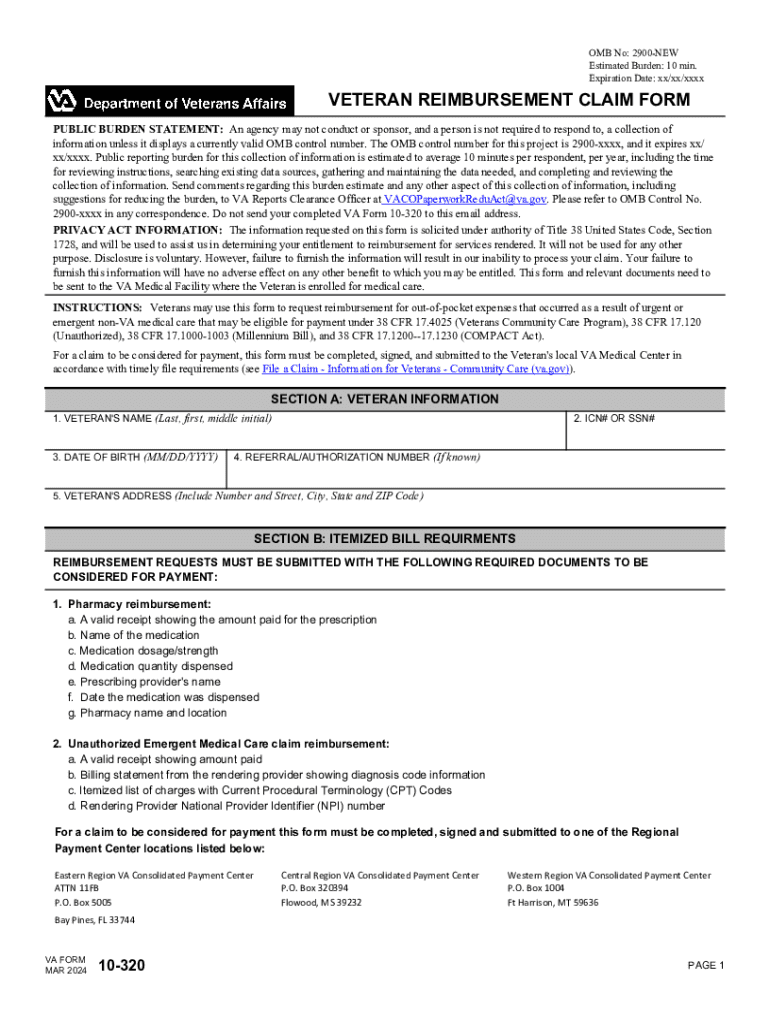







Definition and Purpose of VA Form 10-320
VA Form 10-320, also known as the Veteran Reimbursement Claim Form, is designed to allow veterans to request reimbursement for expenses they have paid out-of-pocket for urgent or emergent non-VA medical care. This form is crucial for veterans who need to recover costs incurred from medical services that the VA typically does not cover directly. The form ensures that veterans provide all necessary information to facilitate a smooth reimbursement process.
Key Elements of VA Form 10-320
-
Personal Information: Veterans must provide accurate personal and identification details, such as their name, contact information, and VA identification number, to begin the reimbursement process.
-
Expense Details: An itemized list of incurred medical expenses is required, showcasing the specific costs for which reimbursement is sought. This ensures transparency and helps the VA verify claims.
-
Explanation for Non-VA Services: A signed explanation is needed to justify why VA services were not used for the medical care in question. This can include reasons like the unavailability of VA services or the emergence of an urgent medical condition.
Steps to Complete the VA Form 10-320
-
Gather Information: Collect all relevant documents, such as itemized medical bills and evidence of payment, to support the reimbursement claim.
-
Fill out Personal Details: Provide accurate personal and VA identification information to avoid delays in processing.
-
Detail Medical Expenses: List all medical costs clearly, ensuring that amounts are itemized and justifiable with attached documentation.
-
Provide an Explanation: Write a brief but comprehensive explanation for why non-VA services were necessary. This is critical for approval.
-
Review and Submit: Double-check all filled sections for accuracy before submitting the form to the correct VA Medical Facility or Regional Payment Center.
How to Obtain the VA Form 10-320
To access the VA Form 10-320, veterans can visit their local VA Medical Facility, where forms are readily available. Alternatively, the form can often be downloaded from the VA’s official website. It's essential for veterans to ensure they are using the latest version of the form to prevent any issues during submission.
Who Typically Uses the VA Form 10-320
This form is primarily used by veterans who have received emergency medical care that could not be provided by VA facilities. This includes those who, due to location or immediate medical needs, sought treatment outside the VA healthcare system. The form is a critical resource for these individuals to relieve financial burdens taken on under such circumstances.


Legal Use of the VA Form 10-320
Using VA Form 10-320 involves complying with legal and procedural guidelines established by the Department of Veterans Affairs. Veterans must ensure accurate reporting of their expenses and provide a legitimate reason for using non-VA services. Misrepresentation of facts could lead to legal consequences and denial of claims. The submission of the form must be accompanied by the necessary supporting documentation for validation.
Important Terms Related to VA Form 10-320
-
Reimbursement: The process of repaying veterans for out-of-pocket expenses incurred for approved non-VA medical services.
-
Itemized bill: A detailed invoice outlining specific services or treatments received, used to verify claims.
-
Urgent care: Medical treatment sought for conditions requiring immediate attention to prevent further health complications.
Filing Deadlines and Important Dates
Veterans should be aware of any deadlines associated with filing VA Form 10-320 to ensure timely reimbursement. Generally, claims should be submitted promptly after receiving non-VA emergency care. Checking with the VA for specific deadlines relevant to their situation is advised to avoid missing crucial deadlines.
Required Documents for Submission
Submitting VA Form 10-320 requires attaching various supporting documents:
-
Itemized medical bills: Detailing the services provided and costs incurred, these bills are pivotal in verifying reimbursement claims.
-
Proof of payment: Such as receipts or credit card statements, to demonstrate that the expenses were indeed paid by the veteran.
-
Explanation statement: An accurate and honest account of why non-VA services were utilized needs to be included to clarify the necessity of seeking external medical care.
These documents, when combined with the completed form, facilitate a smoother processing of reimbursement claims.




