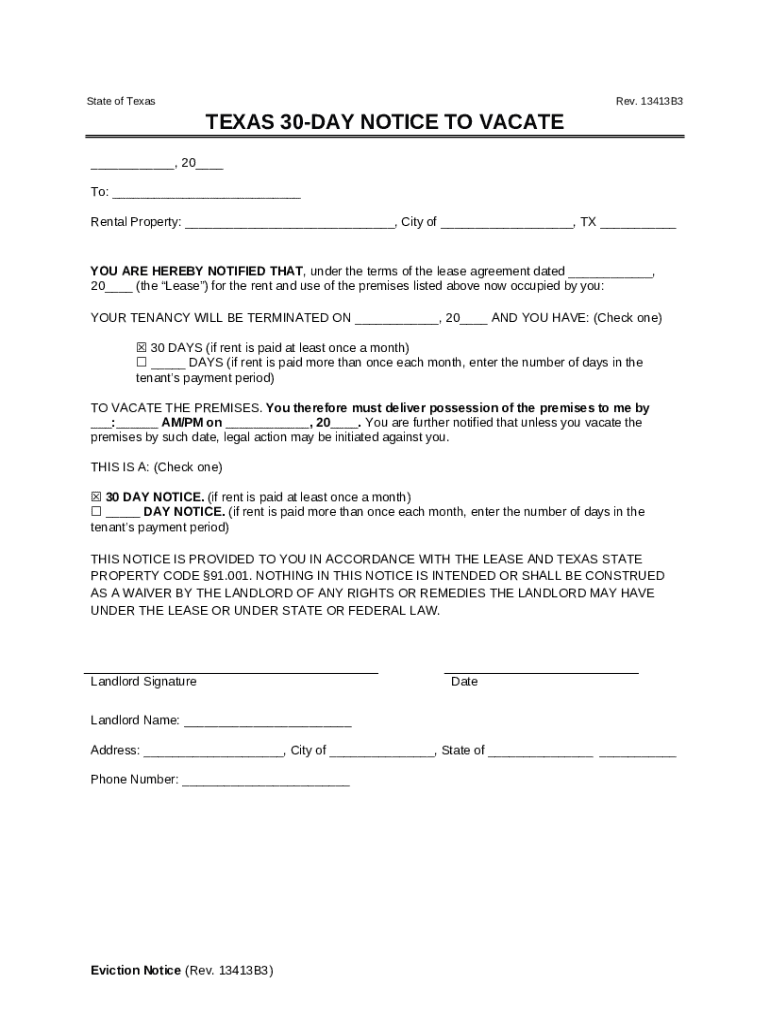







Definition and Purpose of the 30-Day Notice to Vacate in Texas
A 30-Day Notice to Vacate is a legal document used primarily by landlords to inform tenants of the termination of their tenancy. In Texas, this notice serves to notify the tenant that they must vacate the rental property within thirty days from the date specified in the notice. This communication is crucial for ensuring that the tenant has sufficient time to make arrangements for relocation and that the transition complies with Texas state landlord-tenant laws.
The notice outlines the terms under which the landlord is ending the lease, often due to reasons such as the expiration of a lease term, breach of lease conditions by the tenant, or personal reasons requiring the property to be vacated. It ensures a clear communication channel between the landlord and tenant, detailing contact information, reasons for termination, and any further essential instructions.
Steps to Complete the 30-Day Notice to Vacate
-
Consult the Lease Agreement: Before preparing the notice, review the lease agreement to understand the conditions under which you can issue a notice to vacate. This step ensures that the notice adheres to any specific notification periods or requirements established by the lease.
-
Draft the Notice: Create the notice using a structured format. The document should include the tenant’s name, address of the rental property, the termination date, and reasons for the notice. Ensure clarity and conciseness to prevent any confusion.
-
Include Necessary Details: The notice should also provide the landlord’s contact information for any queries or clarifications. Additionally, indicate any expectations regarding the condition of the property upon vacating.
-
Deliver the Notice Correctly: In Texas, delivery of the notice can be done via personal delivery, certified mail, or by posting the notice on the interior of the main entry door if the tenant does not voluntarily collect the mail. Document the form of delivery to ensure legal compliance.
-
Maintain a Record: Keep a copy of the notice and any delivery confirmation for your records. This will be useful should any disputes arise regarding the notice or its terms.
Legal Implications and Requirements
When utilizing the 30-Day Notice to Vacate in Texas, it is crucial to ensure that the notice complies with Texas law. The Texas Property Code mandates certain procedures for issuing such notices. For example, if a lease specifies a term longer than month-to-month, you may be required to provide a longer notice period. Additionally, notices must adhere to the Fair Housing Act, meaning they must not be discriminatory based on race, color, national origin, religion, sex, familial status, or disability.
Who Typically Uses the 30-Day Notice to Vacate
This form is predominantly used by landlords or property management companies managing rental properties. It is also applicable in scenarios where tenants themselves initiate the termination if they intend to vacate the premises, provided they give proper notice duration as required by the lease.
Real estate professionals and legal advisors may also utilize or advise on this notice when managing or consulting on tenant-landlord relationships. Understanding the nuances of issuing and responding to the notice is key for these stakeholders to minimize potential legal disputes.


State-Specific Rules for Texas
Texas has specific laws governing the issuance of a 30-Day Notice to Vacate. Unlike many other states where a month-to-month tenant may be evicted with a simple notice, Texas requires landlords to have just cause if the lease specifies conditions that necessitate early termination. It’s important for landlords to adhere to the Texas Property Code to avoid penalties or legal challenges.
Additionally, Texas provides certain exceptions, such as for servicemembers invoking rights under the Servicemembers Civil Relief Act, which can alter the terms and enforceability of such notices.
Key Elements of a 30-Day Notice to Vacate
- Tenant’s Information: Full name(s) of the tenant(s) residing on the property.
- Property Description: Exact address and description of the rental property.
- Termination Date: Clearly defined date by which the tenant must vacate.
- Reasons for Termination: Specific reasons for terminating the lease, if applicable.
- Contact Information: Landlord’s name, address, and contact details for follow-up.
- Signatures: The notice should be signed and dated by the landlord or their authorized representative.
When and How to Use the Notice
The 30-Day Notice to Vacate is typically used in the final months of a lease term or when a tenant has violated lease terms. However, to ensure legal compliance, landlords should consult the lease agreement and Texas landlord-tenant laws prior to issuing the notice. Using this document appropriately helps in maintaining professionalism in tenant-landlord relationships and ensuring a smooth transition without unexpected liabilities.
Landlords should regularly consult their legal counsel to update the notice format and content as per any legislative changes in Texas real estate law. Proper usage of the notice can prevent misunderstandings and foster a cooperative transition for both parties involved.