1 ) EFFECTIVE USE OF PMT REQUIRES 2026

Get Form
1 ) EFFECTIVE USE OF PMT REQUIRES Preview on Page 1

Here's how it works

01. Edit your form online
Type text, add images, blackout confidential details, add comments, highlights and more.

02. Sign it in a few clicks
Draw your signature, type it, upload its image, or use your mobile device as a signature pad.

03. Share your form with others
Send it via email, link, or fax. You can also download it, export it or print it out.

Understanding Physical/Psychological Management Training (PMT)

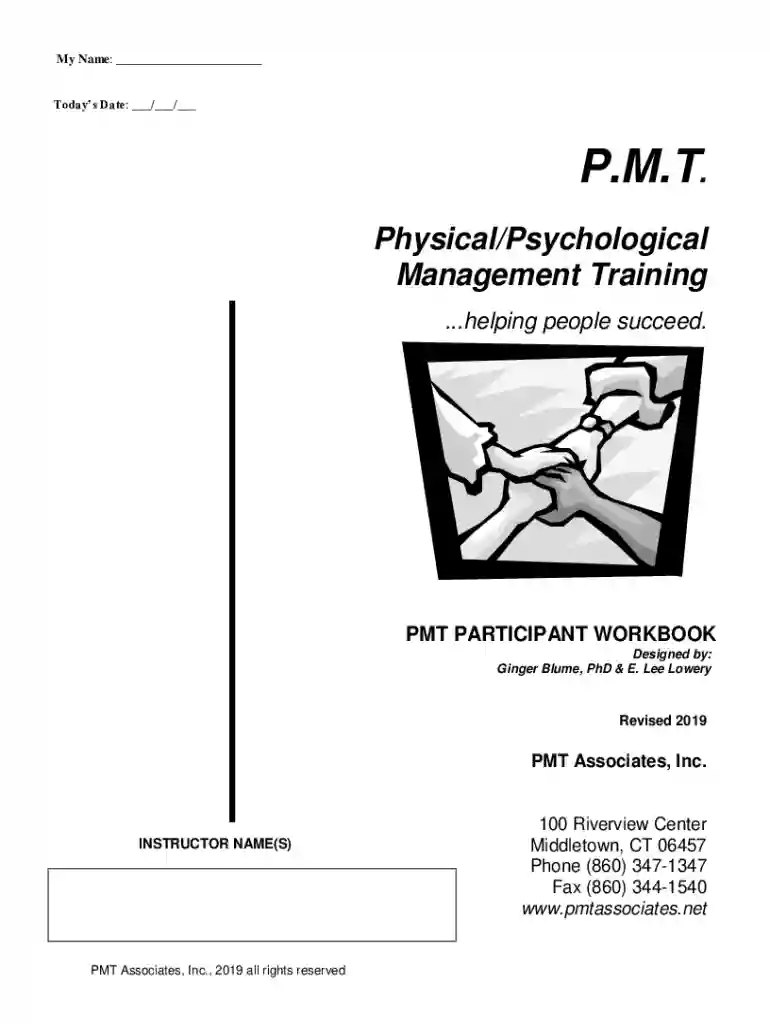
PMT is a structured approach geared toward equipping individuals with the skills necessary to effectively manage and de-escalate behavioral crises. Its core components include prevention, prediction, and protection in crisis situations. By emphasizing a therapeutic approach to conflict management, PMT aims to mitigate crises without unnecessary escalation.

Core Objectives of PMT

  • De-escalation Techniques: Focused on diffusing potentially volatile situations through calm and assertive communication.
  • Personal Safety: Educating individuals on maintaining their physical and emotional safety during crisis interventions.
  • Legal and Ethical Considerations: Ensuring compliance with legal standards in any action taken during the management of a behavioral crisis.

How to Effectively Implement PMT

Implementing PMT requires a structured plan that incorporates training sessions, periodic evaluations, and feedback mechanisms. Ensuring that individuals are well-versed in PMT techniques can significantly enhance their ability to handle crisis situations efficiently.

Steps to Implement PMT

  1. Initial Training: Conduct comprehensive sessions focusing on the principles of prevention, prediction, and protection.
  2. Role-Playing Scenarios: Utilize real-world scenarios to simulate crisis situations and test the response strategies learned.
  3. Feedback and Reflection: Encourage participants to share experiences and insights post-training for continual improvement.

Importance and Benefits of PMT

The effective use of PMT enhances the safety and well-being of both individuals and groups in environments prone to crises, such as schools, healthcare facilities, and correctional institutions.

Key Benefits

  • Reduced Incidence of Crises: By emphasizing early intervention and de-escalation.
  • Increased Safety: For all parties involved in potentially dangerous situations.
  • Enhanced Communication: Through training in clear and assertive strategies for managing stress and conflict.

Legal Considerations in PMT

Understanding and adhering to the legal framework surrounding the use of PMT is crucial, particularly in U.S.-based institutions.

Legal Standards

  • Compliance with Federal and State Regulations: Ensuring PMT practices do not violate any state-specific laws concerning restraint and intervention.
  • Documentation Requirements: Accurate and thorough documentation of incidents and interventions to maintain transparency and accountability.

Examples of Effective PMT Usage

Case studies and real-world examples can illustrate the positive impact of PMT when appropriately applied.

Scenario Analysis

  • Healthcare Setting: Managing a patient experiencing a disorienting episode without resorting to physical restraint.
  • Educational Environment: Guiding students through stressful situations using verbal de-escalation techniques rather than punitive measures.

Key Elements of PMT

For effective application, PMT requires understanding its critical elements.

Essential Components

  • Crisis Recognition: Identifying early signs of potential crises to prevent escalation.
  • Strategic Intervention: Using informed strategies to manage and resolve conflicts amicably.

Training and Continuous Improvement

Continuous training is vital for the sustained effectiveness of PMT. Regular refresher courses and updates on best practices are recommended to stay abreast of new strategies and regulatory changes.

Training Programs

  • Initial Certification Courses: Mandatory for new personnel to understand PMT fundamentals.
  • Periodic Refresher Sessions: To keep skills sharp and updated with the latest techniques and regulations.

By ensuring a robust understanding and application of PMT principles, individuals and organizations can create safer environments while effectively managing and resolving behavioral crises.

be ready to get more

Complete this form in 5 minutes or less

Get form

Got questions?

We have answers to the most popular questions from our customers. If you can't find an answer to your question, please contact us.
Contact us
As such, PMT typically includes interventions aimed at helping parents be more consistent and contingent in their behavior management practices, including use of clear and direct commands, differential attention, contingent reinforcement, response cost, and time-out from reinforcement.
The core of the PMT training program involves learning through a variety of experiences, such as simulation and role-play exercises, with the help of practical theoretical concepts. The program covers a wide range of interventions in four stages: prevention, pre-violence, violence, and post-violence.
PMT is a highly effective treatment proven to change behavior over the long-termthat is, reducing negative behavior and increasing positive behavior, until positive behavior becomes second nature to the child (see PMTs history and core ideas).

Security and compliance

At DocHub, your data security is our priority. We follow HIPAA, SOC2, GDPR, and other standards, so you can work on your documents with confidence.

Learn more
ccpa2
pci-dss
gdpr-compliance
hipaa
soc-compliance
be ready to get more

Complete this form in 5 minutes or less

Get form