



Understanding the "CUESTIONARIO DE VERIFICACIÓN DEL ORIGEN"
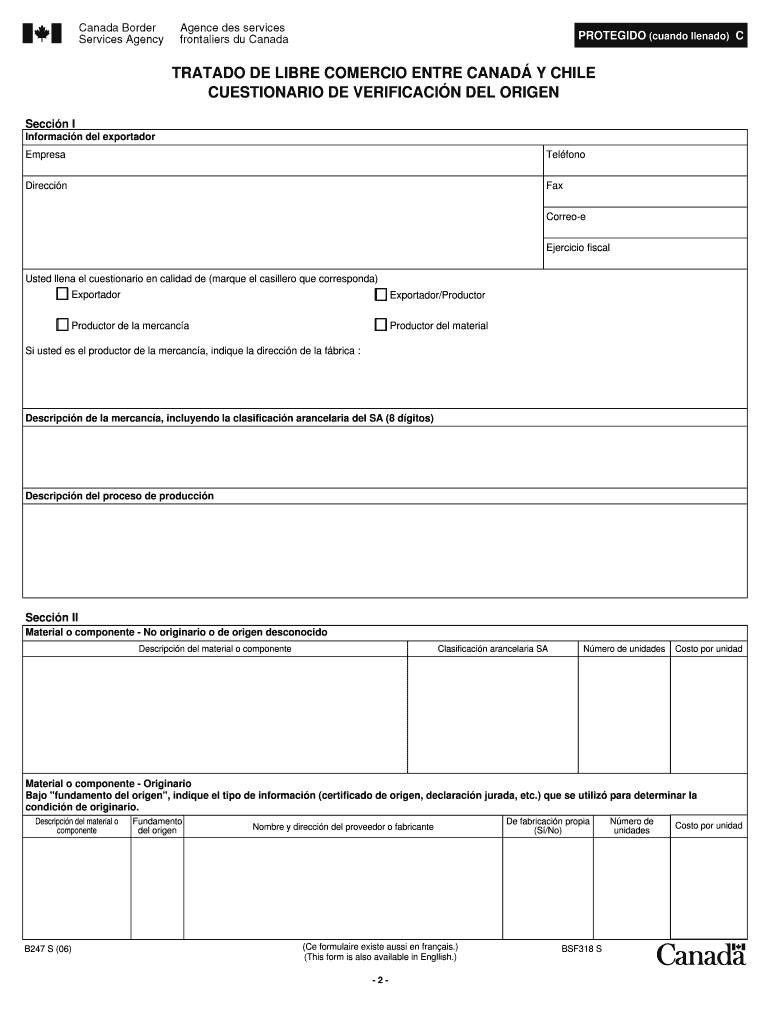
The "Cuestionario de Verificación del Origen" is a form used primarily in international trade to verify the origin of goods. This is particularly relevant under trade agreements where preferential tariff treatment is offered. The form helps customs authorities determine whether goods qualify for certain tariff benefits based on their origin. This is crucial for exporters and importers dealing with countries like Canada under agreements like the Canada-Chile Free Trade Agreement.
- Purpose: To ensure compliance with trade agreements and benefit from lower tariffs.
- Use: Predominantly in international trade contexts involving preferential tariffs.
How to Use the "Cuestionario de Verificación del Origen"
To use the form correctly, it's important to follow a structured approach. This involves understanding the form's requirements, gathering relevant information, and filling out sections accurately.
- Identify Relevant Trade Agreements: Know which trade agreements pertain to your goods.
- Gather Necessary Documentation: Collect documents proving the goods' origin, such as certificates of origin, invoices, and production records.
- Complete Each Section: Follow the instructions for each form section, ensuring accurate and truthful responses.
- Review and Submit: Verify all information before submission to avoid penalties or rejection.
Steps to Complete the "Cuestionario de Verificación del Origen"
Completing the form requires careful attention to detail to ensure all information is accurate:
-
Start with Basic Information:
- Fill out your business details including name, address, and contact information.
-
Describe the Goods:
- Provide detailed descriptions of the goods in question, including their classification codes.
-
Declare Origin:
- Specify the country of origin and provide supporting documentation.
- Include production processes or materials used.
-
Certification:
- The exporter or producer must sign a declaration certifying the accuracy of the information provided.
-
Submission:
- Submit the form via the appropriate channel (online, mail, or in-person).
Important Terms Related to the "Cuestionario de Verificación del Origen"
Understanding certain terms will enhance comprehension of the form:
- Preferential Tariff: Reduced tax rates applied to imports from countries with trade agreements.
- Certificate of Origin: A document proving where your goods are manufactured.
- Tariff Classification Codes: Numbers that classify goods internationally for tariff purposes.
Key Elements of the "Cuestionario de Verificación del Origen"
Several components are crucial to this form's completion:
- Goods Description: Must be precise and align with existing nomenclatures.
- Origin Criteria: Specific criteria that goods must meet to qualify.
- Supporting Documents: Necessary to validate information provided.
- Declaration and Certification: The compulsory certification by a representative of authenticity and accuracy.
Who Typically Uses the "Cuestionario de Verificación del Origen"
The form is primarily utilized by:
- Exporters who seek preferential tariff treatment for goods shipped internationally.
- Importers confirming the origin of the goods they are bringing into a country to ensure tariff reductions.
- Customs Authorities for regulatory and verification purposes.

Legal Use of the "Cuestionario de Verificación del Origen"
The form is used within a legal framework to:
- Comply with International Trade Regulations: Ensures that parties adhere to defined terms under international agreements.
- Avoid Penalties: Accurate submissions mitigate the risk of fines or trade disruptions.
Penalties for Non-Compliance
Failure to properly complete or submit the form can result in:
- Monetary Fines: For incorrect or fraudulent information.
- Denial of Preferential Treatment: Resulting in higher tariff rates.
- Trade Disruptions: Due to non-compliance causing delays in goods clearance.
Understanding the nuances and requirements of the "Cuestionario de Verificación del Origen" ensures that businesses involved in international trade remain compliant and benefit from available trade agreements. Proper usage requires thorough knowledge, accurate documentation, and a commitment to regulatory standards.