







Definition and Objectives of the Protocol
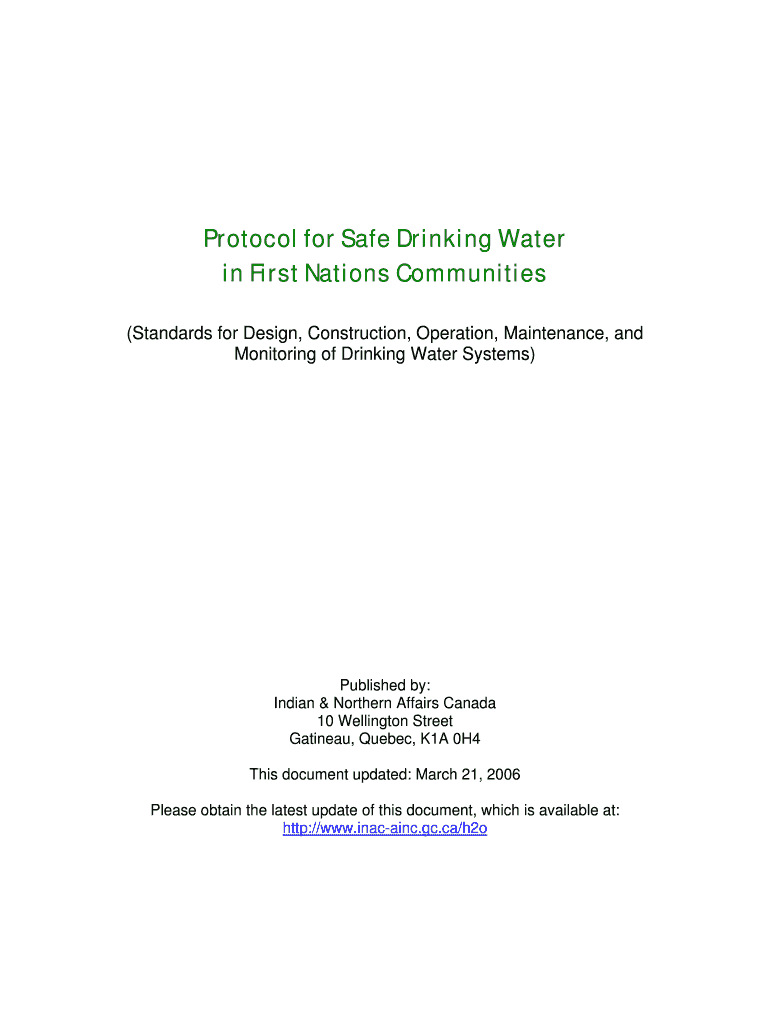
The Protocol for Safe Drinking Water in First Nations Communities serves as a comprehensive guideline aimed at ensuring access to safe and clean drinking water. It outlines essential standards for the design, construction, operation, maintenance, and monitoring of drinking water systems within First Nations communities. The primary goal is to safeguard public health by adopting a multi-barrier approach, addressing each stage from source protection to distribution.
- Source Protection: Ensures the integrity of the water source, whether surface water or groundwater, through conservation measures and pollution control.
- Treatment Standards: Specifies technological and processing requirements to remove contaminants and ensure water meets safety standards.
- Distribution System Management: Focuses on preventing contamination during the transportation of water to consumers by maintaining infrastructure integrity and implementing regular inspections.
How to Use the Protocol
Utilizing the protocol involves a step-by-step approach tailored to various user needs, whether for planning, operation, or emergency response. First Nations staff and relevant federal agencies can implement these procedures to maintain compliance with safety regulations.
- Assessment and Planning: Conduct a thorough assessment of existing water systems, identifying areas needing improvements or upgrades.
- Implementation: Apply specified guidelines during new construction or the upgrade of existing systems to meet water safety benchmarks.
- Monitoring: Continuously monitor water quality, using the protocol's guidelines to ensure any variations or potential issues are promptly addressed.
Key Elements of the Protocol
The protocol is composed of several key components that are critical for its effective application.
- Regulatory Compliance: Ensures adherence to national and local safety standards.
- Operational Plans: Details the procedures for daily operations, maintenance schedules, and responsibilities of staff.
- Emergency Response: Includes guidelines for actions during water quality emergencies, such as contamination or natural disasters.
Important Terms and Their Relevance
Understanding specific terms within the protocol is essential for accurate application and compliance.
- Multi-barrier Approach: A strategy that applies multiple layers of protection, from raw water source to tap.
- Contaminant: Any physical, chemical, biological, or radiological substance or matter in water.
- Operator Certification: Requirements ensuring personnel are adequately trained and certified to manage water systems effectively.
Legal Use and Compliance
Following the protocol is not just a recommendation but a legal necessity for ensuring public health. Non-compliance can lead to severe consequences, including potential legal action and health risks to communities.
- Federal Oversight: The protocol is supported by federal agencies responsible for enforcing water safety standards.
- Legal Obligations: Entities operating within First Nations communities must legally adhere to this protocol, with regular audits and inspections to ensure compliance.
Who Typically Uses the Protocol
The protocol is utilized by a variety of stakeholders within First Nations communities.
- Water System Operators: Implement daily operations in line with the guidelines.
- Community Planners and Engineers: Use the protocol for the design and construction of new water infrastructure.
- Federal and Local Health Agencies: Conduct inspections and provide oversight to ensure adherence to water safety standards.

Steps to Complete the Protocol
Completing the protocol involves a comprehensive process, addressing different aspects of water safety management.
- Training and Certification: Ensure all personnel involved in water management are adequately trained and certified.
- System Evaluation: Regularly assess the current condition and effectiveness of water systems against protocol standards.
- Quality Control: Implement regular testing and monitoring processes to guarantee that water quality remains within established safety parameters.
Examples of Using the Protocol
Practical applications of the protocol have successfully improved water quality in various communities.
- Case Study - Community A: Adoption of new filtration technologies in line with the protocol significantly reduced contaminant levels.
- Case Study - Community B: Implementation of emergency response measures helped prevent a public health crisis during a natural disaster.
Digital vs. Paper Version
The protocol is available in both digital and paper formats, ensuring accessibility and ease of use.
- Digital Format: Provides easier access and the ability to quickly search and update information.
- Paper Format: Offers a durable, offline version for field use where digital access may be limited.
Versions or Alternatives to the Protocol
Alternative documents and guidelines complement the main protocol, offering expanded guidance and related standards from different jurisdictions or agencies.
- Regional Supplements: May include additional regional requirements or adaptations based on local environmental conditions.
- Alternative Guidelines: Developed by specific agencies to offer variations on standard practices for unique or challenging scenarios.




