







Definition and Meaning
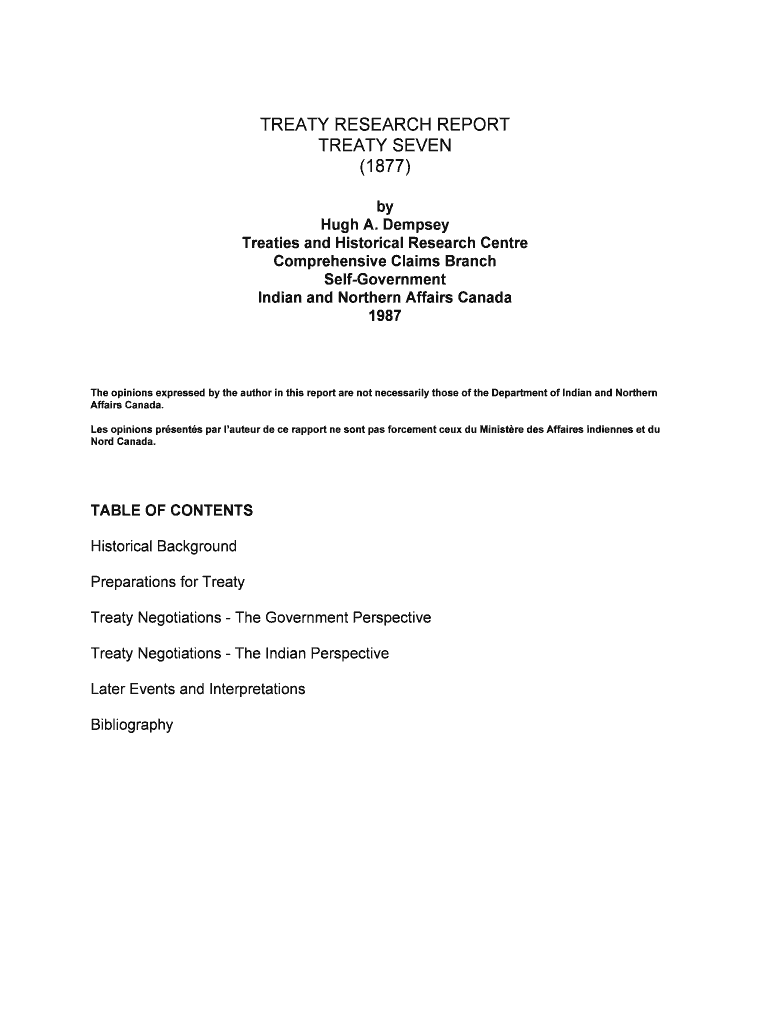
The Treaty Research Report - Treaty Seven (1877) provides a comprehensive overview of the historical agreement signed in 1877 between the Government of Canada and various Indigenous tribes, primarily the Blackfoot nation. The document details the efforts to acquire land for railway expansion, the perspectives and rights of the Indigenous peoples, and the specific terms agreed upon in the treaty.
Why Use the Treaty Research Report - Treaty Seven (1877)
This report offers invaluable insights into the legal, historical, and cultural aspects of Treaty Seven, making it an essential tool for historical researchers, legal professionals, and educators. By understanding this treaty, researchers can gain knowledge about Canadian-Indigenous relations and the broader context of treaty-making in North America.
How to Obtain the Treaty Research Report - Treaty Seven (1877)
To access the Treaty Research Report - Treaty Seven (1877), individuals can consult libraries, academic institutions, or government archives where such historical documents are typically held. Additionally, some government or educational websites may offer digital copies for public viewing or download.
Steps to Complete the Treaty Research Report - Treaty Seven (1877)
- Collection of Historical Context: Start by understanding the events leading to the treaty, including governmental land needs and the Indigenous peoples' perspective on land rights.
- Review of Terms: Examine the specific agreements made, such as land reserves, annual payments, education provisions, and resource allocations.
- Analysis of Subsequent Developments: Investigate how the treaty has been interpreted over time and its impact on current socio-political issues.
- Documentation and Verification: Collect and verify various primary and secondary sources to ensure the accuracy of information.
Key Elements of the Treaty Research Report - Treaty Seven (1877)
- Historical Background: Contextual information setting the scene for land negotiations.
- Terms of Agreement: Details on what the treaty promised to both the Canadian government and the Indigenous tribes.
- Current Impact: An analysis of ongoing effects on Indigenous land rights and resources.
Who Typically Uses the Treaty Research Report - Treaty Seven (1877)
Individuals involved in legal practices, academic research, and Indigenous advocacy often utilize this report. It serves those interested in historical treaty impacts and the progression of Indigenous rights within Canadian law and society.


Important Terms Related to the Treaty Research Report - Treaty Seven (1877)
- Indigenous Land Rights: Legal rights pertaining to the ownership and use of land by Indigenous peoples.
- Historical Treaties: Agreements made historically between colonial governments and Indigenous nations.
- Annexation: The process of incorporating land into a nation or state.
Legal Use of the Treaty Research Report - Treaty Seven (1877)
The report can be employed in legal contexts to interpret treaty rights and grievances. It is a valuable reference in litigations or communications concerning Indigenous land claims and resource entitlements under Canadian law.
Examples of Using the Treaty Research Report - Treaty Seven (1877)
- Academic Research: Scholars can utilize the report to draft papers on Canadian history or Indigenous law.
- Legal Proceedings: Lawyers may reference the document to argue cases regarding treaty rights and injustices.
- Educational Curriculums: Educators can incorporate the report in lesson plans to teach about the history and treaties of Indigenous peoples in Canada.




