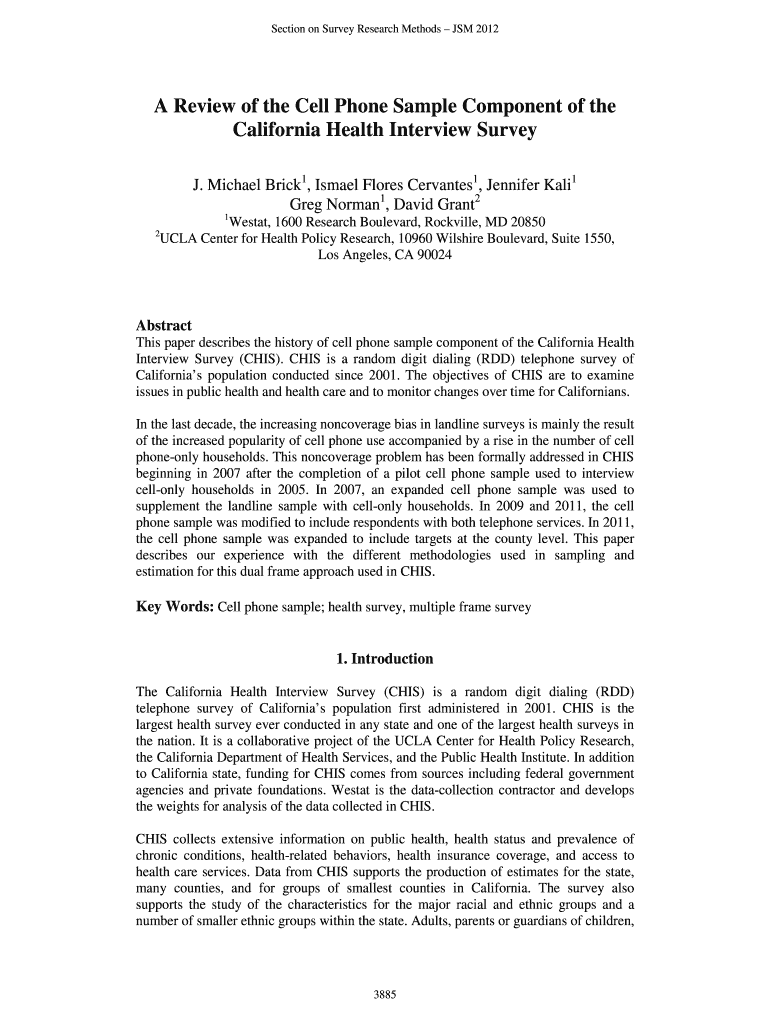







Definition and Meaning of the Cell Phone Sample Component
The Cell Phone Sample Component of the California Health Interview Survey (CHIS) is an integral element of the survey that addresses the increasing dominance of mobile phone usage. Since its introduction in 2001, this component has adapted to capture data from cell phone-only households, which traditional landline surveys might miss. It ensures the representation of California's diverse and technologically evolving population by including respondents who primarily use cell phones, thus providing a comprehensive view of public health trends within the state.
Steps to Complete the Survey Form
Completing the CHIS with the Cell Phone Sample Component involves a series of sequential steps designed to facilitate accurate and complete responses:
-
Contact Introduction: Respondents typically receive an initial contact via phone call, introducing the survey and its objectives.
-
Consent and Agreement: Participants must provide informed consent, understanding the voluntary nature and the confidentiality of the survey.
-
Questionnaire Participation: The survey includes questions aligned with health topics relevant to Californians, completed over the phone with a trained interviewer.
-
Response Verification: Respondents may be asked to verify certain answers or clarify responses to ensure data accuracy.
-
Completion Confirmation: Once the survey is completed, participants receive a confirmation of their involvement, including any additional resources or follow-up details.
Key Elements of the Cell Phone Sample Component
Several key elements make the Cell Phone Sample Component vital to the efficacy of the CHIS:
- Dual Frame Approach: Combines cell phone and landline samples for comprehensive reach.
- Adaptive Methodologies: Adjusts sampling techniques to account for changing telecommunication preferences.
- Diverse Representation: Captures insights across various demographics, including age, ethnicity, and socioeconomic status.
- Real-Time Data Collection: Utilizes current communication technology for prompt and efficient data gathering.
Who Typically Uses This Survey Component?
The Cell Phone Sample Component is primarily used by:
- Public Health Officials: To assess health behaviors and needs within the community.
- Researchers: Interested in the impact of technology on health survey methodologies.
- Policy Makers: To inform decisions affecting healthcare services and funding allocations.
- Academic Institutions: Conducting studies on health trends and telecommunication's role in data collection.
Legal Use of the Survey Data
Legal considerations for using survey data from the Cell Phone Sample Component include:
- Data Privacy Laws: Compliance with state and federal privacy regulations, ensuring interviewee information is protected.
- Informed Consent: Participants must be adequately informed about how their data will be used.
- Reporting: Survey findings are reported in aggregate form to prevent identification of individual respondents.
Important Terms Related to the Survey
Understanding specific terms is crucial for comprehending the survey's scope and impact:
- Cell Phone-Only Household: A home where the only telephone service is through a mobile phone.
- Dual Frame Sampling: A method combining different sampling frames to enhance survey coverage.
- Weighting Process: Adjusting survey results to reflect accurately the population being studied.
State-Specific Rules for Implementing the Survey
California-specific rules are integral to executing the Cell Phone Sample Component:
- Regulatory Compliance: Adherence to California's stringent privacy and data handling laws is required.
- Regional Variations: Implementation may vary across metropolitan and rural areas to account for demographic differences.
- Language Accessibility: Offers survey participation in multiple languages to accommodate California’s diverse population.
Examples of Using the Cell Phone Sample Component
Real-world examples illustrate the survey's implementation:
- Public Health Studies: Tracking obesity trends in regions with high cell phone-only households.
- Emergency Preparedness Research: Understanding communication preferences in Californian communities to improve responses.
- Mental Health Initiatives: Analyzing the prevalence of mental health concerns among different age groups.
Selecting these blocks ensures a thorough understanding of the Cell Phone Sample Component's significance and application within the CHIS, highlighting its role in enhancing California's public health data accuracy.