01. Edit your form online
Type text, add images, blackout confidential details, add comments, highlights and more.

Type text, add images, blackout confidential details, add comments, highlights and more.
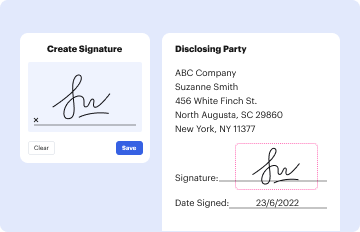
Draw your signature, type it, upload its image, or use your mobile device as a signature pad.

Send it via email, link, or fax. You can also download it, export it or print it out.
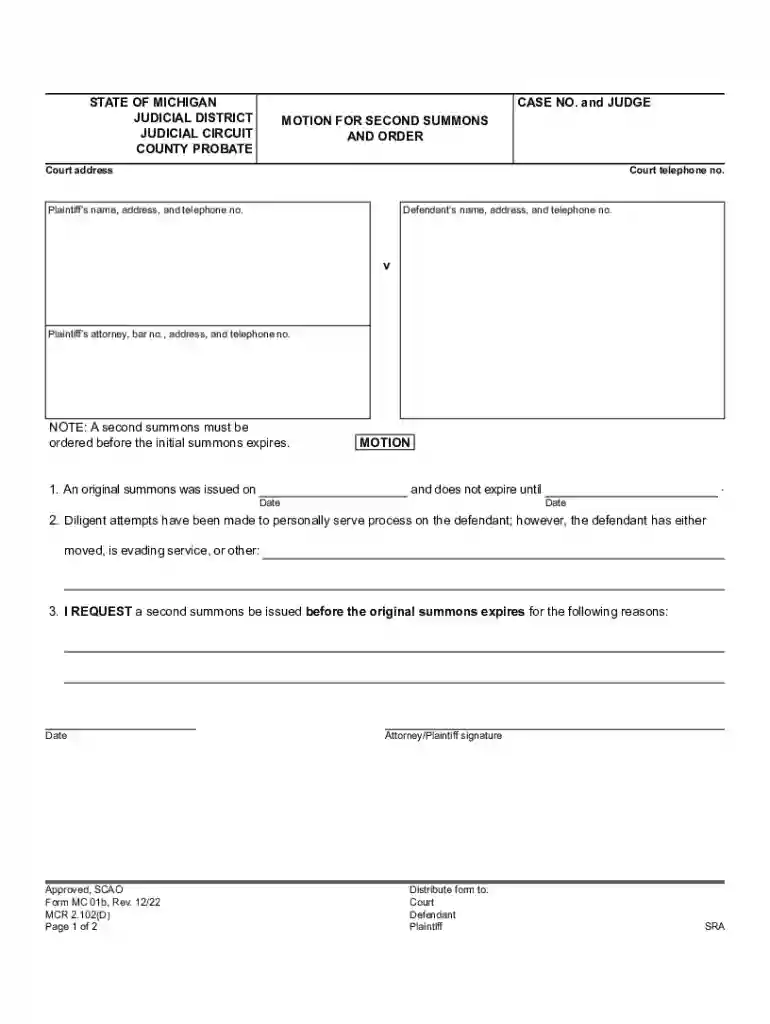
The term "Motion for Second Summons and Order" refers to a legal document filed in court when the initial summons in a legal case was not effectively served to the defendant. Such a motion is typically employed when attempts to deliver the original summons have failed, due to reasons such as the defendant relocating or actively evading service. This motion requests the court to issue another summons to ensure the proceedings can continue as intended.
Using the Motion for Second Summons and Order involves several steps. First, one must identify the reasons why the initial summons failed to reach the defendant. This could include reviewing attempts at different addresses or identifying any pattern of avoidance by the defendant. After establishing these grounds, the motion is prepared according to court rules, including detailed documentation of the failed attempts. The motion is then submitted to the court, often accompanied by affidavits from process servers or relevant evidence supporting the need for a second summons.
Identify the Requirement: Confirm that the original summons was not served and gather information on all attempts made.
Document Attempts: Collect documentation from process servers or any communications indicating why the summons was not delivered.
Draft the Motion: Prepare a detailed motion that outlines the need for a second summons, including all pertinent facts and evidence.
File the Motion: Submit the motion to the appropriate court along with any required fees.
Attend the Hearing: If required, attend a court hearing where the judge will review the motion and make a decision regarding the issuance of a second summons.
Court Details: Includes the name of the court, case number, and other relevant administrative information.
Parties Involved: Clearly states the plaintiff and defendant's names, along with any legal representatives.
Reason for Filing: A detailed explanation of why the original summons was not served and the necessity for a second summons.
Supporting Evidence: Affidavits and any evidence supporting the claim of non-service.
Requested Order: Specific relief sought, i.e., the issuance of a second summons.
This motion serves a strictly legal function, facilitating justice by ensuring that defendants are properly notified of legal proceedings against them. It provides a method for plaintiffs to continue pursuing their case even when initial attempts at service are thwarted. The motion must adhere to procedural rules and often requires substantial evidence to justify the issuance of a second summons, aligning with the principles of fairness and due process in the legal system.
State-specific rules can vary greatly and affect how a Motion for Second Summons and Order is handled. For instance, states like Michigan may have unique requirements concerning timelines for service attempts, acceptable forms of evidence, or additional procedural steps. It is crucial to consult state laws or a legal professional familiar with local rules to ensure compliance and effectiveness of the motion.
Summons: A document notifying a defendant of the commencement of legal proceedings against them.
Plaintiff: The party who initiates the lawsuit.
Defendant: The party against whom the lawsuit is filed.
Affidavit: A sworn statement providing evidence supporting the motion.
Service of Process: The procedure of delivering legal documents to a party to notify them of actions involving them.
One common example involves cases where a defendant has moved without updating their address, resulting in the initial summons being returned undelivered. Another scenario could involve defendants intentionally avoiding receipt by being absent during attempted deliveries. Such examples underscore the utility of the motion in providing a legal remedy to plaintiffs when standard service methods fail, allowing the case to proceed without undue delay.
Attention to filing deadlines is crucial. These deadlines can vary by state and the specific court handling the case. Typically, there is a set period within which service of the original summons must occur before a second summons can be requested. Missing these deadlines can result in dismissal of the motion or other legal setbacks. Always verify specifics with the relevant court to avoid complications.
Submitting the Motion for Second Summons and Order can be done through various means, depending on the court's procedural rules. Common methods include:
Online Submission: Utilizing electronic court filing systems.
Mail Submission: Sending all required documentation via certified mail to the court clerk's office.
In-Person Submission: Delivering documents directly to the court to ensure immediate receipt and processing.
Understanding these submission options ensures timely filing and compliance with court procedures.
We've got more versions of the Motion for Second Summons and Order form. Select the right Motion for Second Summons and Order version from the list and start editing it straight away!
At DocHub, your data security is our priority. We follow HIPAA, SOC2, GDPR, and other standards, so you can work on your documents with confidence.