01. Edit your form online
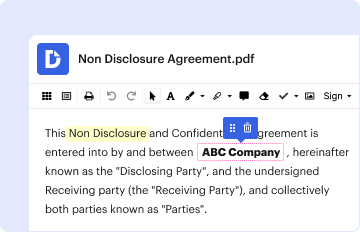
Type text, add images, blackout confidential details, add comments, highlights and more.

Type text, add images, blackout confidential details, add comments, highlights and more.
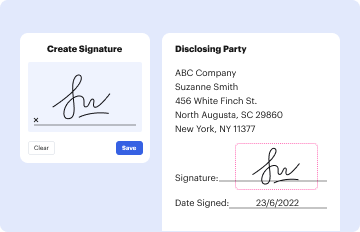
Draw your signature, type it, upload its image, or use your mobile device as a signature pad.

Send it via email, link, or fax. You can also download it, export it or print it out.
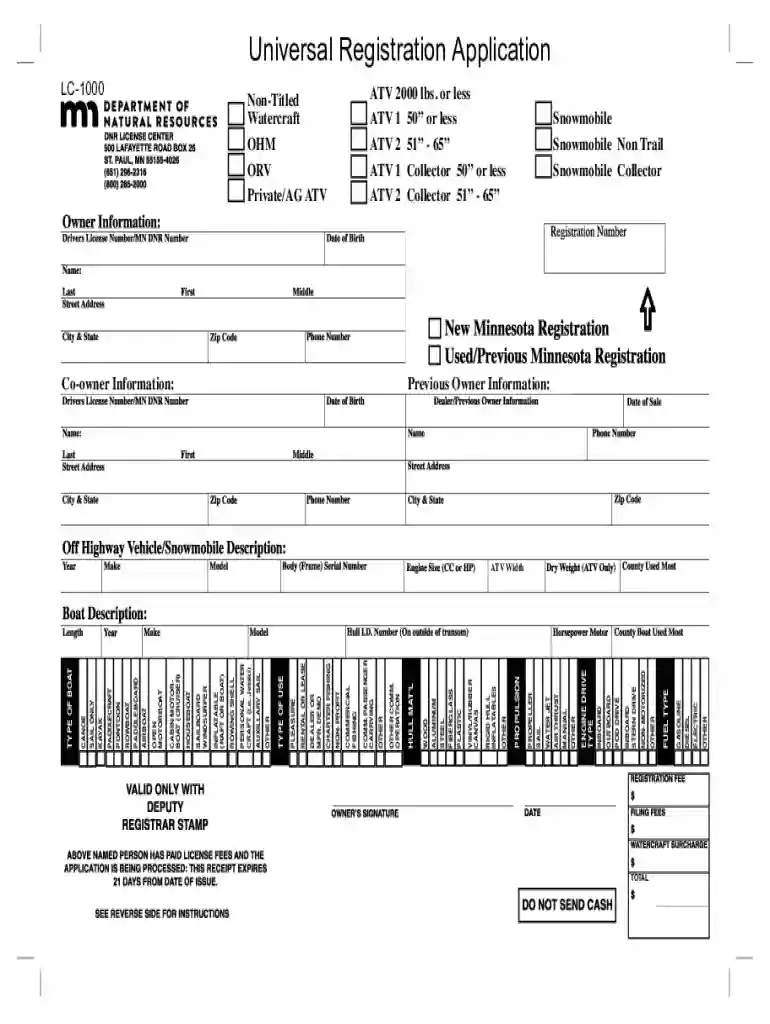
The Universal Registration Form is a standardized document primarily used for registering various types of vessels, vehicles, or business entities. It consolidates essential information into one comprehensive form, which simplifies the registration process across multiple jurisdictions or organizations. This form is designed to accommodate a broad range of registration needs, from marine vessels needing state registration numbers to business entities applying for licensing. By having a standardized format, it ensures that all necessary information is collected and documented uniformly, reducing the likelihood of errors or omissions.
Using the Universal Registration Form involves a straightforward process. Begin by carefully reading each section of the form to understand the information required. Typically, the form will include fields for personal or business details, registration details, and specific identifiers relevant to the entity being registered. For example, if registering a watercraft, you might need to provide the hull identification number, type of propulsion, and hull material. Double-check each entry for accuracy to avoid processing delays. If the form is being filled out for business purposes, ensure that the company details match official registration documents and certificates.
To obtain the Universal Registration Form, visit the specific website or office of the issuing agency relevant to your registration needs. For example, vessel registrations might be handled by a state’s Department of Natural Resources or a similar regulatory body. Often, the form can be downloaded in PDF format from the website, which you can fill out electronically or print for manual completion. Always verify that you have the most current version of the form, as updates might occur periodically to reflect changing regulations or requirements.
Completing the Universal Registration Form involves several key steps to ensure compliance and accuracy. Begin by gathering all essential information and supporting documents, which may include identification, registration numbers, and ownership documentation. Carefully fill out each section to avoid missing any required fields. Pay special attention to details such as serial numbers or specific names, since slight inaccuracies could lead to registration delays. After completion, review each entry thoroughly before signing and dating the form. If additional documents are required, ensure they are properly attached. Finally, submit the form via the preferred method indicated by the issuing authority, whether online, by mail, or in-person.
The Universal Registration Form encompasses several integral components that must be accurately provided:
The Universal Registration Form serves legally binding purposes, ensuring that registered entities comply with relevant regulations and standards. In the United States, the form must adhere to federal, state, and local legal frameworks pertinent to the type of registration. Legal compliance might involve verification of the authenticity of provided information, confirmation of ownership, and proof of eligibility. By signing the form, applicants affirm their understanding of, and agreement to, all pertinent laws and regulations, mitigating the risk of future legal disputes.
State-specific rules can significantly influence how the Universal Registration Form must be completed and submitted. Various states may have unique requirements regarding documentation, fees, and processing times. For instance, Minnesota mandates vessel registration through its Department of Natural Resources, with stipulations on types of boats and necessary documentation for co-owners and previous owners. Understanding and adhering to these state-specific rules not only facilitate smoother processing but also ensure full compliance with local laws.
Familiarity with several key terms is crucial when dealing with the Universal Registration Form:
There are tangible examples where the Universal Registration Form plays a pivotal role. For instance, a company expanding its operations across state lines may use the form to register its fleet of vehicles uniformly in each state, ensuring compliance with local regulations. Similarly, an individual acquiring a used boat might need the form to officially transfer ownership and obtain the requisite registration numbers. These scenarios demonstrate the form's versatility and utility in managing administrative processes efficiently.
We've got more versions of the Universal Registration Form form. Select the right Universal Registration Form version from the list and start editing it straight away!
At DocHub, your data security is our priority. We follow HIPAA, SOC2, GDPR, and other standards, so you can work on your documents with confidence.