






Definition & Meaning
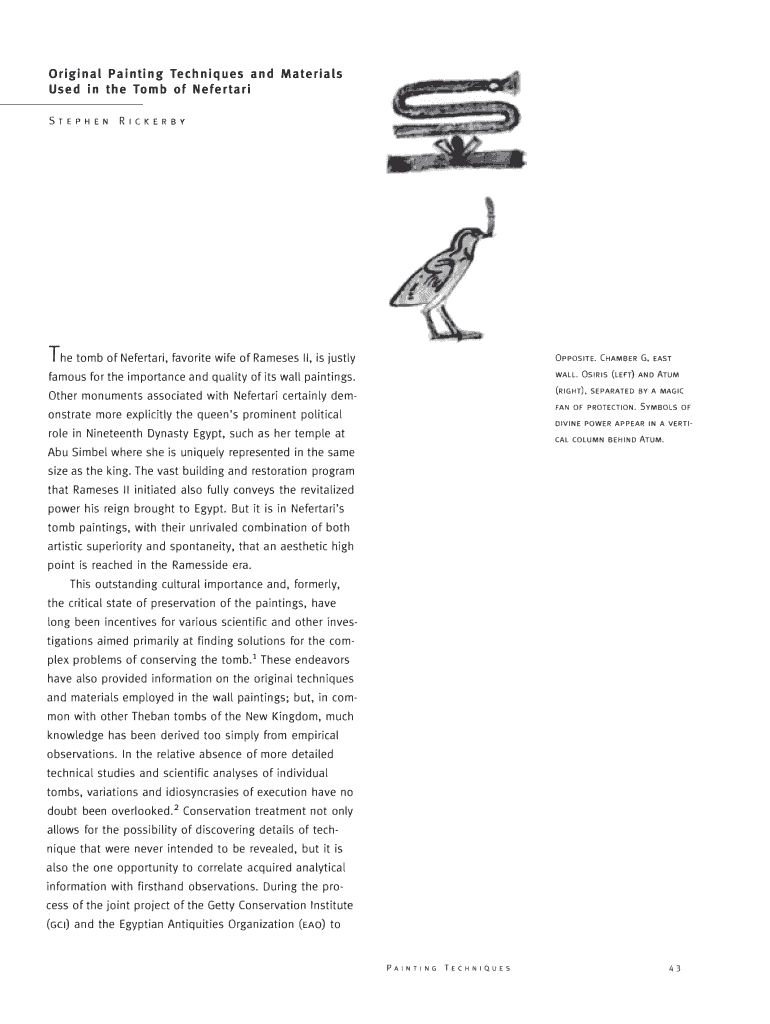
The "Art and Eternity Section 2 of 3 A full text document" refers to a specialized text focusing on the conservation, historical analysis, and artistic techniques related to ancient artworks, especially those found in significant historical sites. This section provides an in-depth exploration of artistic methods, materials used in art creation, and ongoing preservation efforts required to maintain the artwork's integrity over time. It serves as a comprehensive reference for art historians, conservators, and researchers interested in understanding the detailed nuances of ancient artistic practice and preservation.
Specific Focus Areas
- Artistic Techniques: The document examines methods and materials employed by ancient artists, offering insight into their craftsmanship.
- Conservation Challenges: Discusses the difficulties faced due to environmental and human factors, emphasizing preservation needs.
- Historical Context: Provides background on the creation and purpose of these artworks within their original cultural and historical settings.
Key Elements of the Document
The document is structured to cover critical themes essential for understanding ancient art and its preservation. The section is comprehensive, ensuring a deep dive into each aspect.
Core Components
- Material Analysis: Detailing various pigments and materials, revealing insights into the technological advancements of ancient times.
- Preservation Techniques: Outlines methodologies used in conserving these artworks, highlighting modern and traditional approaches.
- Environmental Impact: Discusses how environmental changes, like humidity and temperature shifts, affect the longevity of artwork.
How to Use the Document
This section acts as a guide for utilizing the document effectively, whether for academic research or practical conservation efforts.
Practical Applications
- Research Reference: Serves as a scholarly resource providing detailed analysis and context for academic studies.
- Conservation Guidelines: Acts as a manual for conservators to understand preservation techniques and the challenges they might face.
- Educational Tool: Useful for educational purposes, providing students and educators with a detailed overview of ancient art conservation.
Importance of the Document
Understanding the significance of this document is crucial, as it contributes to both historical knowledge and practical preservation efforts.
Benefits
- Preservation of Heritage: Ensures that valuable cultural heritage is appropriately maintained for future generations.
- Educational Advancement: Enhances knowledge in fields related to art history and preservation studies.
- Cultural Insight: Provides detailed understanding of ancient civilizations through their artistic expressions.
Who Typically Uses the Document
Identifying the primary audience helps in understanding the document's reach and application across various sectors.


Primary Users
- Art Historians: Utilize it for scholarly research and publications.
- Conservators: Apply the detailed techniques in their preservation work.
- Educators and Students: Serve as an educational resource in art history and archaeology courses.
Important Terms Related to the Document
Understanding terminology is vital for accurate interpretation and application of document content.
Key Terms Explained
- Pigment Analysis: Investigation of color materials used in art.
- Microclimatic Conditions: Environmental factors like temperature and humidity affecting artwork.
- Preservation Methods: Techniques employed to maintain the integrity of artworks over time.
Legal Use of the Document
Outlining the legal aspects helps in adherence to regulations and proper application in specific contexts.
Legal Considerations
- Rights and Reproduction: Understanding copyright and permissions for using and reproducing sections of the document.
- Conservation Regulations: Compliance with legal standards related to the preservation of cultural heritage.
- Research Ethics: Adhering to ethical standards while utilizing the document for research and educational purposes.
Examples of Using the Document
Providing case studies or examples aids in illustrating practical applications and benefits gained from using the document.
Real-World Scenarios
- Conservation Projects: Used in planning and executing conservation strategies on historical sites.
- Museum Exhibitions: Guides curatorial practices in interpreting and displaying ancient artworks.
- Academic Publications: Cited in scholarly articles focusing on ancient art and its preservation.
Steps to Access the Document
Describing the process for obtaining the document ensures ease of access for interested parties.
Access Procedures
- Institutional Access: Often available in academic libraries or through educational institutions for research purposes.
- Purchase/Subscription: Some sections may be available for purchase or via subscription to academic journals or repositories.
- Public Archives: Portions might be available in public archives dedicated to cultural heritage and art history resources.
Examples of Digital vs. Paper Versions
Understanding different formats helps users choose the most suitable version for their needs.
Comparative Overview
- Digital Version: Offers easy access and searchability, ideal for quick references and remote research.
- Paper Version: Preferred for in-depth study, where tactile interaction and physical note-taking are beneficial.
- Interactive Features: Digital formats often include hyperlinks and multimedia features enhancing the reading experience.
Software Compatibility
Ensuring compatibility with software solutions aids in effective use and management of document resources.
Compatible Platforms
- Document Editors: Can be integrated with various software like Microsoft Word or Google Docs for annotation and collaborative work.
- Reference Managers: Compatible with tools like EndNote or Zotero for easy citation and organization.
- Adaptability: Available in formats supporting diverse software, ensuring flexibility for different user needs.