




Definition and Meaning of Appellate Court Cause No
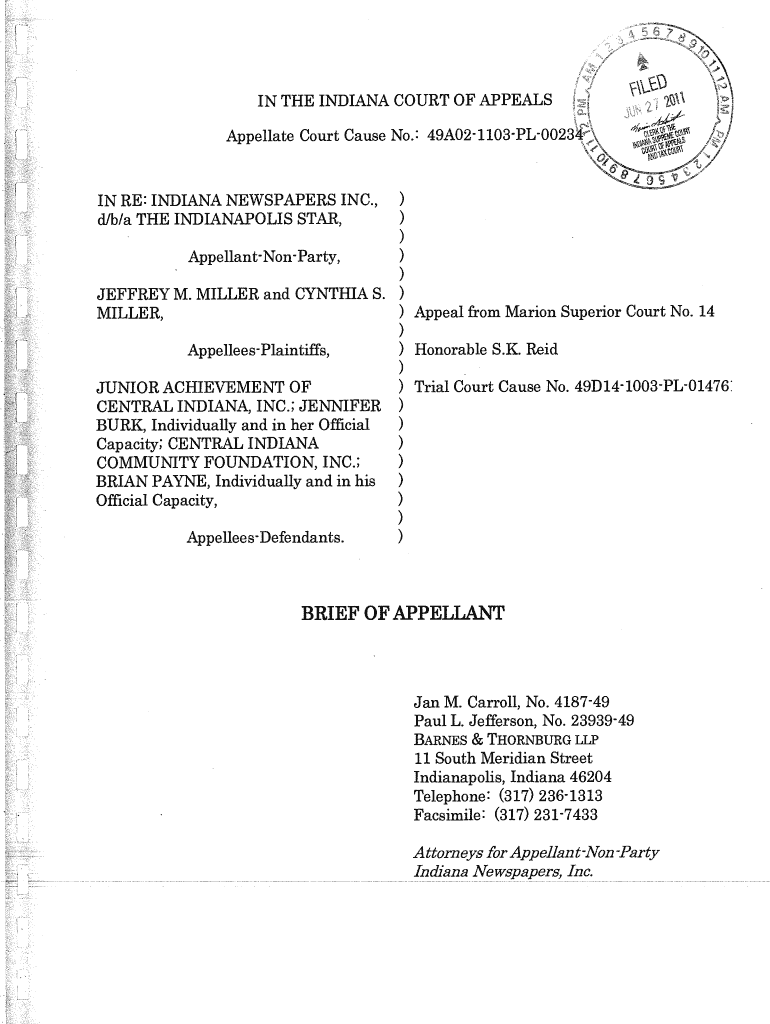
The term "Appellate Court Cause No" refers to a unique identifier assigned to cases on the docket of an appellate court. This number is critical for tracking and managing cases as they move through the appellate judicial system. Every appellate court assigns its own cause numbers, ensuring that each case can be accurately documented and referenced in legal proceedings. The cause number typically contains elements signifying the year of filing, court division or district, and a serial number that distinguishes each case within its filing year.
How to Use the Appellate Court Cause No
The "Appellate Court Cause No" is fundamental for locating and referencing specific case filings, documents, and orders within the appellate court system. Legal professionals, including lawyers and paralegals, routinely use this number when drafting legal briefs, motions, or appeals. For instance, when citing a previous judgment or requesting further information about a case, the specific cause number allows for precise and efficient retrieval from the court's records. By entering this number in court databases or during inquiries, individuals can swiftly access all documents and decisions related to that case.
How to Obtain the Appellate Court Cause No
To acquire an "Appellate Court Cause No," parties involved in an appeal must first file a notice of appeal with the trial court, which then forwards essential documents to the appellate court. Following the appellate court's acknowledgment of the appeal, it assigns a unique cause number to the case, which is communicated to the involved parties. Regular follow-ups with the court clerk or checking electronic filing systems are practical methods to ensure receipt of this number. Legal representatives can typically also obtain this information directly through their case management systems, which integrate with court filing systems.
Steps to Complete the Appellate Court Cause Filing
- Filing a Notice of Appeal: Initiate the appeal process by filing a notice of appeal with the correct trial court.
- Record Compilation: Collaborate with the trial court to ensure the complete record on appeal, including transcripts, is forwarded.
- Docketing with Appellate Court: Once the appellate court receives the necessary documents, the case is officially docketed, and a cause number is assigned.
- Verification and Acknowledgment: Confirm receipt of the appellate court cause number through formal acknowledgment from the court or access to the online docket system.
- Using the Cause Number: Apply the cause number in all related appellate documents and communications for accuracy and record-keeping.
Importance of the Appellate Court Cause No
Recognized as an essential component of legal documentation, the "Appellate Court Cause No" facilitates streamlined communication and case management within the judiciary. Its unique identifier attributes significantly improve the efficiency of legal processes by organizing case information, simplifying retrieval processes, and minimizing errors. This also ensures consistency in referencing and prevents discrepancies, which is particularly vital in maintaining legal precedents and integrity.
Parties Typically Using the Appellate Court Cause No
Use of the "Appellate Court Cause No" extends beyond the legal realm into various sectors. Litigants, attorneys, court clerks, and judges are the primary users. Additionally, researchers, journalists, and policymakers access this number when analyzing specific cases or the appellate process as a whole. Its reliable reference is invaluable for law libraries maintaining archives and for legal education, where students and academics frequently engage with real-world case studies.
Key Elements of the Appellate Court Cause No
- Year of Filing: Indicates the year in which the appeal was filed.
- Court Identifier: Represents the specific appellate court or its division/district.
- Serial or Sequence Number: A unique number assigned in sequential order as cases are filed.
- Case Type Indicator: Some systems might include letters or numbers indicating the nature of the case, such as civil or criminal.
State-Specific Rules for the Appellate Court Cause No
Every U.S. state's appellate system may have distinct mechanisms for determining an "Appellate Court Cause No." Variations can include differences in the numbering format, indexing methods, or additional identifiers denoting specific regional jurisdictions. Understanding state-specific protocols is crucial for legal professionals practicing in multiple states, as it ensures compliance and facilitates accurate legal proceedings. Some states may also provide comprehensive online access to case filings, while others might have more limited digital resources.
Examples of Using the Appellate Court Cause No
Consider a law firm representing a client in an appeal concerning a commercial dispute. The firm frequently uses the assigned "Appellate Court Cause No" to submit additional briefs, acquire court schedules, or track hearing dates. In another scenario, a business journalist may cite the cause number in an article's footnotes when referencing significant appellate decisions affecting industry regulations.
Legal Use of the Appellate Court Cause No
In legal practice, the "Appellate Court Cause No" serves as an authoritative denomination for case documents and decisions. It is indispensable for creating appeals, locating case law in legal databases, and ensuring precise communication among practitioners, further emphasizing its critical role in preserving the integrity and coherence of judicial processes.
Form Submission Methods (Online / Mail / In-Person)
Appellate court forms and documents associated with a cause number may be submitted through various channels, including:
- Online Filing: Many jurisdictions offer electronic filing systems, allowing attorneys to submit documents and navigate through case management systems easily.
- Mail: Physical submission remains an option for those without access to digital platforms, although it may involve longer processing times.
- In-Person: Direct submission to the court clerk's office might be required for certain documents, ensuring reliable handover and immediate acknowledgment.
By comprehensively understanding these sections, users gain insights into navigating the appellate court system effectively while utilizing the "Appellate Court Cause No" to its full potential.