





Definition & Meaning
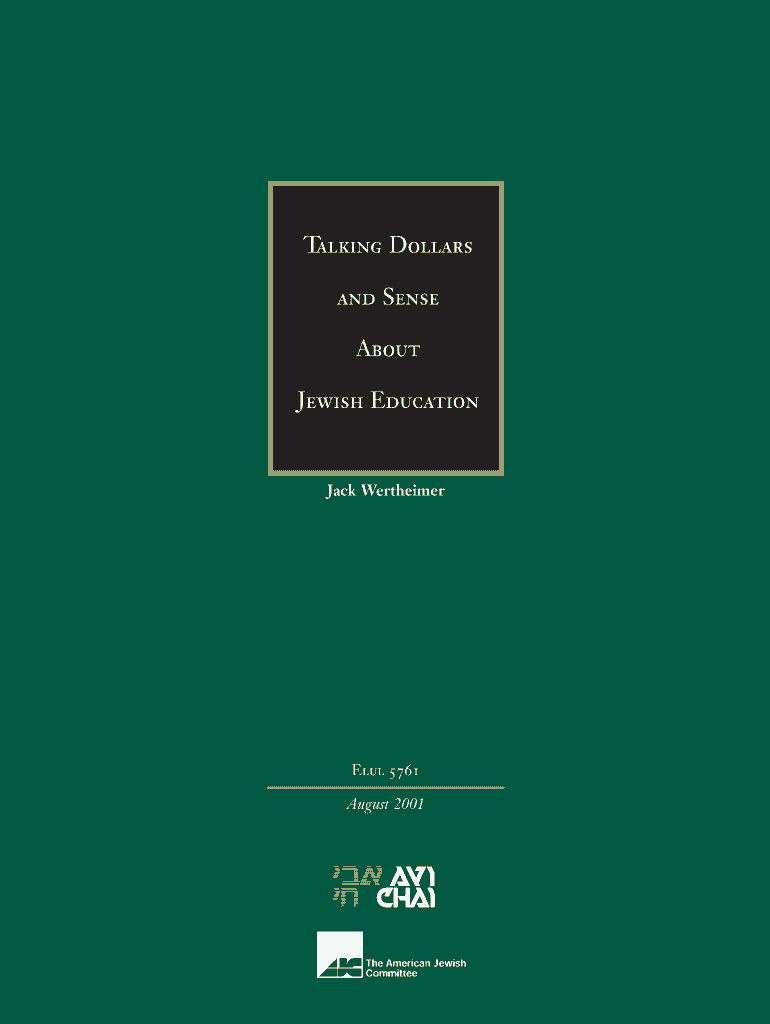
"Talking Dollars" refers to a method or tool used to facilitate understanding and communication about financial matters or educational funding, particularly within specific communities. It often involves discussions around budget allocation, expenditure transparency, and the overall financial planning required for educational institutions. This concept may include addressing the complexities of providing sustainable resources for educational initiatives, such as Jewish education, highlighting inventive funding strategies and methods to alleviate financial burdens like tuition costs.
Steps to Complete the Talking Dollars
-
Gather Necessary Information: Begin by collecting all relevant financial statements, documents, and records related to your educational institution or organization's funding.
-
Identify Key Financial Goals: Define what you intend to achieve with your Talking Dollars strategy, such as reducing tuition, increasing enrollment, or improving educational resources.
-
Analyze Current Financial Position: Review your collected data to understand your current financial status, identifying areas of strength and those needing improvement.
-
Draft a Financial Plan: Develop a detailed financial outline that includes budgets, projected expenses, and potential funding sources. Align this plan with your key goals.
-
Communication Strategy: Create a communication framework to ensure transparency and understanding among all stakeholders. Use clear language and visuals to explain complex financial data.
-
Implementation and Monitoring: Execute the financial strategy and regularly monitor progress. Adjust plans as necessary based on the results and feedback.
Why Should You Use Talking Dollars
Using Talking Dollars can significantly aid in demystifying financial discussions, fostering transparency and trust among stakeholders. For educational institutions, this method encourages strategic allocation of resources and prioritization of spending, which is crucial for long-term sustainability. By openly discussing financial objectives and challenges, organizations can collaboratively identify innovative solutions, ensuring educational initiatives are both effective and accessible. In the context of Jewish education, Talking Dollars can help navigate the unique funding challenges, enabling more community members to partake in these invaluable educational opportunities.
Important Terms Related to Talking Dollars
-
Budget Allocation: The distribution of available financial resources across different sectors within an organization.
-
Expenditure: The total amount of money spent by an organization, including operating costs and capital expenses.
-
Financial Transparency: Openness and clarity regarding financial operations, enabling stakeholders to understand and assess financial performance effectively.
-
Funding Strategy: A comprehensive approach aimed at identifying potential revenue sources and efficiently using funds to achieve the organization's goals.
Legal Use of the Talking Dollars
Talking Dollars, when used appropriately, must adhere to legal and ethical standards in financial management. This includes compliance with regulatory requirements concerning transparency, accountability, and responsible financial reporting. Institutions should conduct regular audits and maintain meticulous records to demonstrate compliance with local, state, and federal laws. Ensuring legal usage involves establishing internal policies that align with these regulations, thereby protecting the institution and its stakeholders.
Key Elements of the Talking Dollars
-
Clear Objectives: Defining specific financial and educational goals.
-
Stakeholder Engagement: Involving various stakeholders, including parents, educators, and financial experts, in the planning process.
-
Resource Assessment: Understanding the current availability and sourcing of funds.
-
Communication Plan: Ensuring all involved parties are informed and engaged through effective communication channels.
-
Feedback Mechanism: Setting up processes for regular feedback to measure the impact and adjust strategies.
Examples of Using the Talking Dollars
A Jewish day school aims to reduce tuition fees by employing a Talking Dollars approach. It carefully assesses its financial status, identifies cost-saving opportunities, and seeks alternative funding sources, such as grants and community donations. Through transparent reporting and stakeholder meetings, the school successfully reduces fees and increases accessibility without compromising educational quality. Another example could be a non-profit seeking to expand its educational programs through effective budgeting and allocation discussions within a Talking Dollars framework.
Required Documents
To effectively implement Talking Dollars, organizations need to compile a range of documents, including:
-
Financial Statements: Balance sheets, income statements, and cash flow statements for comprehensive financial analysis.
-
Budget Proposals: Detailed plans outlining expected income and expenditures.
-
Funding Sources Documentation: Agreements, grant proposals, or donation records that detail revenue sources.
-
Tax Filings: Up-to-date tax records that reflect compliance with tax authorities.
Eligibility Criteria
Organizations looking to employ a Talking Dollars approach must meet certain criteria, such as:
-
Non-Profit Status: Many educational funding strategies apply primarily to non-profit entities.
-
Community Focus: Initiatives must focus on benefiting a specific community or public interest.
-
Established Financial Need: The organization must demonstrate a genuine need for financial restructuring or support.
By ensuring adherence to these criteria, institutions can effectively leverage Talking Dollars to improve financial health and educational accessibility.