






Definition and Purpose of the Equipment Finance Agreement
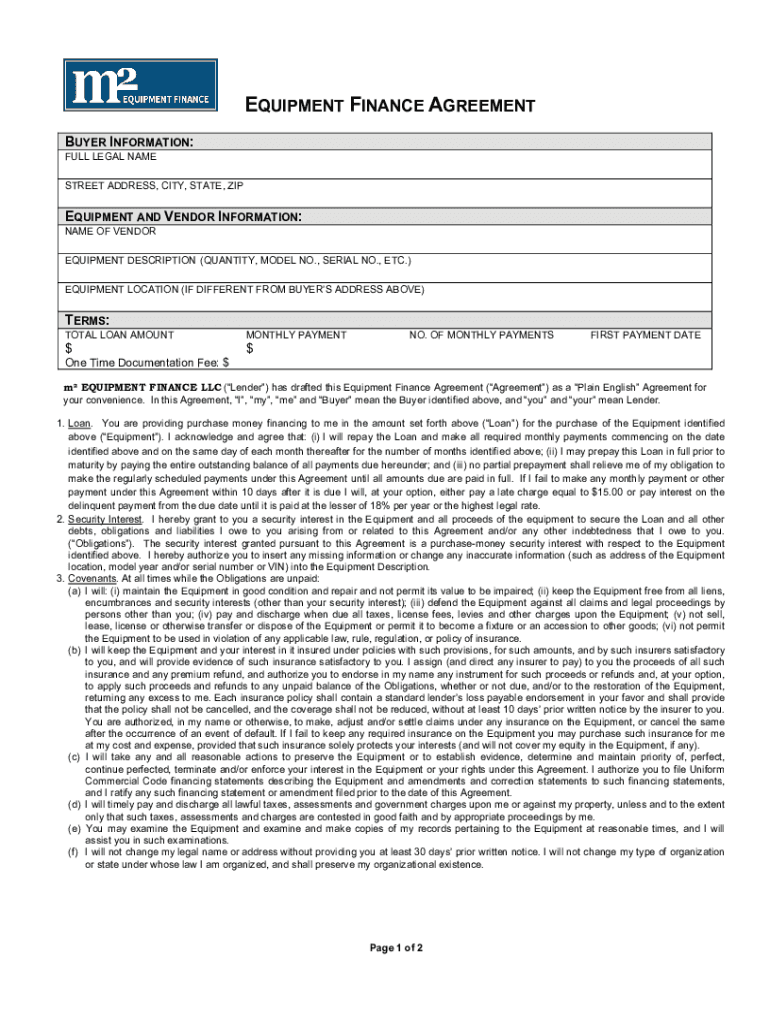
The Equipment Finance Agreement is a legal document that outlines the conditions for financing equipment purchases. It is utilized by businesses and individuals who need to acquire machinery, electronics, or other types of equipment without an upfront payment. Specifically, this agreement involves a lender financing the equipment cost, while the borrower agrees to repay the loan over a specified period. This arrangement ensures that the borrower can start using the equipment immediately, promoting operational efficiency and business growth.
Key Components
- Parties Involved: The agreement identifies the lender, who provides the financing, and the borrower, who receives the funds to purchase the equipment.
- Description of Equipment: Specific details such as model, serial number, and functionality of the equipment being financed are meticulously documented.
- Loan Amount and Repayment Terms: The total amount financed, interest rates, and repayment schedule are clearly outlined to avoid disputes.
- Security Interest: Establishes the lender's claim to the equipment as collateral until full repayment is made by the borrower.
How to Use the Equipment Finance Agreement
Using the Equipment Finance Agreement correctly ensures smooth transactions and compliance with legal standards. Users should familiarize themselves with its components to properly leverage the document.
Steps to Utilize
- Review the Equipment Description: Ensure the equipment details match the intended purchase.
- Understand Financial Obligations: Read and agree to the repayment terms and interest rates specified in the agreement.
- Confirm Legal Obligations: Acknowledge the covenants, warranties, and default conditions detailed within the document.
- Ensure Proper Signatures: Both parties must sign the agreement, confirming their legal and financial commitment.
How to Obtain the Equipment Finance Agreement
Acquiring the Equipment Finance Agreement is a straightforward process facilitated by DocHub's platform. The document is available in various formats, adaptable to user needs.
Methods of Access
- Online Download: The agreement can be accessed and downloaded from DocHub's website, allowing for immediate use.
- Editable Formats: Once downloaded, it can be edited to include specific details regarding the transaction, using tools provided by DocHub.
- Mobile Access: The agreement is available via mobile devices, ensuring users can manage it from any location conveniently.
Steps to Complete the Equipment Finance Agreement
Completing the Equipment Finance Agreement requires attention to detail and adherence to the specified instructions. Follow a systematic approach to ensure accuracy and compliance.
- Identify Parties: Fill in the names, addresses, and contact details of both the lender and borrower.
- Detail the Equipment: Provide an accurate description of the equipment, including any identification numbers.
- Outline Financial Terms: State the loan amount, repayment terms, and any penalties for late payments.
- Set Security Features: Detail any security interests or collateral requirements linked to the finance agreement.
- Review and Sign: Both parties should carefully review the document, sign it, and keep a copy for their records.
Importance and Benefits of Using the Equipment Finance Agreement
The Equipment Finance Agreement is invaluable for businesses aiming to enhance their capabilities without significant initial capital expenditure.
Advantages
- Facilitates Immediate Equipment Use: Enables businesses to access necessary equipment immediately, enhancing productivity and efficiency.
- Predictable Financial Planning: Provides clarity on repayment schedules and financial commitments, aiding in accurate budgeting.
- Risk Mitigation: By securing the lender's interest with collateral, the agreement reduces the risk of default.
Key Terms and Clauses in the Equipment Finance Agreement
Understanding crucial terms and clauses in the Equipment Finance Agreement can prevent misunderstandings and legal complications.
Essential Terms
- Covenants: Borrower obligations regarding equipment maintenance and usage.
- Warranties: Statements about the condition or performance of the equipment, as stipulated by the vendor.
- Default Conditions: Situations outlined in the agreement that may lead to the contract's termination or legal action if breached.
Legal Aspects of the Equipment Finance Agreement
Legal compliance is a critical component of the Equipment Finance Agreement. Being informed about the legal framework can protect both parties' interests.
Jurisdiction and Disputes
- Governing Law: Specifies the jurisdiction whose laws govern the agreement, impacting how potential disputes are resolved.
- Dispute Resolution: Details procedures for handling disagreements, potentially through mediation, arbitration, or litigation.
Examples and Case Studies of Using the Equipment Finance Agreement
Practical, real-world scenarios illustrate how the Equipment Finance Agreement benefits all parties involved, fostering mutual trust and business success.
Case Study Examples
- Startup Businesses: New companies use these agreements to acquire necessary equipment, like computers and telecommunications systems, without disrupting cash flow.
- Manufacturing Firms: Large-scale manufacturers frequently finance expensive machinery to keep up with production demands and technological advancements.
By integrating these elements, users leverage the Document to facilitate and secure their equipment financing needs effectively.