Definition & Meaning
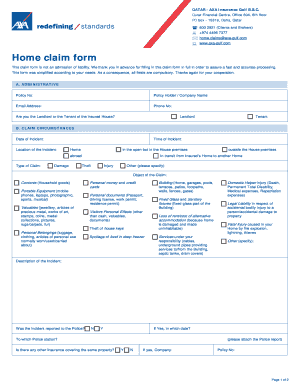
A home insurance claim form is a standardized document used by policyholders to file a claim with their home insurance provider. This form serves as a formal request for compensation or settlement in the event of damage, loss, or theft involving the insured property. Typically, the form requires detailed information about the policyholder, the insurance policy, and the nature of the incident. The primary function of this document is to initiate the claims process, allowing insurance companies to assess the validity and extent of the claim.
The home insurance claim form is integral in identifying the specifics of the damage or loss. This includes detailing the cause, extent, and the estimated costs associated with the damages. The form underscores the importance of providing accurate and complete information to expedite the claims process and ensure a fair assessment.
Key Elements of the Home Insurance Claim Form
The home insurance claim form includes several critical sections that must be accurately completed to ensure a successful claim submission. These key elements encompass:
- Policy Details: Policy number, coverage type, and the name of the insured.
- Incident Description: A comprehensive account of the event that caused the damage or loss, including the date, time, and location.
- Claimant Information: Contact details of the policyholder, including full name, address, and phone number.
- Loss Estimate: An approximation of the financial impact of the incident, covering repairs, replacements, and additional expenses.
- Supporting Documentation: Attachment of relevant documents, such as receipts, photographs, repair estimates, or police reports, which substantiate the claim.
- Declaration: The policyholder’s affirmation that the information provided is truthful and accurate, often accompanied by a signature.
Each of these elements plays a vital role in the overall submission and credibility of the claim. Failing to accurately provide any of these can result in delays or denial of the claim.
Steps to Complete the Home Insurance Claim Form
Successfully completing a home insurance claim form involves several structured steps, each critical to ensuring the claim is handled efficiently:
- Gather Information: Collect all necessary policy and incident information, including relevant documents like police reports or photographic evidence.
- Fill Out Personal and Policy Details: Enter all personal data and specific insurance policy numbers as required on the form.
- Describe the Incident: Provide a detailed and factual account of the incident, ensuring clarity and conciseness in your description.
- Estimate Costs: Include as accurate an estimate as possible of the financial impact, supported by invoices, repair estimates, and other relevant financial documents.
- Attach Supporting Documents: Compile and attach any supportive evidence, such as photos, receipts, and communications with authorities or third parties involved.
- Review and Sign: Carefully review the entire form for completeness and accuracy, then sign the declaration section to affirm the truthfulness of the provided information.
Each step builds upon the previous, ensuring all required aspects of the form are addressed thoroughly, minimizing the chance of processing delays.
How to Use the Home Insurance Claim Form
The home insurance claim form serves as a critical tool for policyholders seeking to claim insurance benefits post-incident. Using this form requires understanding its layout and ensuring every section is completed accurately:
- Identify the Correct Form: Ensure the form matches your specific insurance provider and policy requirements. Often, versions may differ depending on the provider or the nature of the claim.
- Consult Guidelines: Review any provided guidelines or instructions accompanying the form, as these can provide valuable insights into the desired level of detail and supporting documentation.
For those unfamiliar with insurance vernacular or claims processes, consulting with an insurance agent or professional can also provide additional clarity and assurance during the completion process.
Required Documents for Home Insurance Claims
When filing a home insurance claim, specific documents are essential to substantiate the claim and facilitate a prompt review. These typically include:
- Proof of Loss: Detailed itemization of lost or damaged properties along with valuations.
- Repair Estimates: Professional evaluations or estimates detailing the costs involved in repairing or replacing damaged property components.
- Photographic Evidence: Visual proof of the incident damage, often before and after the event, to clearly demonstrate the extent of the loss.
- Police or Incident Reports: Documented reports from relevant authorities if the damage or loss was due to theft, vandalism, or similar events.
- Receipts and Bills: Original purchase receipts of lost items or invoices showing incurred costs due to temporary arrangements like accommodations.
Each document plays a significant role in backing up the details declared within the claim form, ensuring consistency and accuracy during assessment.
Legal Use of the Home Insurance Claim Form
Home insurance claim forms are governed by legal standards and regulations to protect both the insurer and insured. Using the form legally requires adherence to specific conditions:
- Accurate Declaration: All information furnished in the form must be truthful and reflect the actual scenario. Incorrect or misleading data can result in claim denial or legal repercussions.
- Policy Compliance: Ensure all actions taken while filing the claim align with the stipulations outlined in the insurance policy agreement. Failure to remain within these terms can invalidate the claim.
Insurance fraud, either through misinformation or manipulation of evidence, is a legal offense. Hence, honesty and transparency are paramount when completing the form.
Examples of Using the Home Insurance Claim Form
Practical scenarios illustrate the importance and process of accurately using the home insurance claim form:
- Storm Damage: A homeowner discovers significant roof damage following a severe storm. Completing a claim form with photographs, weather reports, and contractor repair estimates provides the necessary evidence for a claim.
- Fire Incident: A kitchen fire results in smoke and water damage throughout the property. The homeowner must compile detailed repair estimates alongside a fire department report to substantiate the damages.
These real-world examples demonstrate the critical importance of thorough documentation and accurate reporting when filing a home insurance claim, emphasizing the role of the claim form as a fundamental tool in the process.
Form Submission Methods
Submitting a home insurance claim form can vary depending on the provider’s available channels. Typically, the common methods include:
- Online Submission: Many insurance providers offer a digital portal where claim forms can be completed and uploaded along with electronic versions of all supporting documents.
- Mail: Traditional mail submission involves sending hard copies of the completed form and supporting evidence directly to the insurance company’s claims department.
- In-Person: Some insurers allow claim form submissions at local offices, which can be beneficial for policyholders seeking personal assistance or confirmation of receipt.
Choosing the most suitable method often depends on personal preference, the immediacy of the claim, and the submission options your insurer offers.