





Definition and Importance of the Immigration Court Practice Manual
The Immigration Court Practice Manual serves as a vital resource for legal practitioners in managing the procedural aspects of immigration cases. This manual provides detailed instructions and guidelines tailored to the proceedings within U.S. immigration courts, ensuring that all actions taken are in alignment with federal protocols. It outlines the expectations for filings, hearings, and specific processes that govern immigration court functions, fostering uniformity and understanding among court participants. The manual’s comprehensive coverage is crucial for attorneys, court personnel, and respondents, as it helps minimize errors and enhances the efficiency of case processing.
How to Use the Immigration Court Practice Manual
Utilizing the Immigration Court Practice Manual effectively involves familiarizing oneself with its structure and pertinent sections. The manual guides users through:
- Case Filing: Instructions for submitting documents, with emphasis on format and deadlines.
- Motion Practice: Detailed procedures on how to file motions and the necessary components.
- Hearing Preparation: Guidance on preparing for hearings, including witness and evidence requirements.
- Regulatory Compliance: Steps to ensure compliance with immigration law and court protocols.
Practitioners should regularly consult the manual as it is frequently updated to reflect changes in laws and court procedures.
How to Obtain the Immigration Court Practice Manual
The Immigration Court Practice Manual is accessible through the Executive Office for Immigration Review (EOIR) website, which is part of the U.S. Department of Justice. This ensures that practitioners have access to the most current version, reflecting any amendments or updates. Some legal libraries may also hold physical copies, although the digital version is preferred for its up-to-date content. Users can download the manual in PDF format, which allows easy navigation and searchability.
Key Sections of the Immigration Court Practice Manual
Understanding the key elements of the manual is essential for users to navigate complex cases efficiently:
- Filing and Service: Guidelines on how to file documents appropriately and serve them to other parties involved.
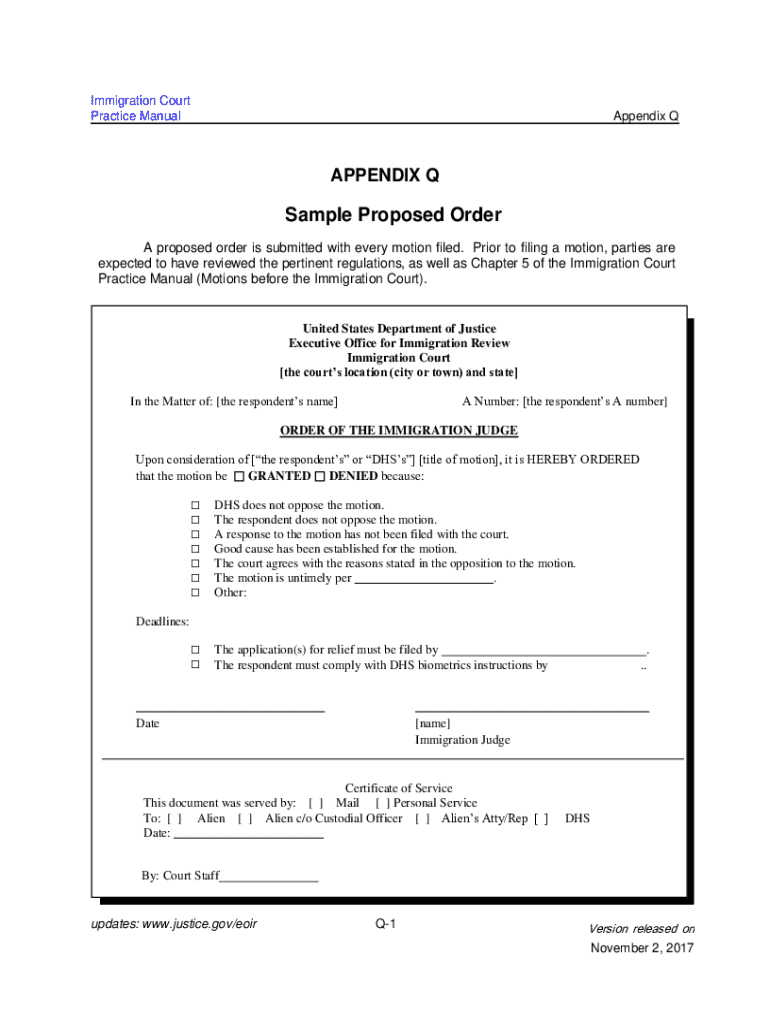
- Motions: Specific instructions and examples of various motions, such as motions to reopen or continue cases.
- Evidence: Standards regarding the submission and admissibility of evidence in court.
- Appeals: Processes for appealing immigration judge decisions, including deadlines and required documentation.
These sections are crafted to provide clarity on procedural matters, ensuring consistent application across cases.
Steps to Complete Forms in the Immigration Court Practice Manual
When completing forms associated with the Immigration Court Practice Manual, follow these steps:
- Identify the Correct Form: Determine which form is applicable based on the nature of the filing.
- Gather Required Information: Collect all necessary data and documentation needed for complete and accurate form submission.
- Follow Manual Guidelines: Adhere to the specific instructions outlined in the manual, ensuring correct formatting and content.
- Double-Check for Accuracy: Review the form for errors and verify that all sections are filled out correctly before submission.
- Submit Within Deadlines: Ensure timely submission to avoid any processing delays or penalties.
Legal Use and Compliance
Legal compliance with the Immigration Court Practice Manual is non-negotiable for practitioners representing clients in immigration court. The manual sets forth requisite procedures that must be followed to ensure fair and standardized treatment across different cases. Breaching these established protocols may result in negative legal consequences, including case dismissals or sanctions against the legal representative. Practitioners are encouraged to leverage the manual to strengthen their case strategies and maintain compliance with statutory requirements.
Who Typically Uses the Immigration Court Practice Manual
The primary users of the Immigration Court Practice Manual include:
- Immigration Attorneys: Who rely on the manual for guidance on case management and procedural compliance.
- Immigration Judges: Who refer to the manual for standardized processes across different cases and jurisdictions.
- Law Students and Educators: Who utilize the manual as an educational resource to understand real-world legal applications.
- Respondents: Who may reference the manual to better understand the process and rights during their own proceedings.
The manual shepherds these users through intricate immigration legal landscapes, ensuring informed participation in legal proceedings.


Examples of Using the Immigration Court Practice Manual
Real-world scenarios illustrate the manual's application:
- Case Management: Attorneys use the manual to determine the appropriate timeframes and document requirements for case filings.
- Motion Preparation: Legal teams reference specific sections when crafting motions to reopen or reconsider closed cases, ensuring they meet all necessary criteria.
- Court Appearances: During hearings, lawyers structure their arguments and evidence presentation based on guidelines within the manual.
These examples highlight its indispensable role in facilitating effective legal practice within immigration courts.
State-Specific Rules and Considerations
Although the Immigration Court Practice Manual outlines federal guidelines, practitioners should be aware of any state-specific rules that may interact with or impact federal immigration procedures. While immigration law is predominately federal, state-level laws can occasionally influence certain aspects of an immigration case, such as identification documentation. Understanding the intersection between state and federal regulations can prove critical when advising clients or presenting cases in U.S. immigration courts.