






Definition & Meaning
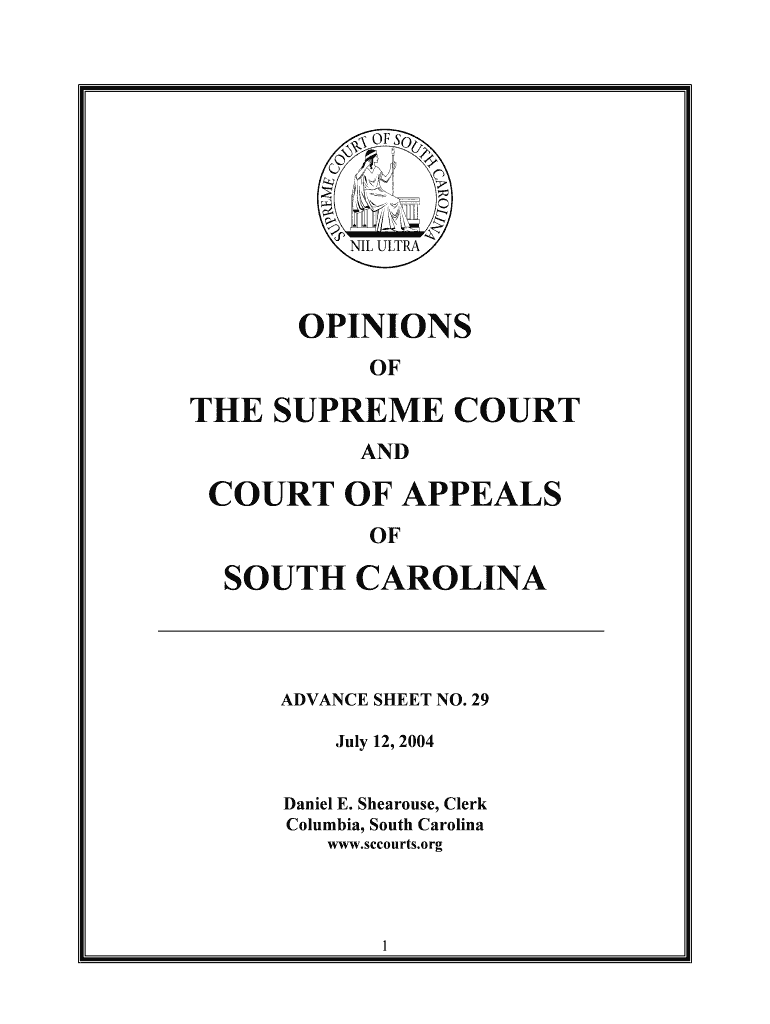
The Supreme Court of South Carolina, also known simply as the South Carolina Judicial, is the state's highest court. It holds the authority to interpret the constitution and laws of South Carolina. The court reviews cases from lower courts and has jurisdiction over various legal issues, including disciplinary matters and procedural appeals. Its decisions have a significant impact on legal precedents within the state.
Role in the Judicial System
- Final Appellate Authority: All final appeals in South Carolina's judicial system are taken up by the Supreme Court.
- Interpretation & Enforcement: It interprets state laws, ensuring they align with federal standards, while also overseeing their enforcement.
- Administrative Functions: The court manages lower courts, setting standards for judicial conduct and overseeing attorney discipline.
Examples
- Disciplinary Actions: The Court has the authority to discipline legal professionals as seen in the case of R. Daniel Day, Jr.
- Probate Cases: They determine issues such as will interpretations, as illustrated in the Bessie P. Haile case.
Steps to Complete the Form
Understanding how to navigate and complete any legal form associated with the Supreme Court of South Carolina is crucial.
- Obtain the Form: Visit the official South Carolina Judicial Department website to access required forms.
- Review Required Information: Ensure you know what personal, legal, or case-specific information is needed.
- Fill Out Details: Carefully provide all relevant details, double-checking for accuracy.
- Attach Required Documents: Include all supporting documentation as specified on the form.
- Submit: Follow submission guidelines, whether via mail, online, or in person.
Practical Tips
- Double-Check Information: Errors can delay processing or lead to inaccuracies in legal interpretations.
- Consult Legal Advice: Consider seeking assistance from a legal professional for complex issues.
Key Elements of the Form
Understanding the core components of the form ensures all necessary information is provided.
Essential Information
- Personal Information: Such as name, address, and contact details.
- Case Details: Information about the legal case, such as court dates and involved parties.
- Legal Arguments: Summaries of legal arguments or issues being presented for appeal.
Documentation
- Supporting Evidence: Documents backing up claims or arguments.
- Legal References: Relevant laws or prior case rulings applicable to the case.
Who Typically Uses the Form
Individuals and entities involved in legal proceedings might need to use forms associated with the Supreme Court of South Carolina.


Typical Users
- Attorneys: Presenting or appealing a case.
- Individuals: Representing themselves in legal matters.
- Organizations: Such as businesses involved in litigation or legal disputes.
Scenario Examples
- Individual Appeals: A resident seeking to appeal a lower court's decision.
- Attorney Submissions: Legal professionals submitting case details or further documentation.
State-Specific Rules for the Form
There are specific regulations governing how forms must be submitted and completed within South Carolina.
Compliance Requirements
- Filing Deadlines: Adhere strictly to submission deadlines.
- Procedural Rules: Follow all procedural guidelines for filing and appeals set by state laws.
Differences and Nuances
- Unique State Laws: Understanding laws that are specific to South Carolina.
- Case Precedents: Familiarity with prior rulings that could affect the current legal questions.
Legal Use of the Form
The purpose of the form can vary across different legal applications and functions.
Legal Contexts
- Appeals Processes: Documenting the grounds for appeal.
- Judicial Requests: Submissions for hearings or legal clarifications.
- Disciplinary Matters: Forms related to attorney conduct cases.
Form Submission Methods
Proper submission of forms is crucial for the legal process.
Methods Available
- Online Submission: Access and submit forms through the judicial department's digital platform.
- Mail-In Form: Sending physical forms via postal mail.
- In-Person Submissions: Hand-delivering to a court office.
Best Practices
- Confirmation of Receipt: Always obtain a confirmation for submissions where possible.
- Method Selection: Choose the method that ensures timely and secure delivery of documents.
Important Terms Related to the Form
Familiarity with relevant legal terminology is necessary for effective form completion.
Glossary of Terms
- Appellant: The party who files an appeal.
- Amicus Curiae: A "friend of the court" offering information or expertise in a case.
- Petitioner: The individual or party initiating a lawsuit.
Terminology Use
- Plain Language: Avoid complex jargon unless required for legal precision.
- Consistent Use: Ensure terms are used consistently across documentation.
Examples of Using the Form
Practical examples highlight how and when these forms are utilized.
Case Studies
- Attorney Disciplinary Case: Form used for reporting and addressing ethical violations.
- Probate and Estate Disputes: Resolving legal questions about inheritance and will interpretation.
- Workers' Compensation Appeals: Documenting and appealing workers' compensation decisions.
Penalties for Non-Compliance
Failure to properly complete or submit legal forms can have consequences.
Possible Penalties
- Dismissal of Case: Incomplete forms could result in case dismissal.
- Fines or Sanctions: Penalties may apply for late or incorrect submissions.
- Legal Setbacks: Missing crucial data can impede legal proceedings.
Avoiding Penalties
- Diligence in Submission: Follow all guidelines meticulously.
- Legal Counseling: Consulting with lawyers to ensure forms are filled correctly.