






Definition and Meaning
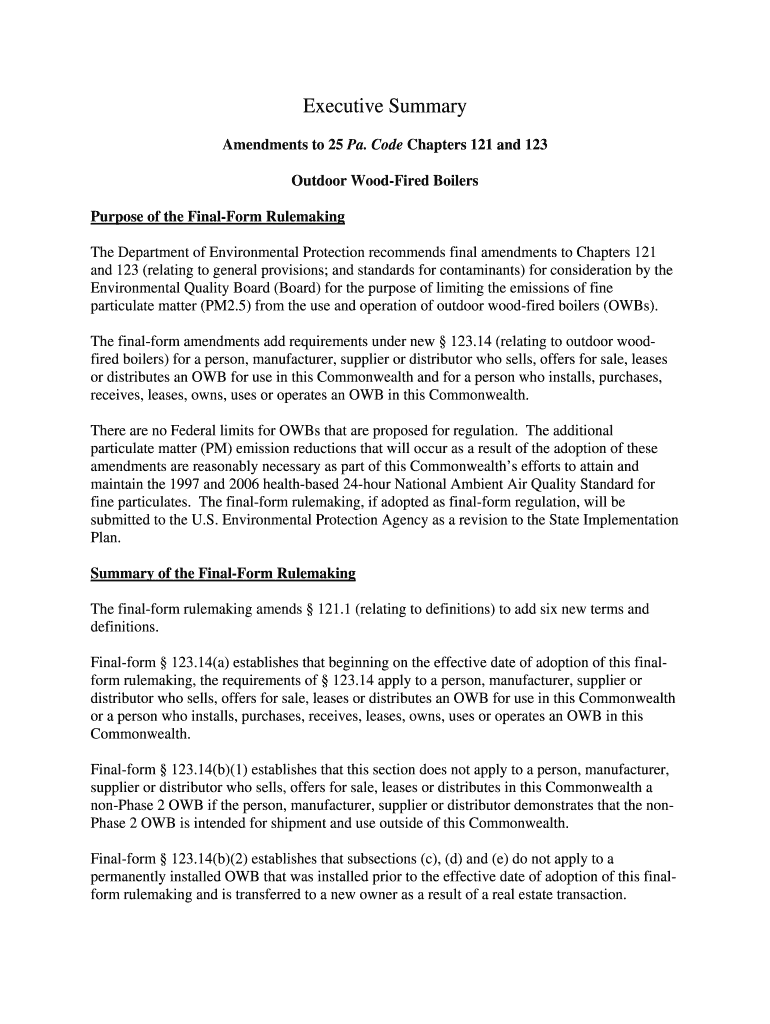
The "Amendments to 25 Pa - files dep state pa" refers to modifications made to Title 25 of the Pennsylvania Code, which encompasses environmental regulations. These amendments involve regulatory adjustments instituted by the Pennsylvania Department of Environmental Protection (DEP) aiming to address various environmental concerns, particularly focusing on emission standards and air quality improvements. The modifications seek compliance with updated federal and state environmental policies and often reflect changes that impact both industries and individual stakeholders within Pennsylvania.
How to Use the Amendments to 25 Pa - Files DEP State PA
To effectively utilize the amendments, stakeholders such as manufacturers, environmental consultants, and legal advisors must thoroughly review the updated regulations. Key steps include:
-
Assess the Impact: Analyze how the amendments affect your operational processes or compliance requirements. This may involve consulting with legal experts or environmental professionals.
-
Update Compliance Strategy: Revise existing compliance strategies or create new ones to align with the amendments. This could include developing new operational procedures or altering equipment to meet new standards.
-
Training and Communication: Educate relevant personnel about the changes and ensure they understand how these affect their roles. Establish communication channels to clarify queries or concerns about the amendments.
-
Monitoring and Reporting: Implement or adjust monitoring systems to ensure compliance. Regularly review operations to guarantee adherence to the new regulations and report any requisite data to regulatory bodies as required.
How to Obtain the Amendments to 25 Pa - Files DEP State PA
You can access the amendments through multiple channels:
- Official State Websites: Visit the Pennsylvania Department of Environmental Protection's official website where the latest regulations can be found as downloadable files.
- Legal Consultation Firms: Many environmental law firms provide summaries and analyses of recent amendments, often accompanied by advisory services.
- Public Libraries and Government Offices: Access physical copies or get assistance from local government offices handling environmental regulations.
Steps to Complete the Amendments to 25 Pa - Files DEP State PA
-
Obtain Relevant Documents: Start by gathering the latest version of the amendments from a reliable source.
-
Review Changes: Carefully read through each section to identify specific changes and their potential implications.
-
Implementation Planning: Formulate a detailed plan for implementing the necessary changes within your organization or operation.
-
Integration and Monitoring: Integrate the changes into existing policies and procedures, incorporating a monitoring system to ensure ongoing compliance.
-
Documentation and Compliance Reports: Keep records of all compliance activities, training sessions, and strategic changes for future referencing or audits.
Who Typically Uses the Amendments to 25 Pa - Files DEP State PA
These amendments are predominantly used by:
- Environmental Compliance Officers: Responsible for ensuring that organizations adhere to state and federal regulations.
- Manufacturers and Industrial Facilities: Particularly those using equipment or processes that may impact air quality.
- Legal and Environmental Consultants: Professionals advising businesses and individuals on regulatory compliance and potential legal repercussions.
- Regulatory Agencies: State and local agencies overseeing environmental protection and enforcement of laws.


Key Elements of the Amendments to 25 Pa - Files DEP State PA
- Emission Standards: New emission limits for specific pollutants, aimed at reducing environmental impact and protecting public health.
- Operational Restrictions: Guidelines and restrictions on the use of certain equipment to prevent excess emissions.
- Reporting and Compliance Schedule: Mandated timelines for industries to comply with new standards, including necessary documentation and periodic reporting.
- Enforcement and Penalties: Details on consequences for non-compliance, including fines, operational restrictions, or other legal actions.
State-Specific Rules for the Amendments to 25 Pa - Files DEP State PA
Pennsylvania's environmental regulations under Title 25 of the Pennsylvania Code may differ from those in other states. The amendments reflect regional priorities like the reduction of emissions of fine particulate matter (PM2.5), necessitating tailored compliance strategies:
- Localized Standards: Regulations may focus on issues more prevalent in Pennsylvania, such as emissions from wood-fired boilers.
- Consultation and Public Hearings: Amendments often follow discussions with local stakeholders, ensuring that the needs of Pennsylvania communities are addressed.
Penalties for Non-Compliance
Failing to comply with the amendments can result in significant penalties:
- Financial Penalties: Businesses may incur fines proportional to the level of non-compliance or ongoing violation.
- Operational Restrictions: Repeated non-compliance could lead to suspensions of permits or operational licenses.
- Legal Repercussions: Non-compliance might lead to legal actions which could affect the organization's reputation and operational capabilities.
By understanding and implementing these sections, stakeholders can effectively navigate changes introduced by the amendments, ensuring compliance and minimizing potential risks associated with non-adherence.