
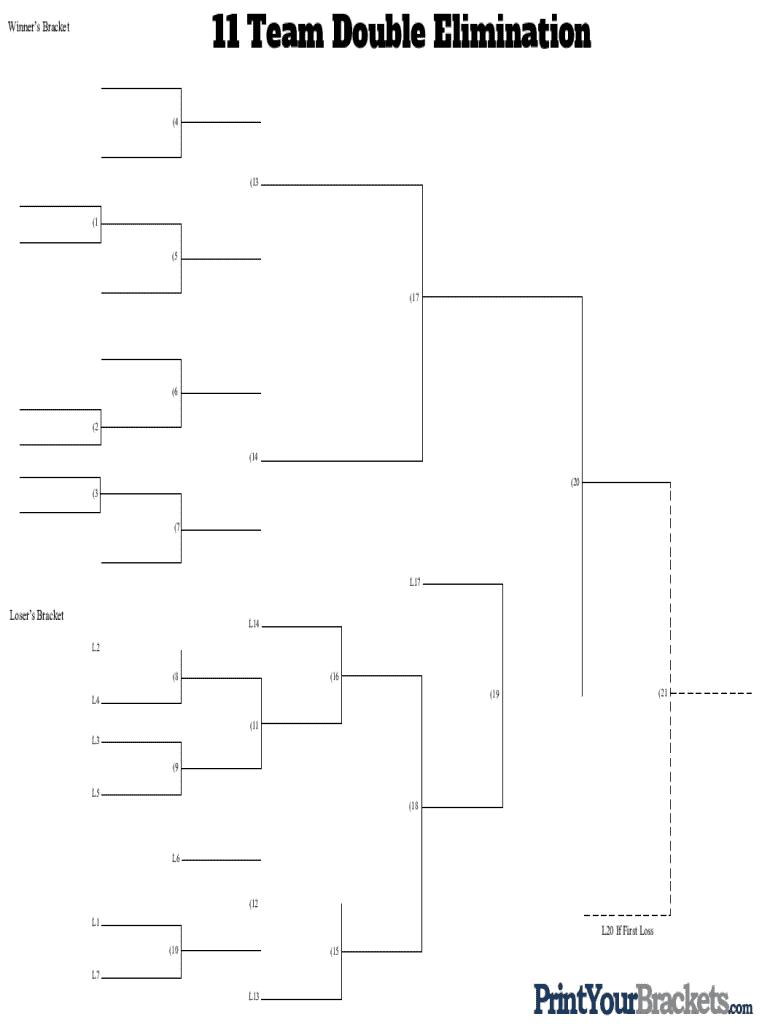







Definition and Meaning of Double-Elimination Tournaments
Double-elimination tournaments are a competition structure where teams or individuals must lose twice to be eliminated. This setup consists of a winner's bracket and a loser's bracket, allowing a second chance for participants who have lost once. The tournament continues until one team or player remains, who is declared the winner. Despite being widely used in sports and gaming, double-elimination tournaments often lead to confusion due to their complex structure and progression rules. Understanding this format is essential for participants, organizers, and spectators to follow the competition effectively.
Key Elements of Double-Elimination Tournaments
-
Winner's Bracket: This is the main bracket participants start in. Winners continue in this bracket until they are defeated.
-
Loser's Bracket: Losers from the winner's bracket move here for a second chance. A loss in this bracket results in elimination.
-
Grand Finals: The final matchup where the winner of the winner's bracket competes against the winner of the loser's bracket. If the latter wins, a second match typically determines the overall champion.
-
Seeding: Initial arrangement of participants based on rankings or previous performances, which significantly influences the tournament's progression.
Understanding these elements helps in navigating the tournament's structure and its implications on game planning and strategy.
How to Use Double-Elimination Tournament Brackets
Double-elimination tournament brackets require careful management to ensure fairness and clarity. Here are the steps to follow:
-
Set up Initial Seeding: Arrange participants based on their rankings or a random draw.
-
Conduct Matches in Winner's Bracket: Match participants based on seeding. Winners proceed within the bracket, while losers drop to the loser's bracket.
-
Proceed with Loser's Bracket: Continue matches among those transferred to offer a path towards the finals.
-
Conclude with Grand Finals: Match the top participants from both brackets, ensuring an exciting closure to the tournament.
This structured approach ensures that all participants understand their standing and the next steps in the tournament.
Why Double-Elimination Tournaments Cause Confusion
Several factors contribute to the confusion surrounding double-elimination tournaments:
-
Complex Progression: With two brackets, tracking progress requires attentive management to avoid errors.
-
Rematches: Potential repeat matchups can confuse spectators who expect diversity in competition.
-
Bracket Reset: If the winner's bracket champion loses the grand final, an additional match is needed, adding complexity.
-
Strategy Adjustments: Different tactics might be needed when transitioning between brackets, which can confuse teams.
Understanding these nuances helps in better preparing for and managing tournaments using this format.
Examples of Double-Elimination Tournaments
Double-elimination tournaments are common in various competitive domains:
-
Sports Leagues: Amateurs and professional levels in baseball, tennis, and esports frequently employ this method.
-
Gaming Championships: Major esports events like EVO or competitive gaming circuits often use this structure to ensure fair chances.
-
Corporate Competitions: Companies sometimes use this format for team-building activities due to the balanced chance of winning it provides.
These examples show the versatility and popularity of double-elimination tournaments across different arenas, each demonstrating unique challenges and engagements.
Software Compatibility for Managing Tournaments
Efficiently managing a double-elimination tournament often requires specialized software. Here are some options:
-
Bracket Management Tools: Platforms like Challonge and Tournament Master streamline organizing and updating brackets.
-
Spreadsheet Applications: Excel or Google Sheets can be customized to track progress, though they may lack specific features for dynamic bracket updating.
-
Dedicated Software: Tools tailored for esports and large-scale tournaments provide integration features that simplify management.
Selecting the right software depends on the size of the tournament, available resources, and the level of precision required for management.
Variations and Alternatives to Double-Elimination Tournaments
While double-elimination is common, variations exist to accommodate different needs:
-
Single-Elimination: Participants are out after one loss, offering a quick resolution but fewer chances.
-
Round-Robin: Every participant competes against every other, ideal for finding the true best without eliminations.
-
Swiss-System: Offers multiple rounds with participants facing others of similar records, balancing fair play and competition time.
Understanding these alternatives helps organizers select the most appropriate format for their specific needs, balancing fairness, excitement, and logistical feasibility.




