




01. Edit your test carbon monoxide online
Type text, add images, blackout confidential details, add comments, highlights and more.

Type text, add images, blackout confidential details, add comments, highlights and more.

Draw your signature, type it, upload its image, or use your mobile device as a signature pad.

Send carbon monoxide detector levels via email, link, or fax. You can also download it, export it or print it out.
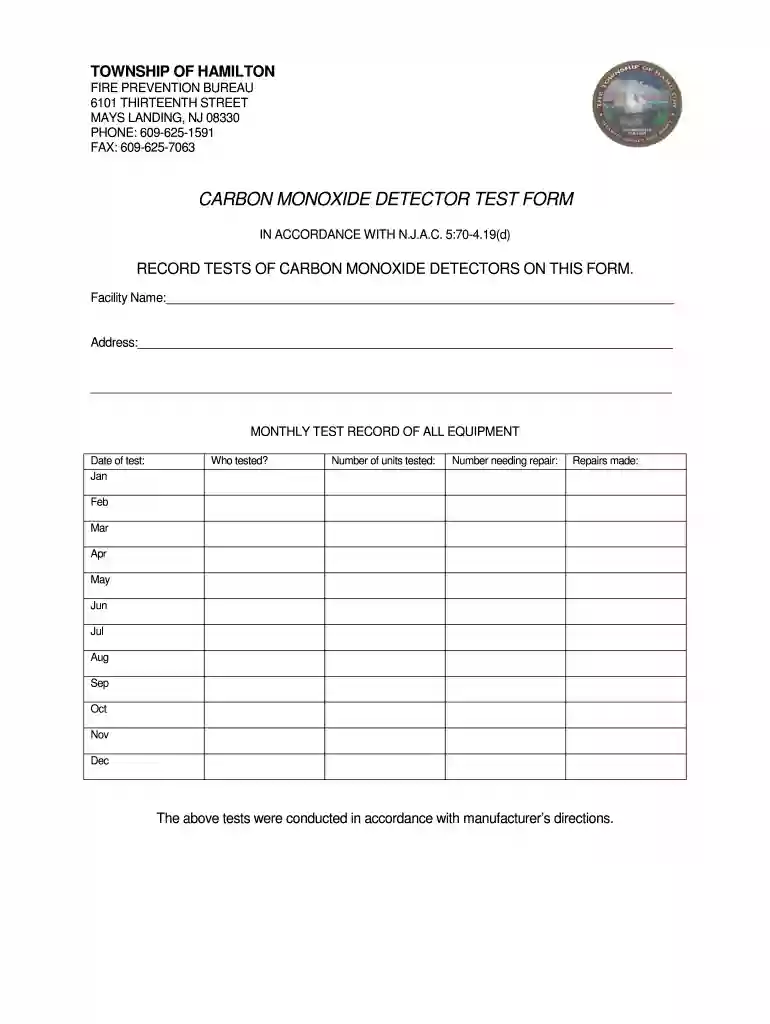
The carbon monoxide detector test form is a crucial document designed to record and certify the functionality of carbon monoxide detectors in various facilities. It serves multiple purposes, including ensuring that all detectors are regularly tested and maintained, complying with local laws and regulations, and safeguarding public health. This form is particularly relevant in jurisdictions with strict safety standards regarding carbon monoxide detectors, reflecting a commitment to prevent incidents related to carbon monoxide poisoning.
The carbon monoxide detector test form is typically used by property owners, facility managers, or designated safety officers responsible for maintaining safety protocols within buildings.
Completing the carbon monoxide detector test form involves a systematic approach to ensure all necessary information is collected accurately. The following steps can guide users through the completion process.
Gather Required Information: Before starting to fill out the form, collect details about the facility, including the address, type of establishment, and contact information. Ensure that you have logs of past testing dates and results for reference.
Record the Test Date: Clearly indicate the date the carbon monoxide test was conducted. This is essential for maintaining an accurate timeline of compliance and safety checks.
Document Tester Information: Include the name and credentials of the individual conducting the test. This establishes accountability and ensures that the test is performed by a qualified individual.
Log Detector Details: For each carbon monoxide detector being tested, indicate the number of units tested, their locations, and any that require repair. Record the status of each detector, noting whether it passed or failed the test.
Report Repairs Made: If any detectors were found to be malfunctioning, detail the repairs performed. Include dates, the nature of the repairs, and any further actions required to bring the units into full compliance.
Completing the form with attention to detail is crucial, as these documents may be subject to review by local regulatory authorities.
Understanding the terminology associated with the carbon monoxide detector test form is essential for proper use and compliance. Familiar terms include:
Carbon Monoxide (CO): A colorless, odorless gas that can be harmful when inhaled. Detectors are designed to alert occupants to dangerous levels of CO.
Test Dates: Specific dates on which the detectors are assessed for functionality to ensure timely maintenance.
Pass/Fail Criteria: Standards set to determine whether a detector is operating correctly, including its ability to detect specific levels of carbon monoxide.
Repair Log: Documentation outlining any repairs made to faulty detectors, including the parts replaced and the dates these actions were taken.
Familiarity with these terms enhances effective communication among the individuals involved in safety management and regulatory compliance.
Different states may have unique regulations governing carbon monoxide detector testing, reflecting local safety concerns and legal requirements. Understanding state-specific rules is vital for compliance.
New Jersey: Regular testing is mandated by local fire codes, with specific guidelines regarding the placement and number of detectors in residential and commercial properties.
California: Legislation requires carbon monoxide detectors in all homes with a fuel-burning appliance or attached garage, and these must be tested at least once a year.
Failure to adhere to state-specific regulations may result in fines and increased liability in case of an incident. Therefore, it is crucial for property owners and safety managers to stay informed about local laws.
The carbon monoxide detector test form serves not only practical safety purposes but also legal requirements. It is essential for documenting compliance with safety regulations and can be used in various legal contexts.
Evidence of Due Diligence: The form acts as a record proving that safety measures are being implemented or maintained, which can protect property owners or managers from potential lawsuits.
Insurance Claims: In case of a carbon monoxide incident, having properly documented testing records can assist in processing insurance claims and demonstrating adherence to safety standards.
Regulatory Inspections: Regulatory bodies may require proof of compliance during inspections. The test form provides verifiable documentation of safety efforts and results.
Understanding the legal context surrounding the use of this form can help individuals and organizations mitigate risks associated with liability and compliance.
To ensure thorough and effective use of the carbon monoxide detector test form, several key elements should be included. Each of these components contributes to a comprehensive assessment and record-keeping process.
Facility Information: This includes the name, address, and contact details of the facility where detectors are installed.
Test Results: Clear documentation of whether each detector passed or failed, along with specific readings if applicable.
Maintenance Record: A log of any maintenance performed, including dates, actions taken, and individuals responsible.
Tester Credentials: Including the qualifications of the person conducting the tests can enhance the credibility of the entries made on the form.
Incorporating these elements helps maintain a clear and traceable record that enhances safety compliance and operational transparency.
Understanding practical applications of the carbon monoxide detector test form can illustrate its importance in real-world scenarios. Here are a few examples of how it is utilized across different contexts.
A homeowner conducting regular checks on their carbon monoxide detectors uses the form to document testing dates, results, and any necessary repairs. This not only meets local safety requirements but also provides a history that can be useful for future home inspections or real estate transactions.
A facility manager in a restaurant completes the carbon monoxide detector test form quarterly to comply with health and safety regulations. They record the tests, highlighting any units needed repair, ensuring that patrons are protected from potential CO hazards.
A property manager overseeing multiple rental units utilizes the form to schedule and document annual tests in each unit. This systematic approach ensures compliance across all properties, reduces liability risks, and fosters trust with tenants.
These examples demonstrate how the form serves as a vital tool in maintaining safety standards and fulfilling regulatory obligations across various settings.
We've got more versions of the test carbon monoxide form. Select the right test carbon monoxide version from the list and start editing it straight away!
| Versions | Form popularity | Fillable & printable |
|---|---|---|
| 2008 | 4.3 Satisfied (45 Votes) |
Yes, and it’s really easy! DocHub is an online PDF editor with advanced document management functions that allow you promptly modify your paperwork, fill out blank fields and insert new ones for others to fill out, and create electronic signatures in several ways. Add your co detector test form.doc, provide information as requested, and select how you want to eSign your template - by typing your name, drawing your signature, uploading its picture, or using a QR code.
With a swift editing platform like DocHub, you do not need anything but a web browser and connection to the internet to modify your co detector test form.doc online quickly. Add your document or get the relevant form in DocHub’s catalog, open our editor with a single click, and complete it electronically. To revise your forms anytime, register a free profile with DocHub.
At DocHub, your data security is our priority. We follow HIPAA, SOC2, GDPR, and other standards, so you can work on your documents with confidence.
Testing the CO Detector. NOTE: Performing a CO detector system test will generate an alarm trans- mission. Notify the central station before testing. PerformRead more
Directions: To complete this form, the designee documents the dates drills were performed, the exit times, and the dates that smoke detectors.Read more
This model policy was created to provide procedures for personnel to follow for the safe investigation and mitigation of reported carbon monoxide (CO) incidentsRead more


