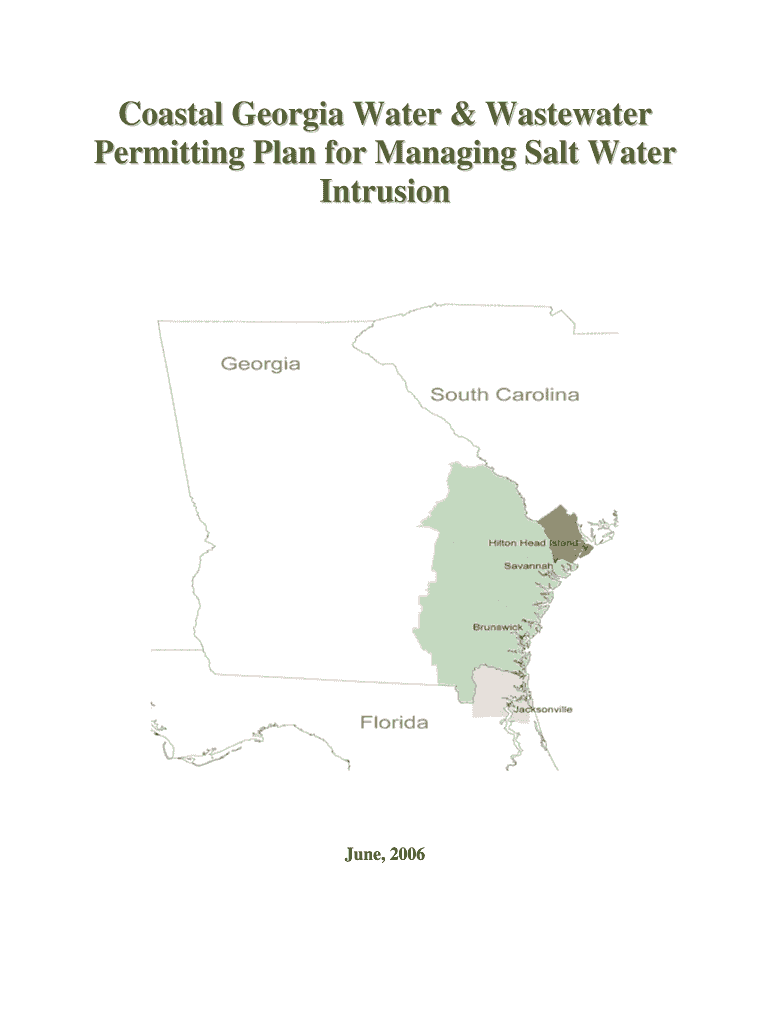







Definition and Significance of Coastal Georgia Water and Wastewater
The Coastal Georgia Water and Wastewater Permitting Plan primarily focuses on managing water resources in the 24-county area of coastal Georgia. The plan is dedicated to preventing saltwater intrusion into the Upper Floridan aquifer. Saltwater intrusion is a critical issue that can lead to significant environmental and public health problems, making this plan vitally important. The plan emphasizes sustainable practices such as conservation, reuse, and wastewater management to address challenges like population growth and industrial demands. It serves as a comprehensive guide for ensuring water quality and a sustainable supply for this region.
How to Use Coastal Georgia Water and Wastewater Resources
Utilizing the Coastal Georgia Water and Wastewater resources involves understanding the guidelines and strategies outlined in the permitting plan. It is crucial for businesses, municipalities, and industries to align their operations with the strategies proposed. Activities such as monitoring water usage, reporting compliance, and adapting water management practices are integral. Collaboration among stakeholders ensures that these resources are managed efficiently, balancing ecological health with human and industrial needs.
Key Strategies for Implementation
- Water Conservation: Implementing measures to reduce water consumption both in households and industrial applications.
- Reuse Systems: Establishing systems for gray water and wastewater reuse to minimize freshwater demand.
- Regular Monitoring: Conducting regular monitoring of water quality to promptly detect and mitigate saltwater intrusion.
Steps to Complete Compliance with the Plan
- Review the Plan: Start by thoroughly understanding the guidelines and recommendations presented in the Coastal Georgia Water and Wastewater Permitting Plan.
- Identify Applicable Strategies: Assess which strategies apply to your specific area or business and tailor a plan to integrate these strategies into your operations.
- Implement Changes: Execute necessary adjustments in water management practices, ensuring systems are in place for conservation and reuse.
- Regular Reporting: Establish a schedule for reporting to relevant authorities on compliance status and any challenges faced.
- Review and Adapt: Continuously review water usage patterns and adapt practices to align with updated findings from the Coastal Sound Science Initiative.
Legal Use and Compliance Requirements
Compliance with the Coastal Georgia Water and Wastewater Plan is legally required for entities within the specified region. The plan serves as a replacement for an interim strategy, providing a legally binding framework mandated by state agencies. Entities must ensure that their operations are not only compliant but also adaptable to any future modifications in the plan. Failing to adhere to the plan could lead to significant legal and financial penalties.
Key Elements of Coastal Georgia Water and Wastewater
The plan contains several critical elements that are essential for effective management:
- Monitoring Programs: Essential for tracking changes in water quality and assessing the health of the aquifer.
- Adaptive Management Approaches: Ensure that water management practices can adjust based on new scientific findings or environmental changes.
- Stakeholder Collaboration: Encourages cooperation between individuals, businesses, and governing bodies to protect shared water resources effectively.
Steps to Obtain Permissions Under the Plan
- Submit Application: Begin by submitting a formal application to the designated water management authority in Georgia.
- Provide Required Documentation: Ensure all necessary documents, such as environmental impact assessments and water usage reports, accompany your application.
- Await Evaluation: Authorities will review applications to ensure compliance with environmental standards and alignment with the permitting plan.
- Receive Approval: Once approved, agencies will issue permissions, outlining specific conditions and operational guidelines.
Important Terms and Concepts
Understanding the following terms is vital for navigating the Coastal Georgia Water and Wastewater Plan effectively:
- Aquifer: A geological formation that stores groundwater.
- Saltwater Intrusion: The process by which saline water enters freshwater aquifers, often due to groundwater over-extraction.
- Conservation: Practices aimed at reducing water consumption and preserving water resources.
Examples of Plan Implementation
Municipalities and industries in the region have successfully integrated various components of the Coastal Georgia Water and Wastewater Plan:
- Case Study 1: A local utility company implemented advanced metering infrastructure to monitor water consumption in real-time, resulting in a 15% reduction in water use.
- Case Study 2: An industrial plant adopted water reuse technologies, cutting demand for potable water by 25% while maintaining productivity.
- Community Example: A coastal city partnered with environmental organizations to promote rainwater harvesting among residents, achieving significant reductions in municipal water demand.
By prioritizing these elements and steps, stakeholders across Georgia can manage and preserve their vital water resources effectively.