Definition and Meaning
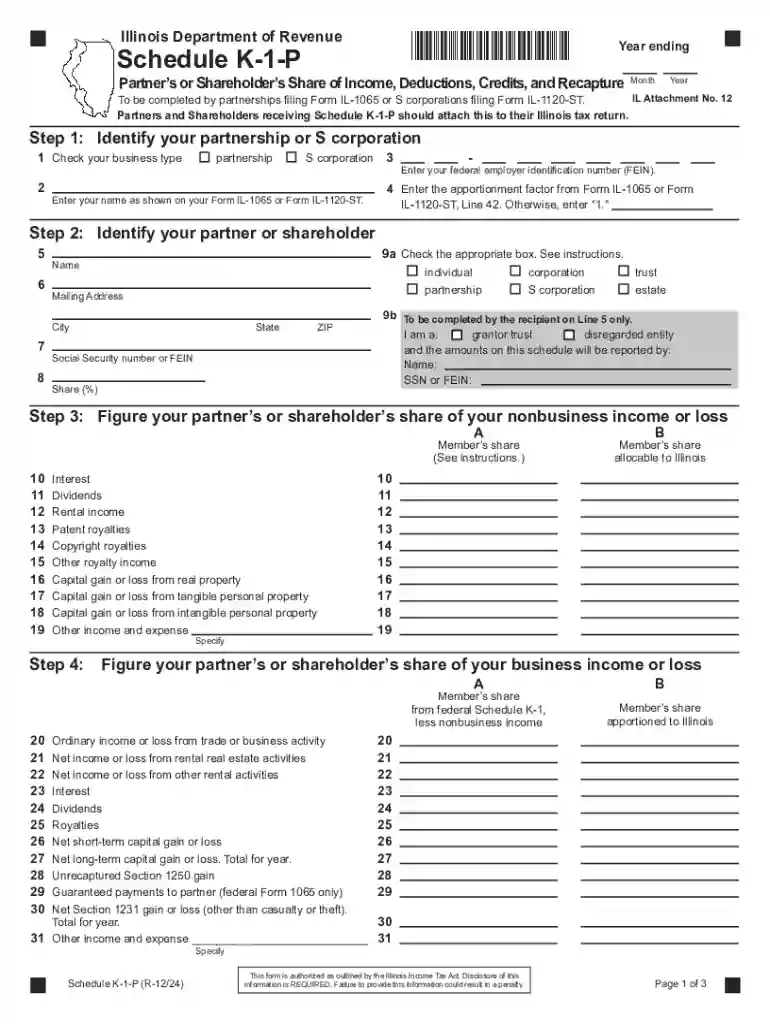
The Schedule K-1-P form is specifically utilized by partnerships and S corporations in Illinois to report individual partners' or shareholders' share of income, deductions, credits, and other financial activities for tax purposes. It plays a critical role in breaking down and itemizing these shares, ensuring transparency and compliance with state tax laws. This form is particularly important for informing the Illinois Department of Revenue about the distribution of taxed income among partners or shareholders, helping to accurately calculate individual tax liabilities.
Key Elements of the Schedule K-1-P
Understanding the essential components of the Schedule K-1-P is vital for accurate completion and submission. The form includes sections that capture a variety of financial details:
- Partner or Shareholder Information: This section requires details such as the name, address, and taxpayer identification number of those involved.
- Business Income and Deductions: Information on both nonbusiness and business income or loss, alongside any specific deductions.
- Illinois Additions and Subtractions: Records unique to state tax code, including additions and subtractions applicable under Illinois law.
Practically, this means ensuring that each section is completed with precision to avoid issues with state tax authorities.
How to Use the Schedule K-1-P
Effectively using the Schedule K-1-P involves methodical preparation and the integration of accurate financial data. Partnerships and S corporations must:
- Recognize each partner's or shareholder's share of income, credits, and deductions.
- Calculate and distinctly report any nonbusiness income or losses and business-specific income details.
- Ensure any Illinois-specific tax adjustments are applied correctly to each individual’s financial reporting.
Steps to Complete the Schedule K-1-P
A strategic approach to completing the form involves the following steps:
- Gather Necessary Information: Collect data on all income, deductions, and tax credits relevant to each partner or shareholder.
- Fill Out Partner or Shareholder Details: Accurately input personal and identification information.
- Calculate Financial Shares: Use financial statements to determine and report each individual's share of taxable income and credits.
- State Adjustments: Apply any necessary Illinois-specific additions and subtractions.
How to Obtain the Schedule K-1-P
Acquiring the Schedule K-1-P is a straightforward process:
- Online Access: The form can be downloaded directly from the Illinois Department of Revenue's official website.
- Tax Software: Often included in tax preparation software packages like TurboTax or QuickBooks.
- Request via Mail: Contacting the Illinois Department of Revenue for a physical copy if required.
Required Documents for Submission
When preparing to submit the Schedule K-1-P, ensure these documents are readily available:
- Business Financial Statements: Essential for accuracy in reporting income and deductions.
- Tax Identification Numbers: For verification and reference.
- Supporting Documentation for Deductions: Ensure all claims are substantiated with proper evidence.
State-Specific Rules for the Schedule K-1-P
Illinois has unique regulations surrounding the Schedule K-1-P, which need careful adherence:
- Illinois Additions and Subtractions: Specific calculations that may differ significantly from federal guidelines.
- Tax Year Requirements: Aligning the schedule’s timeline with state tax requirements and dates.
- Compliance Norms: These ensure the correct distribution of income and deductions according to state laws.
Examples of Using the Schedule K-1-P
Various scenarios demonstrate the practical application of the Schedule K-1-P:
- Scenario One: A partnership in Illinois uses the form to report shared income from rental properties among partners.
- Scenario Two: An S corporation applies the Schedule K-1-P to allocate income and deductions related to services provided by individual shareholders.
- Scenario Three: A complex application involves multiple business activities with specific state adjustments, illustrating the need for precise calculation.
Who Typically Uses the Schedule K-1-P
The primary users of Schedule K-1-P include:

- Partnerships: Businesses with two or more partners who require tax distribution information.
- S Corporations: Shareholders in these entities needing to reflect tax data accurately.
- Tax Professionals: CPAs and tax advisors finalizing state tax requirements for their clients.
Penalties for Non-Compliance
Neglecting to properly complete and submit the Schedule K-1-P can lead to significant penalties:
- Financial Fines: Monetary penalties that grow with delayed or incorrect filings.
- Legal Repercussions: Possible legal action if non-compliance is deemed willful or fraudulent.
- Interest on Unpaid Taxes: Accrued interest for any misreported or unpaid taxes resulting from inaccurate form submission.
Adhering to these guidelines guarantees less stress during tax season and contributes to maintaining a good standing with tax authorities.