01. Edit your form online
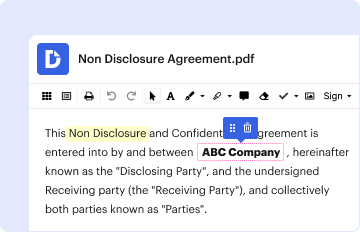
Type text, add images, blackout confidential details, add comments, highlights and more.

Type text, add images, blackout confidential details, add comments, highlights and more.
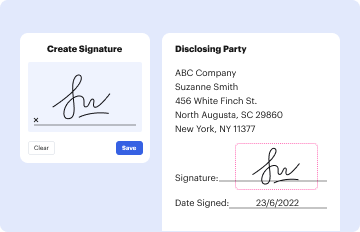
Draw your signature, type it, upload its image, or use your mobile device as a signature pad.
Send it via email, link, or fax. You can also download it, export it or print it out.
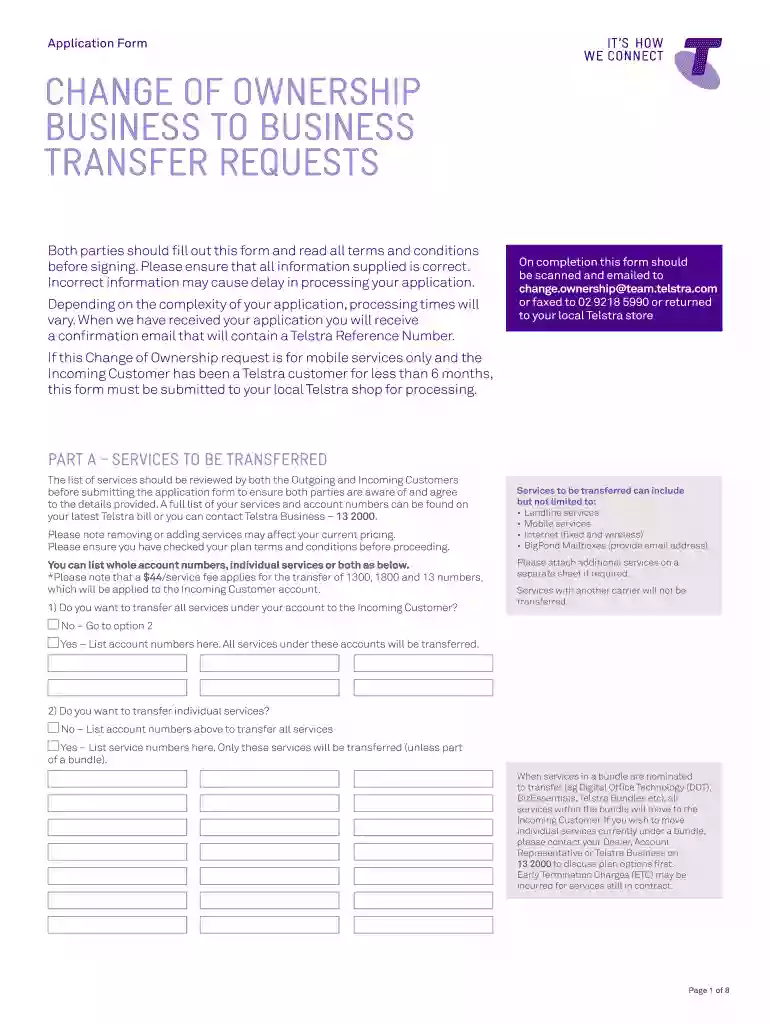
Change of ownership business to business transfer requests are official forms used by enterprises to transfer ownership of assets, services, or accounts from one business entity to another. Typically, these forms are critical during mergers, acquisitions, or restructuring. They ensure legal, seamless updates to records, preventing disruptions in service or misalignment in account details. The request not only serves as proof of the transaction but also sets the groundwork for new ownership to assume responsibilities, adhere to existing terms, and align with contractual obligations.
Businesses can obtain the change of ownership form through the service provider overseeing the asset or service being transferred. For example, if the transfer involves telecommunications, a company like Telstra provides the form on their website. Business owners can also contact customer support to request the form via email or postal mail. It's essential to review the provider's guidelines, ensuring that the current and new owners understand the submission requirements and associated deadlines to prevent delays in processing.
Gather Required Information: Collect data pertinent to the transfer, including the current and new owner's legal names, business addresses, and contact information. Specify the services or assets in question.
Complete the Form: Fill out each section accurately, ensuring clarity and precision to avoid rejection or delays.
Include Authorization: Attach documents verifying the authority of individuals signing the form, such as Board resolutions or Power of Attorney.
Review and Sign: Double-check all details to confirm they are correct. Both parties involved in the transfer must sign the document.
Submit the Form: Send the completed form via the specified method (online submission portals, mail, or in person). Retain copies for your records.
Follow Up: Track the transfer process and respond promptly to any additional information requests from the service provider.
Business to business transfer requests are utilized primarily during structural changes, such as mergers, acquisitions, or consolidation. For operational continuity, legal compliance, or strategic realignment, companies must officially update ownership records. By processing these requests, businesses fulfill regulatory requirements and clarify roles and responsibilities. Other reasons might include a change in business strategy, franchising opportunities, or divestments, ultimately supporting agility and competitiveness.
Typically, businesses like corporations, limited liability companies (LLCs), and partnerships leverage change of ownership transfer forms. These entities, ranging in size from small businesses to multinational corporations, rely on the form to transfer assets from one corporate entity to another, ensuring transparent and legally recognized transitions. Financial institutions, telecommunication companies, and utility providers often engage with these requests, demanding detailed compliance to maintain service integrity and accountability.
The legal implications of business to business ownership changes are significant. Compliance with federal and state regulations is crucial. For instance, the transfer should not violate antitrust laws, and proper notification must be given to relevant tax authorities. It is advisable to consult legal counsel to ensure all contractual obligations are met, protecting both parties from future disputes. Accurate and timely submission is vital to avoiding penalties or legal challenges.
We've got more versions of the change of ownership business to business transfer requests form. Select the right change of ownership business to business transfer requests version from the list and start editing it straight away!
At DocHub, your data security is our priority. We follow HIPAA, SOC2, GDPR, and other standards, so you can work on your documents with confidence.