






Definition and Purpose of SECTION TWO Affidavits and Certifications
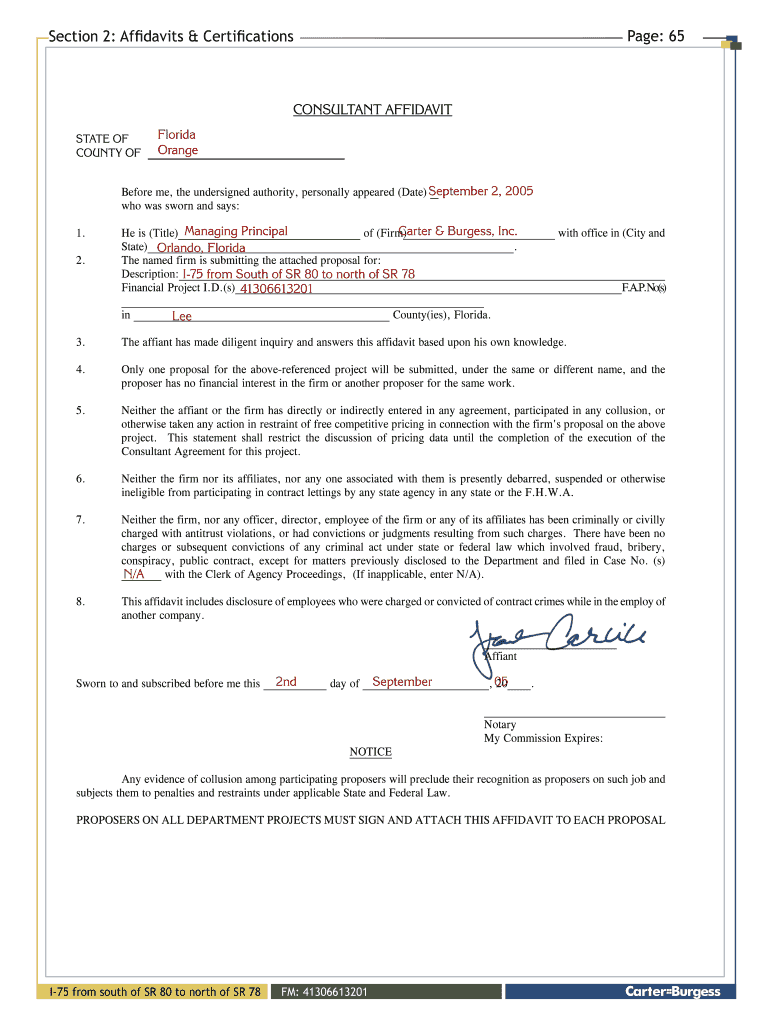
SECTION TWO Affidavits and Certifications is a legal document used primarily in federal aid contracts to affirm compliance with various regulatory requirements. It typically includes affirmations related to debarment, lobbying activities, and truth-in-negotiation. These certifications serve as a formal declaration by entities, such as consulting firms like Carter & Burgess, Inc., to attest their eligibility and adherence to federal guidelines. The document ensures that contractors maintain accurate wage rates and transparently disclose any lobbying activities connected to federal contracts.
Steps to Complete the SECTION TWO Affidavits and Certifications
- Read the Instructions Carefully: Before filling out the form, ensure you understand each section's requirements and the types of certifications required.
- Provide Accurate Information: Fill in all required fields with precise information. This could include company details, relevant compliance details, and certifications.
- Review for Completeness: Double-check each section to ensure all necessary fields are completed and all required certifications are included.
- Sign the Affidavit: Complete the legal attestation by signing the document, confirming all provided information is true and accurate.
- Submit the Form: Depending on submission guidelines, which may include online, mail, or in-person options, follow the official procedure to file the document with the concerned federal agency.
Key Elements of SECTION TWO Affidavits and Certifications
- Debarment Certification: Confirms the entity or individual is not barred from participating in federal contracts.
- Lobbying Disclosure: Requires disclosure of any lobbying activities related to the contract, complying with federal laws.
- Truth-in-Negotiation Declaration: Affirms honesty and transparency in negotiation processes, particularly regarding pricing and wage rates.
- Signature Requirement: Legal attestation signed by an authorized entity representative.
Who Typically Uses SECTION TWO Affidavits and Certifications
This form is commonly utilized by consulting firms, contractors, and other entities engaged in federal aid projects. These organizations need to demonstrate compliance with federal regulations before being awarded or continuing in such projects. It’s vital for ensuring that the parties are legally qualified and committed to adhering to regulatory standards.
Legal Use and Implications of SECTION TWO Affidavits and Certifications
The legal implications of using SECTION TWO Affidavits and Certifications are significant. Falsifying information or failing to disclose required details can lead to severe penalties, including legal action, disqualification from federal contracting, and other legal liabilities. By accurately completing this form, entities affirm their compliance with federal standards, thereby minimizing the risk of non-compliance and associated legal ramifications.
Obtaining the SECTION TWO Affidavits and Certifications
Entities can obtain the form from the federal agency overseeing the aid contract. Typically, the form is accessible online through the agency’s official website or provided directly by contract administrators during the contract negotiation process. Some digital platforms, like DocHub, offer guidance on completing and managing such forms efficiently in electronic formats.
Penalties for Non-Compliance
Failure to accurately complete the SECTION TWO Affidavits and Certifications or provide false information can result in various penalties. These may include:
- Fines and Penalties: Monetary consequences imposed by the overseeing federal agency.
- Contract Termination: Immediate cessation of project involvement and disqualification from future federal bids.
- Legal Action: Potential lawsuits or criminal charges depending on the severity of non-compliance or misrepresentation.
Important Terms Related to SECTION TWO Affidavits and Certifications
- Debarment: Exclusion from participation in contracts due to past offenses or compliance failures.
- Lobbying: Influence on government decisions, which must be disclosed if connected to the contract.
- Truth-in-Negotiation Act (TINA): A U.S. law ensuring transparency and fairness in negotiation processes.
- Certification: A formal declaration that validates compliance with specified regulations.
State-Specific Rules and SECTION TWO Affidavits and Certifications
While SECTION TWO Affidavits and Certifications adhere to federal guidelines, certain state-specific rules may influence how these forms are completed or interpreted. Entities must ensure that they are aware of any specific state provisions that may impact compliance requirements or additional declarations necessary under state law. Engaging with legal counsel familiar with both federal and state requirements is often advisable for compliant submission.