






Definition and Purpose of Form 1
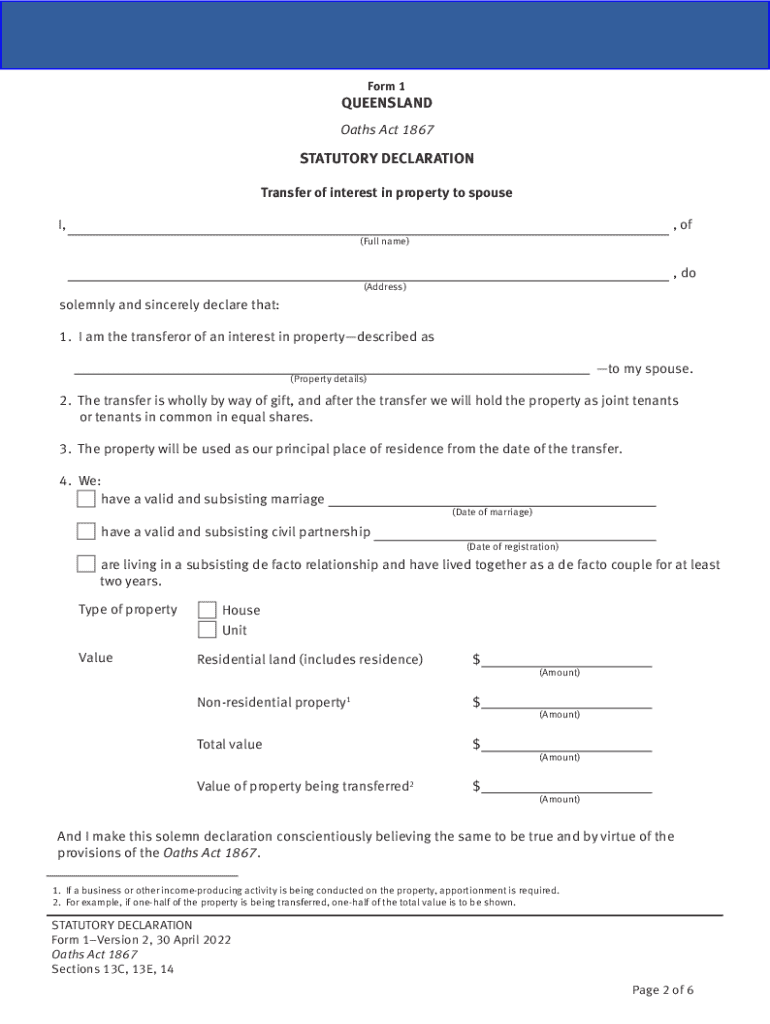
Form 1 is a statutory declaration form under the Oaths Act 1867, utilized primarily in Queensland, Australia. It is a legal document allowing individuals to formally declare the transfer of property interest to a spouse. This form is essential in formalizing such transfers, ensuring that the process adheres to legal standards and requirements.
Steps to Complete Form 1
Completing Form 1 involves several critical steps to ensure accuracy and compliance.
- Obtain the Form: Secure a copy of Form 1 from the appropriate legal or governmental source in Queensland.
- Fill Out Personal Information: Enter all required personal and contact details for both parties involved in the declaration.
- Declaration Statement: Clearly outline the declaration of transfer, specifying the property interests being transferred to the spouse.
- Authorized Witness: Have the form signed in the presence of an authorized witness, as mandated by law, which can include solicitors or justices of the peace.
- Review and Sign: Confirm that all information is accurate before signing.
- Submit the Form: Transfer the completed form to the relevant authority for processing.
Legal Use of Form 1
Form 1 holds legal weight as a statutory declaration and requires compliance with several legal stipulations:
- Authorized Witness: Only authorized personnel can witness the signing of Form 1 to ensure its legal validity.
- False Statements: Ensuring accuracy of all statements is critical, as any false declaration can lead to criminal penalties.
- Electronic Signing and Witnessing: Recent guidelines may allow for electronic signing and witnessing, provided all requirements are met.
Key Elements of Form 1
Understanding the key components of Form 1 is vital for proper completion and submission:
- Declarant Details: Information about the person making the declaration.
- Recipient Details: Information about the spouse receiving the property interest.
- Detailed Description of Property: Clear and thorough identification of the property in question.
- Witness Information: Full details of the authorized witness, including official title and contact information.
Importance of Form 1
Form 1 is integral in legal processes involving property transfer due to its:
- Legal Validation: Provides a legally recognized framework for declaring property interest transfer.
- Protection: Ensures both parties are protected under the law, reducing potential disputes.
- Clarity: Offers clear documentation of property interests and responsibilities.
Who Typically Uses Form 1
Primarily, Form 1 is used by:
- Individuals: People transferring property interests between spouses.
- Legal Professionals: Lawyers and real estate professionals assisting clients with property transfers.
- Government Agencies: Bodies involved in the recording and verification of property transfers.
State-Specific Rules for Form 1
While the form is standardized, there are variations and specific rules:
- Queensland Law: This form operates under Queensland jurisdiction, adhering to state regulations.
- Witness Requirements: Different states may have varying criteria for who can serve as a witness.
- Electronic vs. Physical Submission: Requirements may differ on whether the form can be submitted electronically or if physical submission is necessary.
Obtaining Form 1
Form 1 is typically obtained through specific channels:
- Government Websites: Accessing the form through official Queensland state government portals.
- Legal Offices: Many legal professionals have copies and can provide guidance.
- Real Estate Agencies: Agencies can facilitate the acquisition as part of their client services.
Penalties for Non-Compliance
Non-compliance with the requirements of Form 1 can have significant repercussions:
- Legal Penalties: False declarations can result in criminal charges.
- Void Transactions: Incorrectly completed forms may lead to nullification of the transfer.
- Fines: There may be financial penalties associated with improper submission or false declarations.