Definition & Meaning
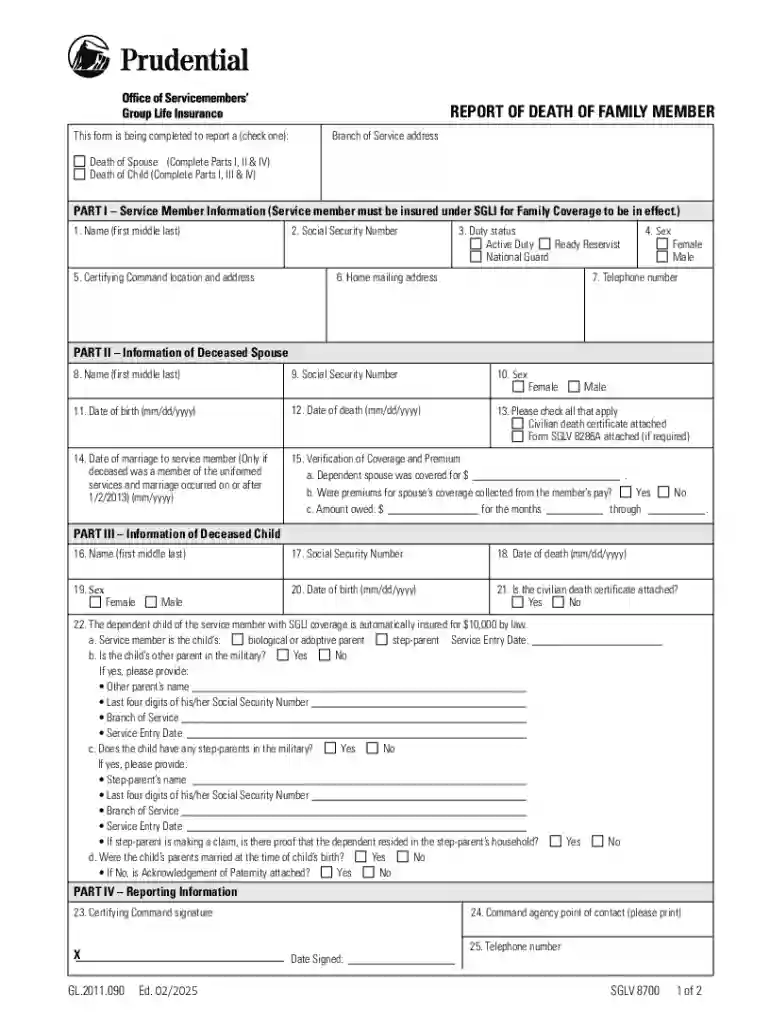
The "Report of Death of Family Member" form is a critical document used to notify authorities about the death of a service member's family member who was insured under the Servicemembers' Group Life Insurance (SGLI) program. This form captures essential information, such as the service member’s details, specifics about the deceased, and the relationship to the insured, ensuring a structured approach to handling insurance claims and any associated legalities. The form not only facilitates the processing of insurance payouts but also acts as a formal record of the incident for governmental and military purposes.
How to Use the Report of Death of Family Member
To effectively utilize this form, you need to gather all relevant information concerning the deceased family member and the insured service member. Typically, this involves:
- Collecting detailed personal information of the deceased, including full name, date of birth, and date of death.
- Documenting the relationship between the deceased and the service member, whether it is a spouse or child.
- Filling out sections that pertain to the service member’s insurance coverage to validate eligibility for claims.
- Providing documentation such as a death certificate as supporting evidence.
- Once completed, the form should be submitted through the appropriate channels, such as the service member’s personnel office or directly to the insurance provider, depending on instructions provided on the form.
Steps to Complete the Report of Death of Family Member
- Gather Required Information: First, ensure you have all necessary details, including the deceased’s personal data, the service member’s information, and proof of death.
- Fill Out the Form Sections: Start by entering the service member’s identifying information, followed by details of the deceased, ensuring accuracy to avoid claim delays.
- Verification of Coverage: Proceed to the sections that confirm the SGLI coverage status and premium through proper certification or verification from the insurer.
- Attach Supporting Documents: Include any required documents like death certificates to substantiate the claims made in the form.
- Review and Submit: Carefully check the accuracy of all entered information and submit the finished form to the designated authority. This could be the service member’s command or an SGLI representative.
Key Elements of the Report of Death of Family Member
- Service Member Details: Includes full name, rank, service number, and contact information, ensuring accurate identification.
- Deceased Information: Encompasses personal details such as name, birth date, and relationship to the service member.
- Insurance Coverage Section: Shows insurance policy details, including verification of active coverage at the time of death.
- Documentation Identification: Lists documents required for submission, like death certificates or proof of insurance.
- Sections for Additional Comments/Clarifications: Allows the applicant to add any necessary explanations or additional information not covered by predefined fields.
Legal Use of the Report of Death of Family Member
The legal utilization of this form is vital for processing claims under the SGLI program. It functions as:
- Proof of Incident: Official record of the death to validate claims.
- Claim Processing: Instrumental in the facilitation of the deceased's benefits payout.
- Legal Compliance: Assists in adhering to the procedural mandates of military insurance claims and applicable state and federal laws regarding deceased family members of servicemen.
Important Terms Related to the Report of Death of Family Member
- SGLI (Servicemembers' Group Life Insurance): A program providing life insurance coverage to eligible service members.
- Beneficiary: The person designated to receive the insurance payout upon a service member's death.
- Premium Verification: Confirmation that insurance premiums are paid and coverage is valid.
- Deceased: The family member whose death is being reported in correlation with the SGLI claims.
Required Documents
When submitting the form, it is imperative to accompany it with necessary documentation, ensuring smooth processing:
- Death Certificate: Validates the report by providing official confirmation of death.
- Proof of Relationships: Documents, such as marriage or birth certificates, confirming the relationship to the service member.
- SGLI Policy Verification: Shows the validity and current status of the insurance coverage, ensuring compliance and eligibility for claims.
Filing Deadlines / Important Dates
While specific timelines for filing may vary, it is crucial to:
- Submit Promptly: To expedite the claims process and reduce delays in the payout.
- Check for Specific Deadlines: Related to the timeframe stipulated by the insurance provider or military department, typically within the first few weeks following the death.
- Be Aware of Special Conditions: That might extend or modify the deadline based on service status or deployment circumstances. Prompt filing ensures beneficiaries receive timely benefits without procedural barriers.