






Definition and Purpose of Illinois - Instructions (Motion)
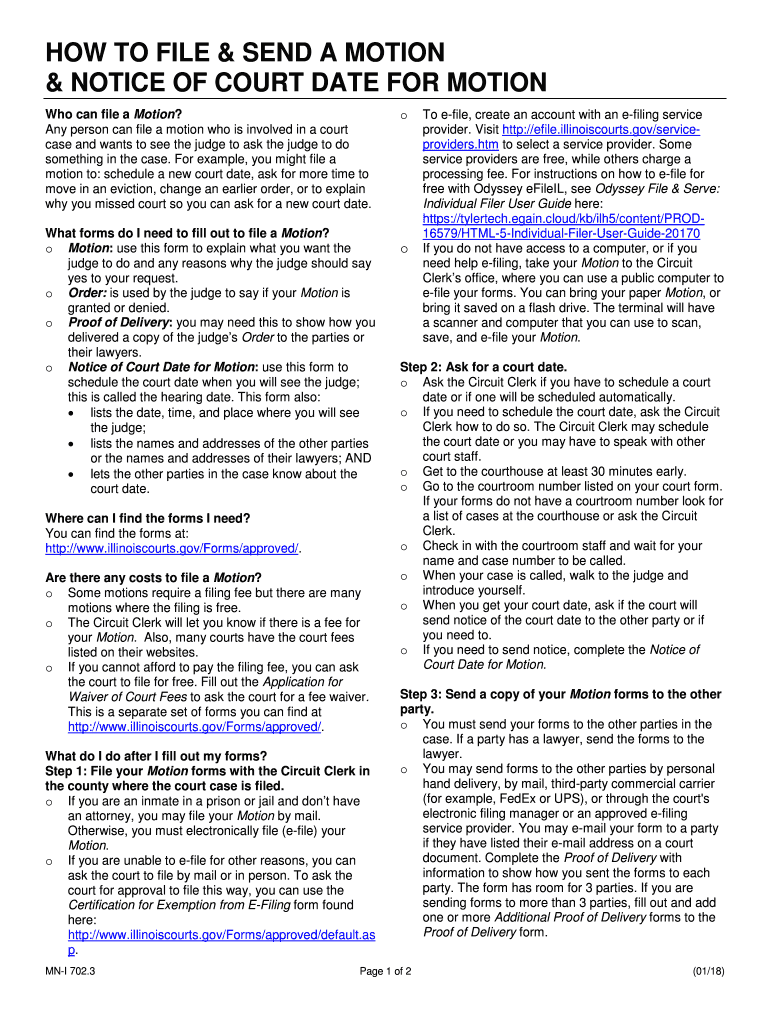
The Illinois - Instructions (Motion) form is a critical document used in the Illinois court system for submitting a motion. A motion is a formal request to the court seeking a specific ruling or order. This document is essential for both civil and criminal proceedings and can include requests such as dismissals, summary judgments, or the modification of court orders. Understanding the purpose of the form helps individuals know how best to use it within the legal process, providing a framework for its execution.
How to Use the Illinois - Instructions (Motion)
Using the Illinois - Instructions (Motion) involves several key steps. Initially, the filer must thoroughly complete each section of the form, ensuring that all pertinent information is accurately included. The document typically requires the motion’s title, the case number, relevant details of the filing party, and a clear statement of what the motion seeks to achieve. It's also vital to adhere to the prescribed format, as improper submissions can delay court proceedings or result in rejections.
Obtaining the Illinois - Instructions (Motion)
The form can be obtained from several sources to ensure wide accessibility. Primarily, users can download it from official judicial or state websites where legal forms are available. Alternatively, individuals may visit the clerk's office in the respective court handling the case to procure a physical copy. For those with limited access to the internet or who require personal assistance, in-person visits to court offices can be beneficial.
Steps to Complete the Illinois - Instructions (Motion)
- Identification Information: Enter the full case name and number as listed on court documents.
- Title and Nature of Motion: Clearly state the type of motion and the precise relief or action requested from the court.
- Supporting Facts: Detail the facts and legal basis supporting the motion. Include relevant laws or precedents where necessary.
- Certification of Service: Include a section indicating how and when the motion was served to the other parties involved in the case.
- Filer’s Signature: Sign and date the form, affirming the honesty and accuracy of the information provided.
- Attachment of Supplementary Documents: Ensure all supplementary documentation pertinent to the motion is appended.
Legal Use of the Illinois - Instructions (Motion)
The legal use of the Illinois - Instructions (Motion) form is governed by Illinois procedural law. It serves as a formal avenue for parties to convey their requests to the judiciary in a structured manner. The form ensures that all parties have an equal opportunity to be heard and that the case progresses towards resolution in a fair manner. Proper filing and service of this motion are required to maintain transparency and procedural integrity.
Key Elements of the Illinois - Instructions (Motion)
- Case identifiers: Essential for the court and opposing parties to trace and contextualize the motion within ongoing proceedings.
- Statement of Relief: Outlines the specific action requested from the court.
- Supporting Argumentation: Legal and factual grounds substantiating the motion's request.
- Service Certification: Confirms notification to all relevant parties, ensuring adherence to due process.
State-Specific Rules for Illinois - Instructions (Motion)
Illinois-specific rules mandate compliance with local court regulations when using the Instructions (Motion) form. These rules include stipulations about timeliness, specific formatting requirements, and the manner of serving documents to opposing parties. Illinois courts may have unique provisions that influence how motions are interpreted and granted, such as response times for the opposing party or specific evidence submission guidelines.
Important Terms Related to Illinois - Instructions (Motion)
Understanding the terminology related to the form is crucial:
- Movant: The individual or party filing the motion.
- Respondent: The opposing party to whom the motion is addressed.
- Ex Parte Motion: A request made to the court without notifying the other party, typically under urgent circumstances.
Examples of Using the Illinois - Instructions (Motion)
Real-world examples help demonstrate the effective use of the form:
- Motion to Dismiss: Filed when a defendant contends that the case should not proceed due to insufficient legal grounds.
- Motion for Summary Judgment: Utilized when one party believes there’s no dispute of material fact and requests a judgment based on provided evidence.
- Motion to Compel Discovery: Appropriate when a party seeks court intervention to obtain evidence from the opposing party.
Eligibility Criteria for Filing
Typically, any party involved in a legal case in Illinois can file a motion, provided they adhere to the stipulated guidelines. Legal representation is often beneficial in ensuring the form is appropriately completed and submitted, but individuals also have the right to self-represent. The key eligibility aspect involves being a participant in the ongoing legal matter the motion pertains to.


Document Submission Methods
The Illinois - Instructions (Motion) can be submitted through various avenues:
- Online Filing: Available through the electronic filing system, allowing remote submissions.
- Mail: Traditional postal service can be used where online access is not feasible.
- In-Person: Direct submission to the court clerk's office, suitable for those requiring assistance or verifying document acceptance.