
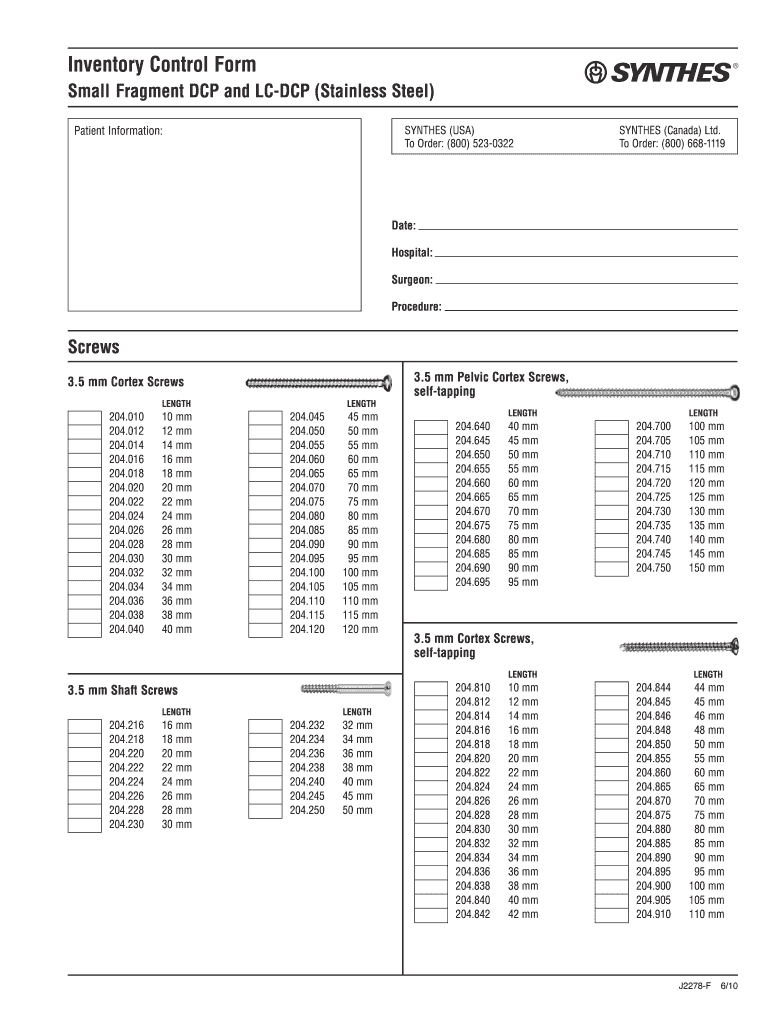







Definition and Purpose of the Synthes Small Frag Inventory
The Synthes small frag inventory is a comprehensive document used within medical and surgical sectors to catalog small fragment surgical instruments. Specifically, it pertains to various types of screws, plates, and medical devices necessary for orthopedic procedures, commonly utilized in trauma surgery, reconstructive surgery, and other applications. This inventory facilitates the precise tracking and management of items such as the 3.5 mm pelvic cortex screws or DCP plates. It ensures that healthcare providers have access to important details about the instruments right when they need them, supporting effective and efficient patient care.
The importance of maintaining an accurate small frag inventory is underscored by the critical nature of surgical procedures, where the availability of the correct instruments directly impacts surgical outcomes. Proper documentation aids in inventory control, helps in minimizing waste, and ensures compliance with medical regulations. Additionally, it fosters collaboration among surgical teams by enabling clear communication regarding the instruments available for various procedures.
Steps to Complete the Synthes Small Frag Inventory
Completing the Synthes small frag inventory involves a systematic approach to ensure accuracy and comprehensiveness. Here are the essential steps:
- Identify Instruments: Begin by gathering all small fragmentation tools and instruments specific to your facility's needs.
- Categorize Items: Group items by type, such as screws, plates, and other accessories. This can help streamline management and retrieval later.
- Record Specifications: For each item, record key specifications including size, type, length, and quantity. Use a consistent format to ease future updates or audits.
- Verify Data Accuracy: Engage team members to verify the recorded information for correctness. Cross-referencing with established Surgical Instrumentation lists can help validate alignment with standard practices.
- Implement Tracking Mechanisms: Employ methodologies such as barcoding or RFID tagging to maintain up-to-date inventory records, allowing for timely audits and inventory reviews.
Additional Considerations
- Digital Tools: Consider utilizing software solutions designed for inventory management in the healthcare field, as these can streamline data entry and reporting.
- Regular Audits: Schedule periodic checks to ensure that the inventory remains accurate and accounts for any new acquisitions or disposals.
Key Elements of the Synthes Small Frag Inventory
The Synthes small frag inventory comprises several critical components essential for effective instrument management. These elements include:
- Item Descriptions: Clear details about each surgical instrument, including its purpose and compatibility with other devices.
- Quantitative Records: An accurate count of each item to prevent shortages or overstocking, which could impede surgical operations.
- Condition Reports: Documentation regarding the condition of each instrument, including any needed repairs or replacements.
- Usage Logs: Tracking the usage of each instrument helps in predicting needs for replenishment and provides insights into most frequently used instruments.
Examples of Using the Synthes Small Frag Inventory
To better understand practical applications, consider these common scenarios:
- Preparation for Surgery: Surgeons rely on the inventory during preoperative meetings to ensure all required instruments are ready and available for the operation, reducing delays in the operating room.
- Inventory Audits: A scheduled audit might reveal discrepancies, such as missing instruments or overstocked supplies, prompting necessary corrective actions.
- Educational Purposes: Training new surgical staff on the inventory system aids in promoting best practices for inventory management and reinforces the importance of maintaining accuracy in surgical supplies.
Legal Use of the Synthes Small Frag Inventory
Maintaining a comprehensive and accurate Synthes small frag inventory abides by several legal considerations relevant to patient safety and healthcare regulations. Key legal aspects include:
- Compliance with Health Regulations: Medical facilities must adhere to federal and state guidelines regarding surgical instrument sterilization and tracking, thus necessitating precise inventory records.
- Liability Management: Proper documentation can mitigate liability risks in the event of medical errors, offering clear records of instrument availability and compliance with laws.
- Quality Control Standards: The inventory must comply with standards set by organizations such as the Food and Drug Administration (FDA) governing the use of medical devices, ensuring that all items meet safety and efficacy requirements.
Adhering to these legal standards fosters trust in the healthcare system while safeguarding patient welfare. Implementing best practices in inventory management is an integral part of organizational compliance.




