01. Edit your form online
Type text, add images, blackout confidential details, add comments, highlights and more.

Type text, add images, blackout confidential details, add comments, highlights and more.

Draw your signature, type it, upload its image, or use your mobile device as a signature pad.

Send it via email, link, or fax. You can also download it, export it or print it out.
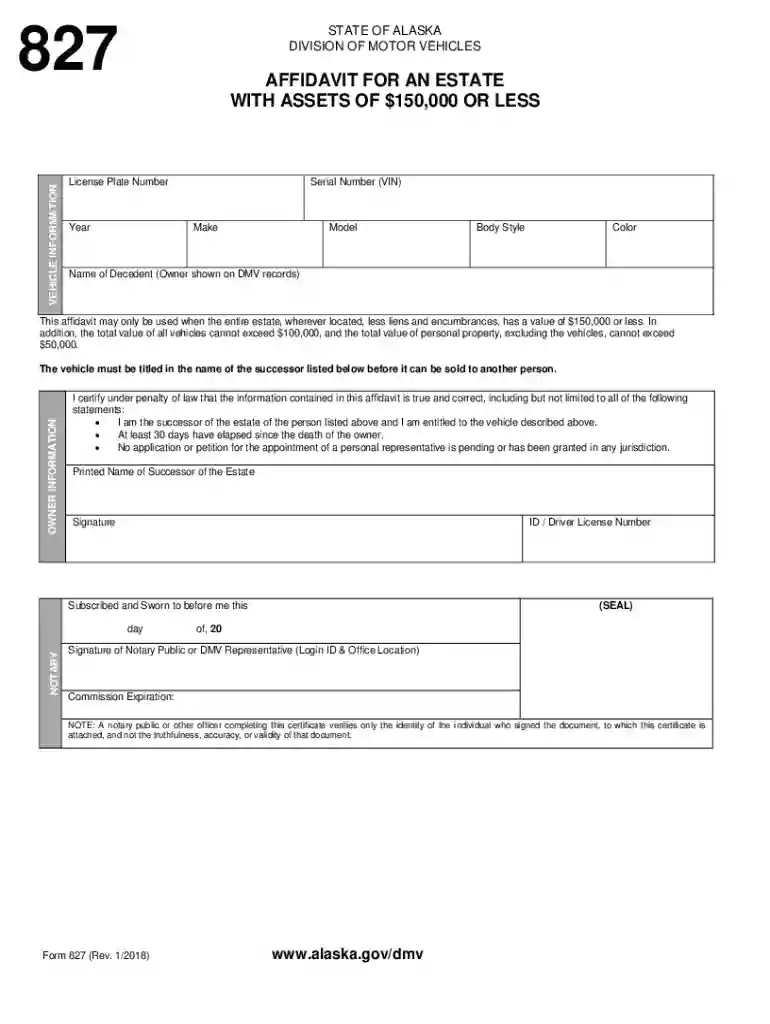
The "Deceased Owner, Division of Motor Vehicles, Department of" form is primarily utilized when a vehicle owner passes away, and there is a need to transfer vehicle ownership to a successor. This process is often necessary to update the registration and title of the vehicle according to the new legal owner's information. The form serves as an affidavit, especially in situations where the total estate value is less than certain financial thresholds—in Alaska, for example, this is $150,000. This ensures a legal transfer of ownership without the need for lengthy probate procedures.
Gather Required Information: Before filling out the form, collect all necessary details. This includes the deceased owner’s full name, date of death, vehicle identification number (VIN), and details of the vehicle.
Identify the Successor: The successor must be clearly identified. This individual is typically a close family member or an appointed executor through legal documents like a will.
Fill Out the Form: Use the information gathered to fill out the relevant sections on the form, ensuring all details are accurate and up to date.
Certification and Signature: The successor should certify their entitlement to the vehicle and sign the document. This often requires notarization to confirm the authenticity of the signature.
Submit the Form: Once completed, the form can be submitted to the local Division of Motor Vehicles office, either in person or by mail, depending on the state's requirements.
Death Certificate: A certified copy of the death certificate is necessary to prove the vehicle owner's passing.
Proof of Successor: Documents like a will, court order, or other legal paperwork proving the successor’s right to the vehicle must be attached.
Current Vehicle Title and Registration: These documents must be submitted to update the records.
Identification: The successor should provide a valid state-issued ID or driver’s license.
This form is essential for ensuring a legal and recognized transfer of vehicle ownership following the death of the original owner. It helps avoid potential disputes and legal challenges by formally documenting the change of ownership. The successor’s certification within the form acts as a declaration that there are no legal impediments, such as probate rulings, preventing the transfer of the vehicle.
Successor: The individual who inherits the ownership rights of the vehicle.
Affidavit: A written statement made under oath, ensuring all information provided is truthful to the best of the signer's knowledge.
Estate: All the assets left by the deceased, including the vehicle in question.
Executor: A person appointed to administer the will and estate of the deceased.
Regulations surrounding the use of this form can vary significantly by state. For example, some states may require additional documentation, such as an affidavit of small estate, if the total value is under a specified amount. Other states may have unique processes for the transfer depending on local probate laws. It is crucial to check with the local DMV or consult legal guidance to understand specific state requirements.
Many states offer online submission of forms either directly through the DMV website or via third-party platforms like DocHub, where you can securely edit and send documents.
For those who prefer traditional methods, forms can be sent via postal services. It is advisable to use certified mail to ensure that the documents reach the appropriate office.
Visiting the local DMV office allows for face-to-face interaction, ensuring that any mistakes or omissions on the form can be immediately addressed by a staff member.
Failure to properly transfer vehicle ownership can lead to several legal and financial penalties. These may include fines, legal disputes, and in some cases, the vehicle being impounded if it is found to be improperly titled. Furthermore, driving a vehicle that still legally belongs to a deceased person can result in liability issues if involved in an accident. It is crucial to adhere closely to state guidelines to avoid these complications.
We've got more versions of the Deceased Owner, Division of Motor Vehicles, Department of form. Select the right Deceased Owner, Division of Motor Vehicles, Department of version from the list and start editing it straight away!
At DocHub, your data security is our priority. We follow HIPAA, SOC2, GDPR, and other standards, so you can work on your documents with confidence.