






Definition & Meaning
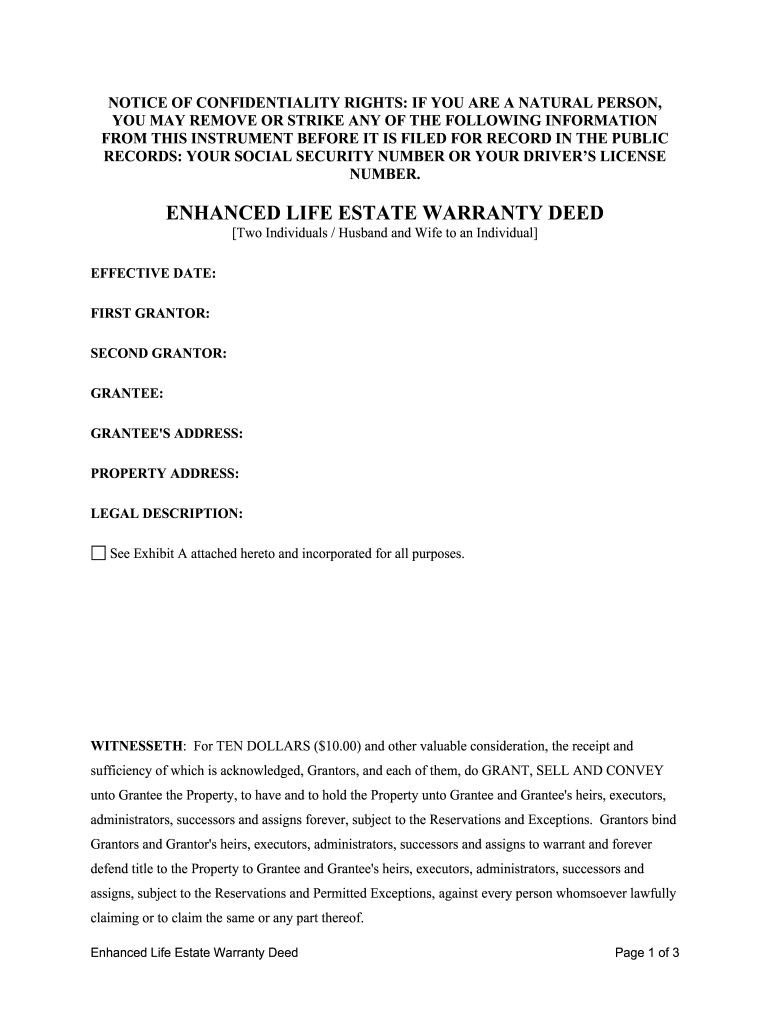
A Texas Enhanced Life Estate Deed, also known as a Lady Bird Deed, is a legal instrument used primarily for real estate transactions. This deed allows property owners, such as a husband and wife, to transfer property to another individual or entity while retaining certain rights during their lifetime. A distinguishing feature of this deed is its ability to allow the property owners to amend or revoke the deed while they are living. This flexibility makes the enhanced life estate deed a unique estate planning tool, providing control and security over property during the owner’s lifetime, and simplifying the transfer process upon death.
Key Elements of the Texas Enhanced Life Estate Deed
The essential components of a Texas Enhanced Life Estate Deed include:
-
Grantors and Grantee: Identifying the parties involved, where the grantors (current property owners) transfer the remainder interest, and the grantee (recipient) receives the interest.
-
Legal Descriptions: A precise description of the property, often including lot numbers or boundaries, to ensure that the correct parcel is conveyed.
-
Reservation of Rights: Details the rights retained by the grantors, such as the right to use, sell, mortgage, or lease the property during their lifetime, which differentiates this deed from other deeds.
-
Execution and Acknowledgment: The deed must be signed by the grantors and notarized to be valid. This confirms authenticity and prevents fraudulent claims over property ownership.
Steps to Complete the Texas Enhanced Life Estate Deed
- Gather Necessary Information: Obtain all relevant details about the property, including legal descriptions and the identities of all involved parties.
- Draft the Deed: Carefully draft the deed, ensuring that it specifies the grantors’ retained rights and details the remainder interest passing to the grantee.
- Legal Review: It's advisable to have the drafted deed reviewed by a legal professional to ensure compliance with state laws and accuracy.
- Sign and Notarize: The grantors must sign the deed in the presence of a notary public. This step is crucial for validating the transaction.
- File with County Clerk: Submit the notarized deed to the county clerk’s office where the property is located to make the transfer official.
How to Use the Texas Enhanced Life Estate Deed
The Texas Enhanced Life Estate Deed is often used in estate planning to streamline the transfer of property upon the owner’s death without the need for probate. By retaining significant rights, the grantors can continue to benefit from the property, thus balancing the need for control with effective long-term planning. It's particularly beneficial in cases where the grantors wish to avoid the costs and delays associated with probate but still want flexibility regarding property decisions during their lifetime.
Who Typically Uses the Texas Enhanced Life Estate Deed
Common users of the Texas Enhanced Life Estate Deed include:
- Elderly Individuals or Couples: Seniors often utilize the deed to ensure their estate is easily transferable to heirs without extensive legal hurdles.
- Estate Planners and Attorneys: Professionals assisting clients in reducing probate complications often recommend this deed.
- Heirs to Property: Those expecting to inherit property may encourage its use to simplify future transitions.


State-Specific Rules for the Texas Enhanced Life Estate Deed
While Texas allows the use of enhanced life estate deeds, it is essential to understand state-specific regulations that govern their execution. Texas law requires that the deed follow certain statutory protocols, such as acknowledgment and registration with the county property records. The deed must clearly outline the retained life estate and ensure that the revocable and amendable characteristics comply with the state's property code.
Legal Use of the Texas Enhanced Life Estate Deed
Legally, a Texas Enhanced Life Estate Deed allows for a smooth transition of property, evading probate while respecting the rights of grantors during their lifetime. This tool ensures that property changes hands as intended upon the death of the life estate holders, fulfilling both immediate and long-term legal strategies. It also supports Medicaid planning, as it allows for the transfer of assets in a manner compliant with eligibility criteria for state assistance programs.
Examples of Using the Texas Enhanced Life Estate Deed
Consider a married couple who owns a valuable home. They wish to keep living in the house and control any decisions regarding it, but they want their child to seamlessly inherit it after they pass away without undergoing probate. By using a Texas Enhanced Life Estate Deed, they can achieve this goal. They retain the full right to reside in and manage the home, and upon their demise, the child automatically becomes the owner, eliminating the need for probate proceedings.
Important Terms Related to Texas Enhanced Life Estate Deed
- Life Tenant: The grantor who retains use and decision-making authority over the property during their lifetime.
- Remainderman: The individual or entity who receives the property upon the death of the life tenant.
- Probate: The legal process of administering a deceased person's estate, which the enhanced life estate deed aims to eliminate.
- Revocability: The ability to amend or cancel the deed during the grantor’s lifetime, a crucial feature of the Texas Enhanced Life Estate Deed.