







Definition & Meaning
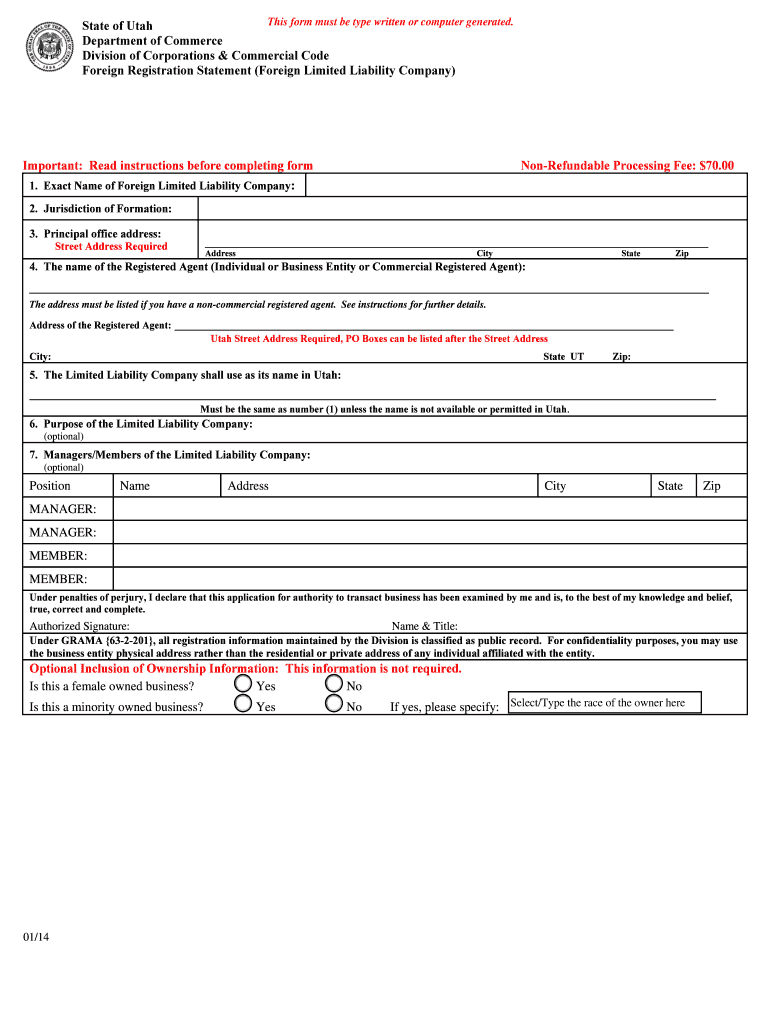
The Foreign Registration Statement for the Utah Division of Corporations is a formal document required for foreign limited liability companies (LLCs) and corporations wishing to operate in Utah. This process ensures that the entity is recognized as a legitimate business by the state's Division of Corporations and receives permission to conduct its operations within Utah. A "foreign" corporation or LLC in this context refers to a company that is incorporated or registered in a different state or country outside of Utah. Completing the Foreign Registration Statement involves providing detailed business information, thereby facilitating regulatory compliance and accountability in business practices within the state. Understanding the nuances of this document is crucial for any out-of-state business looking to maintain lawful operations in Utah.
How to Use the Foreign Registration Statement - Utah Division of Corporations
Businesses intending to operate in Utah must first file the Foreign Registration Statement with the Utah Division of Corporations. This document serves as an official request to conduct business activities within state boundaries, allowing you to reach the Utah market legally. You will need to submit pertinent information such as the entity's legal business name, jurisdiction of origin, and details of Utah-based operations, including the principal office address and the registered agent's information. Once filed, this statement ensures the business complies with Utah's legal requirements and regulations, preventing unauthorized business activities within the state.
Steps to Complete the Foreign Registration Statement - Utah Division of Corporations
-
Gather Required Information:
- Business name and type.
- Jurisdiction of formation and principal office address.
- Details of the registered agent based in Utah.
- Purpose of business and ownership information if necessary.
-
Fill Out the Form:
- Complete the form either typewritten or computer-generated to ensure clarity and avoid errors. Review each section meticulously to ensure accuracy.
-
Pay the Non-Refundable Fee:
- A processing fee of $70 is required. Prepare this payment, as submissions are only accepted with the fee included.
-
Sign and Submit:
- The form must be signed under penalty of perjury by an officer of the company. Once signed, submit the completed form to the Utah Division of Corporations.
-
Await Confirmation:
- After submission, monitor correspondence from the Division of Corporations for confirmation or additional requests needed to complete the registration process.
Who Typically Uses the Foreign Registration Statement - Utah Division of Corporations
The Foreign Registration Statement is predominantly used by business entities such as limited liability companies and corporations headquartered outside of Utah but seeking to conduct business within the state. This includes businesses expanding operations to Utah, as well as foreign entrepreneurs aiming to tap into the Utah market. Entities like partnerships and sole proprietorships might not require this form if local registration suffices, but any formalized company structure beyond individual practice, particularly those involved in substantial transactions or permanent establishments, must file this statement.


Key Elements of the Foreign Registration Statement - Utah Division of Corporations
- Business Name: The legal name of the company as registered in its original jurisdiction.
- Jurisdiction of Formation: Identifies the state or country where the LLC or corporation was originally formed.
- Principal Office and Registered Agent: The Utah address of the principal office and details of the local registered agent responsible for handling legal documents and correspondence.
- Business Purpose: A broad or specific description of the intended business activities in Utah.
- Signature Certification: A required signature by a company officer declaring the information as true under penalty of perjury.
Penalties for Non-Compliance
Failure to file the Foreign Registration Statement before commencing business operations in Utah can result in severe penalties. These include fines, legal injunctions preventing any business activities within the state, and being barred from bringing legal action in Utah courts. Additionally, non-compliance could damage the entity’s reputation and lead to complications while attempting to rectify registration status later. Ensure timely submission and accurate filings to avoid these potential restrictions and financial liabilities.
Legal Use of the Foreign Registration Statement - Utah Division of Corporations
Completion of the Foreign Registration Statement legally permits a business to conduct specific activities within Utah, such as opening offices, hiring employees, and engaging in sales or service delivery. It ensures that the business adheres to the state’s regulatory policies, thereby providing protection to both the corporation and its consumers under Utah's legal framework. Filing this statement is a prerequisite for legality, protecting the entity from accusations of unauthorized operations and providing a transparent line of communication with state authorities.
State-Specific Rules for the Foreign Registration Statement - Utah Division of Corporations
Utah requires that a local registered agent be designated in the Foreign Registration Statement. This agent is tasked with receiving legal documents on behalf of the business. Additionally, the statement must reflect adherence to state regulations, such as disclosure laws and compliance with any state-exclusive provisions regarding business functions and operations. Understanding these state-specific rules is critical since they directly impact the legitimacy of business activities in Utah and ensure uninterrupted operations under state law.
Business Types that Benefit Most from Foreign Registration Statement - Utah Division of Corporations
Different business entities stand to gain from the Foreign Registration Statement, notably LLCs and corporations looking to extend their reach into Utah’s economic environment. Establishments involved in sectors like real estate, retail, and service industries can leverage this form to legally anchor their activities in the state. Entities seeking investment opportunities or contractual engagements with Utah-based firms also benefit greatly. Small to medium enterprises (SMEs) aiming to test new markets or establish a regional presence without entirely relocating find this registration indispensable.







