01. Edit your form online
Type text, add images, blackout confidential details, add comments, highlights and more.

Type text, add images, blackout confidential details, add comments, highlights and more.

Draw your signature, type it, upload its image, or use your mobile device as a signature pad.

Send it via email, link, or fax. You can also download it, export it or print it out.
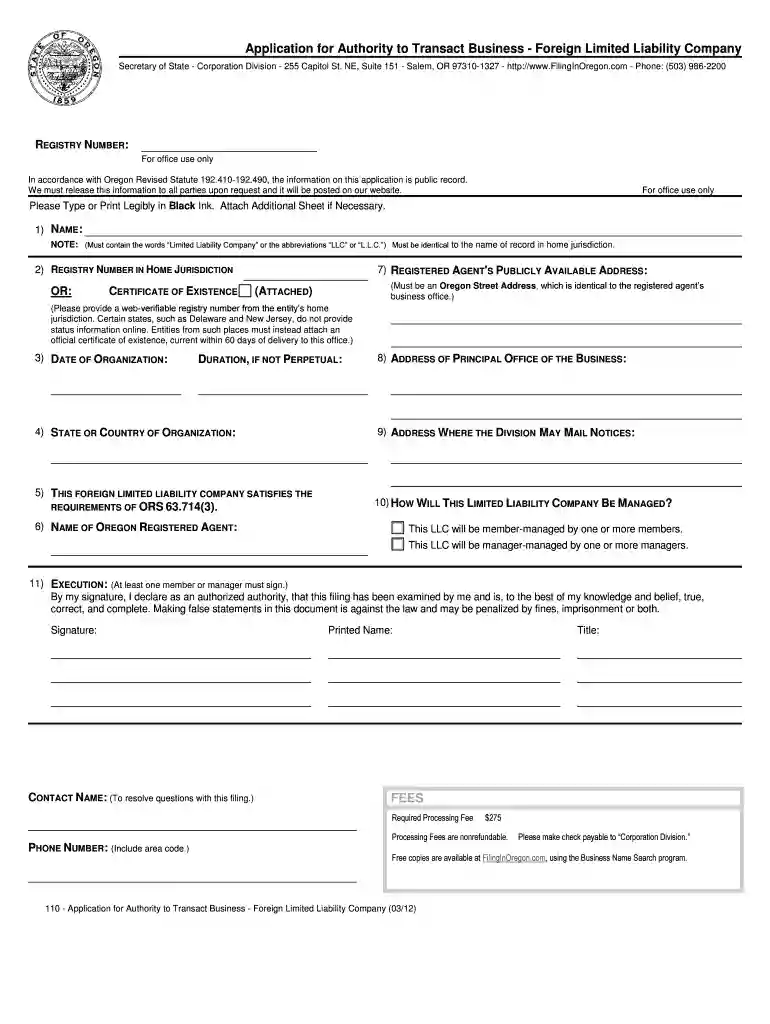
The "Application for Authority to Transact" serves as a formal request submitted by a foreign limited liability company (LLC) to obtain legal permission to conduct business activities in another state. This application typically includes specific details about the company, such as its name, home jurisdiction, and type of business it intends to perform in the new state. Securing this authority is essential for foreign LLCs to operate legally and be recognized by the state government, ensuring compliance with local laws and tax regulations.
When preparing the application, there are several crucial components that need to be addressed:
Company Name and Jurisdiction: The official name of the LLC as registered in its home state, along with the state or country where it was originally formed.
Registered Agent and Office: Information about the registered agent in the state where business will be conducted. The registered agent acts as the official contact for legal documents and notices on behalf of the LLC.
Business Purpose: A clear description of the business activities the LLC will perform in the state.
Management Structure: Details regarding the management style of the LLC, whether it's member-managed or manager-managed, along with the names of those in management roles.
Certificate of Good Standing: Often required as evidence of the LLC's compliance and good standing in its home jurisdiction.
Filing the application involves several specific steps:
Obtain the Appropriate Form: Access the form required for the state where the LLC intends to operate. These forms can often be downloaded from the state's Secretary of State website.
Complete the Form Accurately: Fill in all the necessary details related to the LLC, including accurate information about the company structure, registered agent, and business activities.
Attach Required Documents: Compile any supporting documents such as a Certificate of Good Standing, which verifies the LLC's current status in its home state.
Pay the Filing Fee: Each state imposes a fee for processing the application, which must be paid at the time of submission. For instance, the fee in Oregon is $275.
Submit the Application: File the completed application either online, by mail, or in person, depending on the available methods in the state. Online submission is often the most efficient route.
Each U.S. state might have unique regulations and requirements for foreign LLCs:
Different Fee Structures: Varying fees for filing an application can greatly influence the cost of starting operations in a new state.
Distinct Supporting Documents: Some states might require additional documentation, like financial statements or affidavits of compliance.
Specific Submission Methods: Some states encourage or even mandate electronic filing, while others may accept or prefer conventional mail submissions.
Annual Reporting Obligations: After the initial filing, some states require annual reporting to maintain good standing and authority to transact within the state.
The application is primarily used by foreign LLCs aiming to establish a legal presence in a state other than where they are originally incorporated:
Non-local Enterprises: Companies operating across multiple states use this application to comply with state-specific operational laws.
Business Expansion: Firms looking to broaden their market reach into new geographical areas need to secure this authority to ensure seamless business operations.
Legal Compliance: Filing this application helps avoid penalties or legal action for operating without proper authorization, which can include fines or being barred from future filings.
Ensuring legal compliance when submitting the "Application for Authority":
Authorization Confirmation: Successfully gaining approval allows the LLC to enter contracts, open bank accounts, and legally perform business activities within the new state.
Public Recordation: Filing the application means the LLC's details become part of the public record, enhancing transparency and creditability.
Penalties for Non-Compliance: Failure to file can result in significant fines, prohibition from certain state services, or legal challenges that affect business operations.
The approval duration varies based on the state and the method of application:
Processing Time: Generally, states may take a few weeks to process applications; however, expedited services are often available for an additional fee.
Verification Steps: The state usually performs a compliance check with the home state to ensure all information is accurate before approving the application.
Final Approval and Notification: Once approved, the state provides a certificate or documentation confirming the LLC’s authorization to operate within the jurisdiction.
Several documents may be necessary for a complete and successful submission:
Original Certificate from Home State: This certificate, typically known as a Certificate of Good Standing, verifies the LLC's valid status at its origin.
State Identification Numbers: Some states require the LLCs to apply for tax identification numbers in the new jurisdiction.
Draft Resolutions: Depending on the state, a draft resolution or board approval consenting to the foreign registration may be needed.
Review these requirements thoroughly to mitigate potential delays in your application process.
We've got more versions of the Application for Authority to TransactForeign Limited Liability Company Application for Authority to form. Select the right Application for Authority to TransactForeign Limited Liability Company Application for Authority to version from the list and start editing it straight away!
At DocHub, your data security is our priority. We follow HIPAA, SOC2, GDPR, and other standards, so you can work on your documents with confidence.