
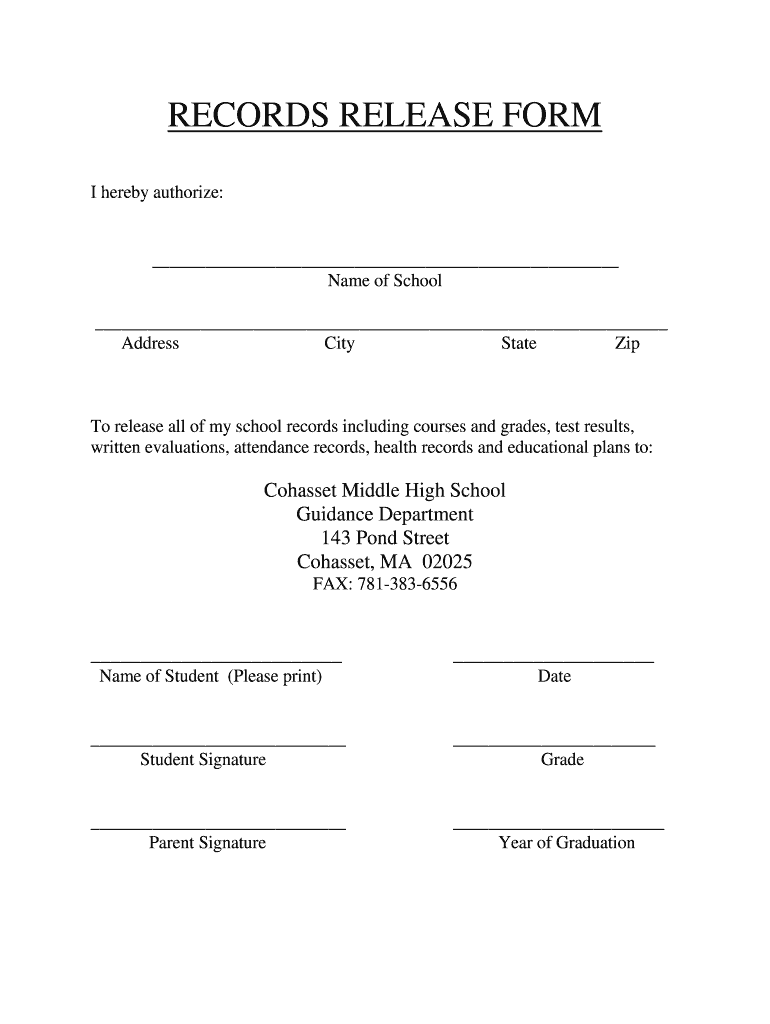







Definition and Meaning of Generic School Records Release Form
The generic school records release form is an essential document that enables educational institutions to share a student's records with authorized individuals or organizations. It serves as an agreement between the student (or their legal guardian) and the school, permitting the release of specific educational information. This information typically includes academic transcripts, attendance records, and other pertinent student data. The purpose of this form is to protect student privacy while facilitating the lawful sharing of information as needed.
The release form often includes a definition of personal information, the parties involved, and the scope of the information being shared. To ensure compliance with regulations such as the Family Educational Rights and Privacy Act (FERPA), the form must clearly outline which records will be disclosed, the purpose of the release, and the expiration date of the authorization.
Key Features of the Form
- Authorization: Explicit consent from the student or guardian to release information.
- Record Specification: Details which records are subject to release, ensuring clarity in what is shared.
- Recipient Information: Identifies who the information will be sent to, safeguarding against unauthorized disclosures.
- Expiration Date: Sets a timeframe during which the authorization is valid, adhering to best practices for privacy.
How to Use the Generic School Records Release Form
Utilizing the generic school records release form involves several straightforward steps, which ensure that the release process is compliant with legal regulations and respectful of student privacy.
- Obtain the Form: Access the generic school records release form from your school's administrative office or educational website. Ensure you have the most current version to avoid issues.
- Complete Required Fields: Fill out the form with necessary information, including the student's name, date of birth, and details of the records to be released. Clearly specify who will receive the records and for what purpose.
- Obtain Signature: The student or legal guardian must sign the form to validate the request. If signed by a guardian, proof of guardianship may be needed.
- Submit the Form: Deliver the completed form to the appropriate school office via mail, email, or in-person submission, depending on the school’s policies.
By following these steps, individuals can ensure a smooth process in requesting the release of school records while safeguarding student privacy.
Steps to Complete the Generic School Records Release Form
Completing the form requires attention to detail to prevent any delays in processing. Here are the steps to ensure successful completion:
- Download or Acquire the Form: Access the generic school records release form from the relevant source, such as the school's website.
- Provide Student Information: Accurately fill in the student’s full name, identification number (if applicable), and date of birth to avoid confusion.
- Specify Release Information:
- Indicate which educational records are to be released, such as transcripts, report cards, or disciplinary records.
- Include a specific purpose for the release, such as applying for college or a scholarship.
- Fill Out Recipient Details: Clearly list the name, title, and contact information of the person or organization that will receive the records.
- Set Expiration Date: Determine when the authorization will expire, which helps manage privacy concerns over time.
- Sign and Date the Form: Ensure that the student or guardian signs the document. This step is crucial in providing the school with legal authority to share information.
- Submit to the School: Lastly, send the completed form to the designated school office and keep a copy for personal records.
Completing these steps thoroughly will help ensure that the document is processed efficiently and that the necessary records are released without issue.
Who Typically Uses the Generic School Records Release Form
The generic school records release form is widely used by various stakeholders in the education sector, including:
- Students and Parents: Students often use this form to request their own records or those of their children for purposes such as transferring schools, applying for scholarships, or enrolling in higher education institutions.
- Educational Institutions: Schools and colleges may use the form to comply with requests for transcripts from prospective students, employers, or other educational organizations.
- Colleges and Universities: These institutions might rely on the release form to gather essential academic histories when making admissions decisions.
- Employers: Employers may request educational records from candidates to verify academic qualifications during the hiring process, making this form an important tool for employment verification.
By understanding the varied parties that utilize the form, individuals can better appreciate its significance in the educational ecosystem.


Legal Use of the Generic School Records Release Form
Understanding the legal implications of the generic school records release form is vital for all parties involved in its use. The following elements underscore its necessity:
- FERPA Compliance: The Family Educational Rights and Privacy Act mandates that educational institutions protect students’ private information. This form provides a compliant mechanism for disclosure, ensuring that schools uphold legal standards while sharing information.
- Consent Requirements: The form must be signed to indicate informed consent. Legally, schools cannot release a student’s records without explicit permission from the student or guardian, except under certain exceptions outlined by FERPA.
- Expiration and Revocation: The authorization granted through the form often includes an expiration date. However, students and guardians have the right to revoke consent at any time, which means the school must stop releasing records upon notification.
Legal use of the form ensures that the privacy rights of students are maintained while still allowing necessary educational information to be shared when appropriately authorized.
Key Elements of the Generic School Records Release Form
A well-structured generic school records release form includes several essential elements that ensure clarity and compliance. Understanding these key components can help facilitate appropriate use and handling of the form:
- Title and Purpose: The form should begin with a clear title identifying it as a school records release form, followed by a brief overview outlining its purpose.
- Student Information Section: This segment should capture the student’s full name, date of birth, and other relevant identifiers such as student ID for effective processing.
- Details of Requested Records: A comprehensive list of educational records desired by the requesting party must be included, specifying items such as grades, attendance, and disciplinary actions.
- Authorization Statement: A clear statement that outlines what the student or guardian is consenting to, including the release of records to specified entities.
- Recipient Information: Utilize fields to capture the name and address of individuals or organizations receiving the records, ensuring accuracy to safeguard privacy.
Inclusion of these key elements establishes a clear framework for the form, facilitating its effective use in various educational scenarios.




