






Definition & Meaning
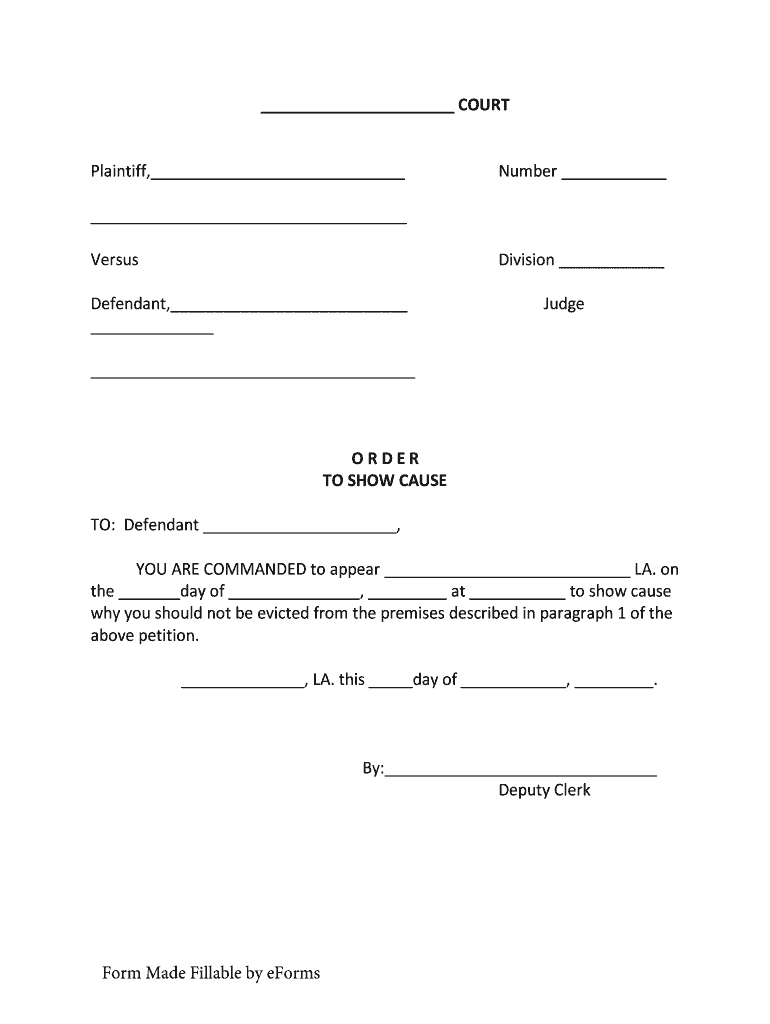
A "Louisiana Order to Show Cause" is a legal document issued by a court requiring a defendant to appear and explain why a specific order should not be enforced against them. This form is typically utilized in various legal contexts, such as evictions, where a landlord seeks to demonstrate why a tenant should be removed from a property. The document details the allegations and sets a date for the defendant to present their defense. Understanding its function is crucial for those involved in legal proceedings, as it dictates the timeframe and expectations for responses in a judicial setting.
Key Components of the Document
- Court Information: Includes the name and address of the court issuing the order.
- Parties Involved: Lists the names of the plaintiff and defendant.
- Hearing Details: Specifies the date, time, and location of the scheduled court appearance.
- Instructions for Compliance: Outlines what the defendant must do to comply, such as presenting evidence or statements.
- Consequences of Non-Compliance: Indicates potential legal repercussions if the defendant fails to appear.
How to Use the Louisiana Order to Show Cause
When you receive a Louisiana Order to Show Cause, it is critical to read the document thoroughly to understand the allegations and requirements. The form is not merely an invitation but a mandate to present your side within the specified timeframe. Missing or ignoring this document can lead to default judgments or other legal penalties.
- Review the Allegations: Carefully check the plaintiff’s claims against you.
- Gather Evidence: Collect any documents, receipts, or testimonies that support your case.
- Prepare Your Defense: Decide whether to hire an attorney or represent yourself.
- Attend the Hearing: Arrive prepared to respond to the court's questions and present your evidence.
Steps to Complete the Louisiana Order to Show Cause
Completing the Order to Show Cause form involves several steps, primarily focused on preparation and response:
- Read the Order: Understand what exactly you are being asked to show cause for.
- Identify Relevant Facts: Determine what facts or evidence counter the plaintiff’s claims.
- Complete Necessary Paperwork: Fill out any associated forms required for your defense.
- Consult Legal Counsel: Consider contacting an attorney for advice or representation.
- Submit a Response: Provide any required documentation to the court before the hearing date.
- Prepare for Court: Rehearse your statements and ensure all evidence is organized.
Who Typically Uses the Louisiana Order to Show Cause
The primary users of a Louisiana Order to Show Cause include landlords, lawyers, and tenants in disputes about property possession or other legal issues requiring judicial intervention. It's also employed by creditors, government agencies, or any involved party needing judicial enforcement or clarification.


Common Scenarios
- Landlord-Tenant Disputes: Used by landlords to initiate eviction proceedings.
- Family Law Cases: Utilized in custody or support hearings to compel an appearance or start enforcement actions.
- Contractual Disputes: Used to resolve breaches or enforce agreements.
Legal Use of the Louisiana Order to Show Cause
Legally, the Order to Show Cause is used to initiate a court process where a judge can compel an individual or entity to justify or explain their actions, potentially under penalty. It serves as an avenue for enforcing rights or obligations not previously adhered to, within the statutory framework of Louisiana law.
Legal Implications
- Compulsory Appearance: Enforces mandatory court presence.
- Judicial Review: Allows for judicial examination of the behavior or claims presented.
- Potential Penalties: Failure to comply could result in sanctions, fines, or adverse judgments.
Key Elements of the Louisiana Order to Show Cause
This document contains specific provisions that dictate its use and function:
- Directive Clause: Summarizes what is required from the defendant.
- Respondent Instructions: Provides guidance on how the defendant should respond or what documents to submit.
- Judicial Orders: Notes any temporary orders that apply until the hearing.
State-Specific Rules for the Louisiana Order to Show Cause
Louisiana has unique legal standards and practices that affect how Orders to Show Cause are processed. Familiarity with these state-specific requirements ensures compliance and preparation in legal proceedings.
Legal Framework in Louisiana
- Civil Code: Determines procedural nuances in handling such orders.
- Court Procedures: Guidelines vary depending on jurisdiction and specific court rules.
- Filing Requirements: Specific documents and deadlines must be adhered to differently in Louisiana versus other states.
Examples of Using the Louisiana Order to Show Cause
To illustrate its significance, consider the following examples:
- A landlord issues an Order to Show Cause to a tenant for eviction due to non-payment of rent.
- A family court issues an Order to Show Cause to modify child custody arrangements when one parent is non-compliant with existing orders.
- A business uses the form to address a contractual disagreement, requiring the other party to justify their breach or face judicial penalties.
Understanding these examples helps contextualize the practical application of the Louisiana Order to Show Cause in varied legal circumstances.