01. Edit your form online
Type text, add images, blackout confidential details, add comments, highlights and more.

Type text, add images, blackout confidential details, add comments, highlights and more.

Draw your signature, type it, upload its image, or use your mobile device as a signature pad.

Send it via email, link, or fax. You can also download it, export it or print it out.
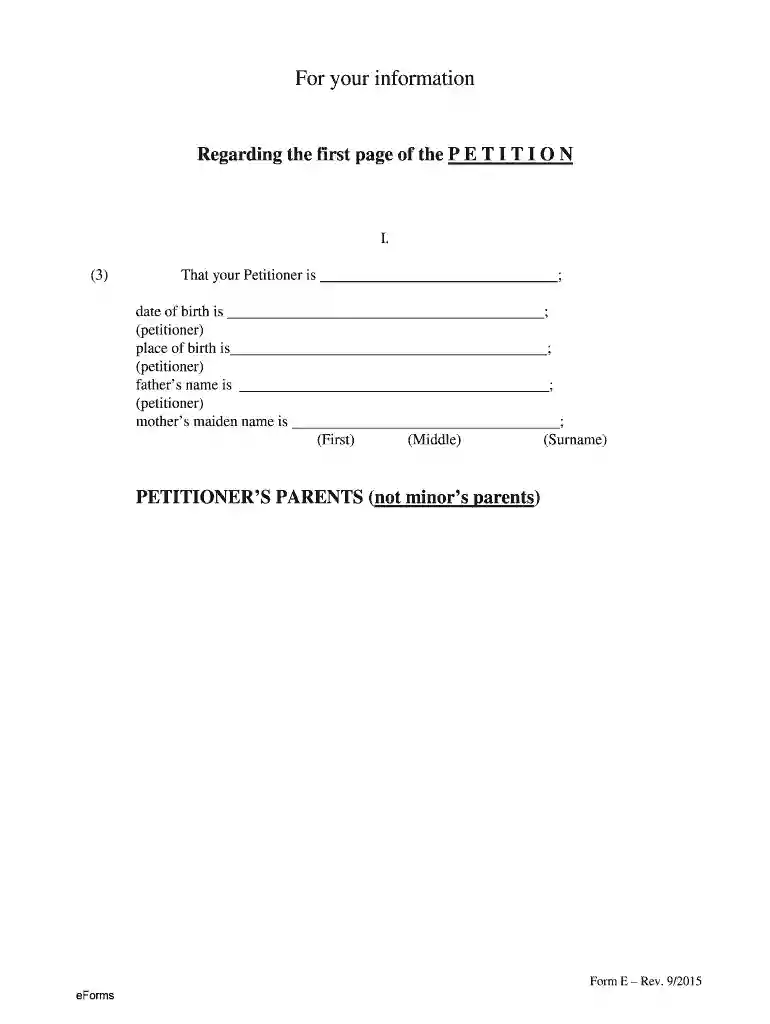
The Petition to Domesticate and Enforce Out-of-State Custody Order is a legal document used to request the recognition and enforcement of a custody order that was originally issued in a different state. This petition aims to make the out-of-state order enforceable in the petitioner's current state, ensuring compliance across state lines. It is crucial for maintaining the custody terms and protecting the rights of the involved parties, particularly in cases involving interstate family law disputes.
To obtain this petition, individuals should first contact the family law court in their state. Most courts have forms available online or at the courthouse. Key steps in acquiring the petition include:
Completing the petition involves several essential steps. Accurate and thorough completion is critical to ensure the petition is processed smoothly.
This petition serves several legal purposes:
The petition generally includes key sections that require:
Each U.S. state may have distinct rules for the domestication and enforcement of out-of-state custody orders. Common considerations include:
When submitting the petition, several supporting documents are generally required:
Real-world scenarios illustrate the utility of this petition:
We've got more versions of the Petition to Domesticate and Enforce Out-of-State Custody Order form. Select the right Petition to Domesticate and Enforce Out-of-State Custody Order version from the list and start editing it straight away!
| Versions | Form popularity | Fillable & printable |
|---|---|---|
| 2021 | 4.8 Satisfied (94 Votes) | |
| 2021 | 4.9 Satisfied (48 Votes) | |
| 2021 | 4.6 Satisfied (47 Votes) | |
| 2020 | 4.2 Satisfied (27 Votes) | |
| 2019 | 4.8 Satisfied (35 Votes) | |
| 2018 | 4.9 Satisfied (28 Votes) | |
| 2018 | 4.5 Satisfied (47 Votes) | |
| 2018 | 4.7 Satisfied (26 Votes) | |
| 2017 | 4.8 Satisfied (101 Votes) | |
| 2017 | 4.8 Satisfied (229 Votes) | |
| 2016 | 4.8 Satisfied (119 Votes) | |
| 2016 | 4.6 Satisfied (33 Votes) | |
| 2016 | 4.8 Satisfied (131 Votes) | |
| 2016 | 4.1 Satisfied (60 Votes) | |
| 2016 | 4 Satisfied (50 Votes) |
At DocHub, your data security is our priority. We follow HIPAA, SOC2, GDPR, and other standards, so you can work on your documents with confidence.