01. Edit your form online
Type text, add images, blackout confidential details, add comments, highlights and more.

Type text, add images, blackout confidential details, add comments, highlights and more.

Draw your signature, type it, upload its image, or use your mobile device as a signature pad.

Send it via email, link, or fax. You can also download it, export it or print it out.
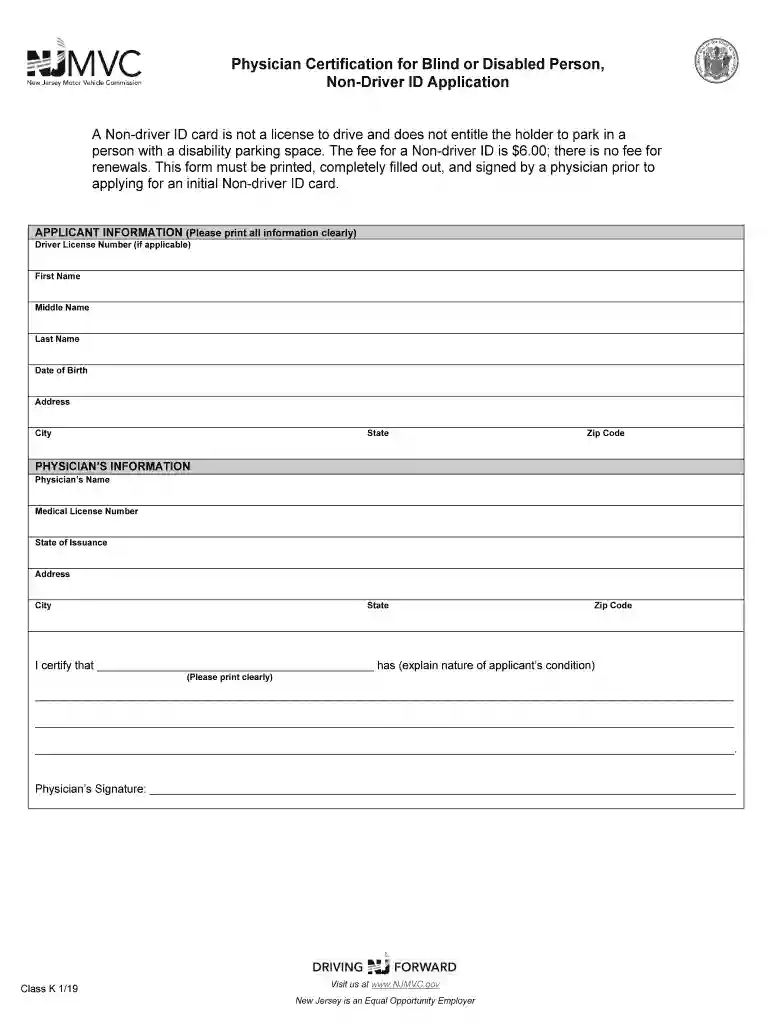
The Physician Certification for Blind or Disabled Person is a formal document utilized predominantly for confirming an individual's disability status. This certification is essential in official contexts where acknowledgment of a person's blindness or disability is required to access certain benefits or services. It serves as proof to various governmental and private entities, establishing the credibility of the individual’s claim for specific accommodations or assistance.
Understanding the use of the Physician Certification for Blind or Disabled Person is crucial for those who may be navigating systems requiring official disability verification. This form commonly supports applications for benefits such as social services, specialized transportation services, and tax exemptions. It often needs to be presented to relevant authorities to initiate or maintain these services.
Acquiring this form involves a few critical steps that individuals must follow to ensure their certification process is smooth and compliant with legal standards.
Completing the form requires precision and accurate information. Both the applicant and the certifying physician must ensure all sections are filled out correctly to avoid application delays or denials.
Several critical components must be present in this form to ensure its validity and utility when submitted.
Regulations surrounding the Physician Certification for Blind or Disabled Person can vary significantly by state, reflecting differing legal requirements and benefits.
Different demographics and entities frequently require this certification to confirm disability status for official purposes.


Understanding the legal framework surrounding this certification is vital to its appropriate use and recognition.
We've got more versions of the Physician Certification for Blind or Disabled Person, form. Select the right Physician Certification for Blind or Disabled Person, version from the list and start editing it straight away!
| Versions | Form popularity | Fillable & printable |
|---|---|---|
| 2019 | 4.8 Satisfied (203 Votes) |
At DocHub, your data security is our priority. We follow HIPAA, SOC2, GDPR, and other standards, so you can work on your documents with confidence.