






Definition & Meaning
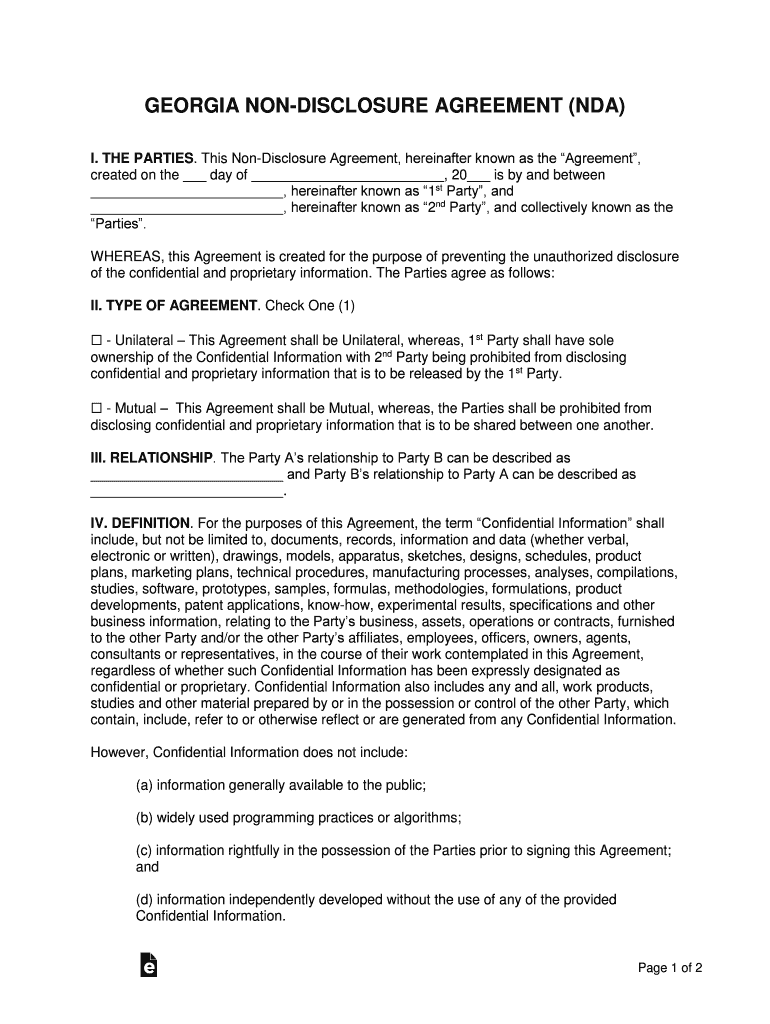
A Georgia Non-Disclosure Agreement (NDA) is a legal document designed to ensure confidentiality between parties involved in a professional relationship. This agreement serves as a protective measure to prevent unauthorized disclosure of confidential and proprietary information. It applies to various contexts, such as business negotiations, partnerships, and employment. The NDA can be unilateral, where one party discloses information to another, or mutual, where both parties share confidential information with each other. Understanding the key terms and definitions within the NDA is essential for both parties to ensure compliance and protect sensitive information.
Key Elements of the Georgia Non-Disclosure Agreement (NDA) Template
A robust Georgia NDA includes several critical components to ensure clarity and enforceability. These elements include:
- Confidential Information Definition: Clearly outlines what constitutes confidential information and any exclusions.
- Obligations of the Parties: Specifies the duty of the receiving party to protect confidential information.
- Term and Duration: Defines the period during which confidentiality must be maintained, often lasting several years beyond the termination of the relationship.
- Permissible Disclosures: Lists circumstances under which information may be disclosed, such as legal obligations or with prior consent.
- Remedies and Penalties: Details consequences for breach of contract, including potential legal actions and financial penalties.
- Governing Law: Indicates that the laws of the State of Georgia will govern the agreement, which is essential for enforcement.
How to Use the Georgia Non-Disclosure Agreement (NDA) Template
To effectively use the Georgia NDA Template, follow these steps:
- Identify the Parties: Clearly state the identities of both the disclosing and receiving parties.
- Specify Confidential Information: Clearly define what information falls under the protection of the NDA.
- Determine the Duration: Agree on how long the confidentiality obligations will last.
- Set Obligations: Establish the recipient's responsibilities in safeguarding the disclosed information.
- Include Exclusions and Permitted Disclosures: Detail any exceptions to confidentiality.
- Sign and Date: Both parties should sign and date the document to make it legally binding.
Steps to Complete the Georgia Non-Disclosure Agreement (NDA) Template
Completing the Georgia NDA Template involves a structured process to ensure accuracy and legal binding:
- Download the Template: Obtain a customizable NDA template suitable for Georgia.
- Fill in the Parties' Details: Enter full names and contact information for all parties involved.
- Define Confidential Information: Clearly outline what is considered confidential.
- Specify the Term: Set the duration for how long confidentiality is required.
- Delineate Obligations: Outline specific actions to protect the information.
- Add Permitted Disclosures: Include any circumstances under which information can be disclosed.
- Review and Edit: Double-check for accuracy and clarity. Consult with legal counsel if needed.
- Execute the Agreement: Have both parties sign and date the NDA in the presence of a witness if required.
State-Specific Rules for the Georgia Non-Disclosure Agreement (NDA) Template
In Georgia, NDAs must conform to state-specific legal standards to be enforceable. Key considerations include:
- Public Policy Consideration: Terms can't violate Georgia's public policy.
- Reasonableness: The scope of the NDA should be reasonable concerning time, geography, and subject matter.
- Specificity: The agreement should specifically address the type of information covered.
Legal Use of the Georgia Non-Disclosure Agreement (NDA) Template
The legal use of an NDA in Georgia focuses on the legitimate protection of business interests:
- Trade Secrets: Protects proprietary methods, formulas, and processes not generally known.
- Business Proposals: Safeguards details of business plans and pitches shared with potential partners.
- Employee Information: Covers employee records or sensitive HR information.
- Patent Discussions: Ensures patent-related information remains confidential before filing.
Who Typically Uses the Georgia Non-Disclosure Agreement (NDA) Template
The Georgia NDA is commonly used by a wide range of individuals and entities, including:
- Businesses and Corporations: Protect trade secrets and proprietary information.
- Startups and Entrepreneurs: Safeguard innovative ideas and business strategies.
- Freelancers and Consultants: Ensure proprietary client information is kept confidential.
- Inventors: Guard ideas and processes before securing patents.
- Employees and Employers: Protect sensitive workplace or employee data.


Examples of Using the Georgia Non-Disclosure Agreement (NDA) Template
Practical scenarios where a Georgia NDA is beneficial include:
- Partnerships: Prior to entering a business partnership, parties can share sensitive financial data and strategies without risk of disclosure.
- Employment: Employers use NDAs to ensure employees do not disclose proprietary company information after leaving the organization.
- Client Projects: Consultants may sign NDAs when working with clients to protect client-specific data and methodologies.
- Product Development: During the creation of a new product, companies can use NDAs to protect early-stage innovations.
Important Terms Related to Georgia Non-Disclosure Agreement (NDA) Template
Understanding the terminology within an NDA is critical for both parties. Key terms include:
- Disclosing Party: The entity sharing confidential information.
- Receiving Party: The entity receiving the confidential information.
- Breach: Violation of any terms set within the NDA.
- Injunction: A legal order that compels or restrains a party from specific actions.
- Non-disclosure: The obligation to not reveal confidential information.