01. Edit your form online
Type text, add images, blackout confidential details, add comments, highlights and more.

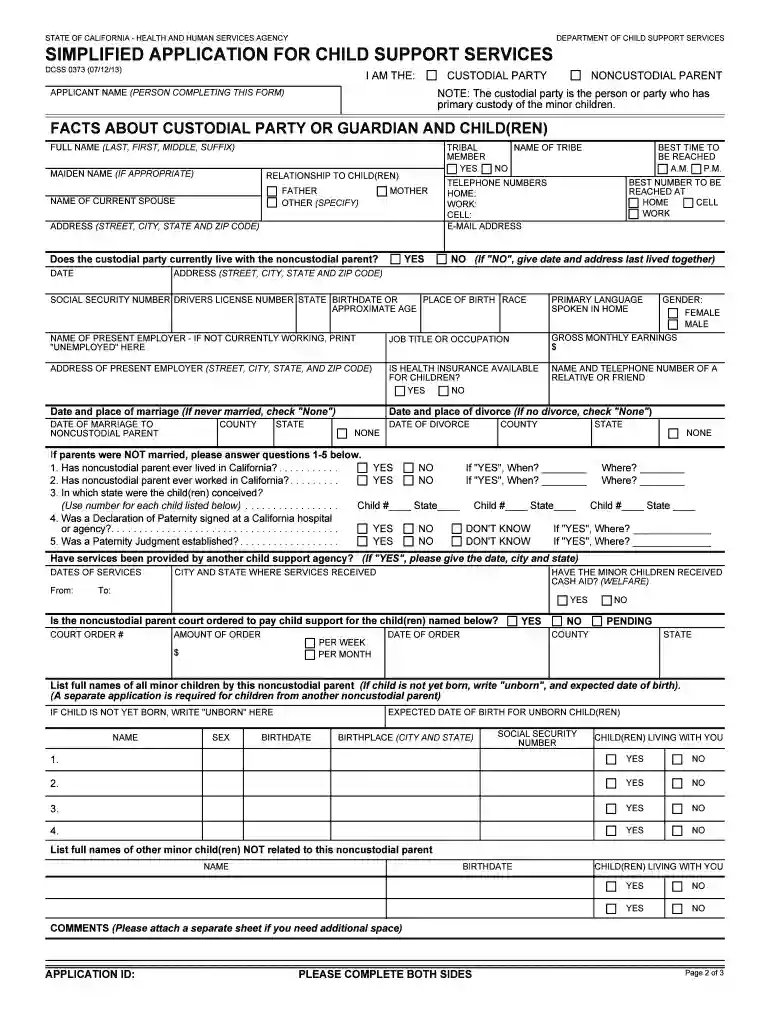
Type text, add images, blackout confidential details, add comments, highlights and more.

Draw your signature, type it, upload its image, or use your mobile device as a signature pad.

Send it via email, link, or fax. You can also download it, export it or print it out.
The document titled "Participant Responsibility to File Documents with Court and Protect Confidential Information" serves as a comprehensive guide emphasizing the duties of individuals involved in legal proceedings, particularly within the child support services framework. It outlines the crucial role participants play in ensuring that all necessary documents are filed with the court in a timely manner and that sensitive information is safeguarded from unauthorized access. This document is pivotal in reinforcing the participant's understanding of their personal responsibilities in legal contexts, fostering adherence to procedural requirements under U.S. legal standards.
To effectively use the "Participant Responsibility to File Documents with Court and Protect Confidential Information" document, participants should closely review each outlined responsibility, ensuring that they comprehend the legal implications. Start by identifying all document submission requirements specified for your case type. Utilize the document as a checklist to verify the completion of each filing obligation, and employ secure channels for document submission to maintain confidentiality. Key steps include verifying the document’s guidelines against your legal responsibilities and consulting legal counsel if clarity is needed.
Completion of the "Participant Responsibility to File Documents with Court and Protect Confidential Information" requires a systematic approach:
The document is legally significant as it details participant obligations in safeguarding sensitive information and fulfilling court filing requirements. It functions as both a preventive tool against the mishandling of confidential data and a mandate to fulfill all necessary legal documentation procedures. Utilizing this document aligns participants with compliance standards, thereby protecting their rights and roles within legal proceedings.
The document's core agenda is composed of:
Participants must ensure the preparation and submission of several key documents, including but not limited to:
Adherence to specific form requirements is crucial for successful proceedings.
Failure to adhere to the responsibilities outlined in the document can lead to several penalties. These might include contempt of court charges, fines, or a negative impact on legal proceedings. Non-compliance could result in the dismissal of claims or defenses and adversely affect case outcomes. Understanding the gravity of these penalties underscores the importance of adhering to all delineated responsibilities.
Maintaining confidentiality is a paramount requirement underlined in the document. Participants are expected to:
Adhering to these requirements minimizes the risk of data breaches and unauthorized disclosures.
This document is actively utilized within scenarios such as:
These examples illustrate the document's practical application in maintaining legal integrity and confidentiality.
The document is primarily used by individuals involved in legal proceedings within family law contexts, including:
It serves as a vital resource for ensuring procedural adherence and data protection in legal contexts.


To aid comprehension, the document defines critical terms such as:
These definitions empower participants to navigate legal requirements with enhanced understanding and precision.
We've got more versions of the PARTICIPANT RESPONSIBILITY TO FILE DOCUMENTS WITH COURT AND PROTECT CONFIDENTIAL INFORMATION form. Select the right PARTICIPANT RESPONSIBILITY TO FILE DOCUMENTS WITH COURT AND PROTECT CONFIDENTIAL INFORMATION version from the list and start editing it straight away!
| Versions | Form popularity | Fillable & printable |
|---|---|---|
| 2019 | 4.8 Satisfied (147 Votes) |
At DocHub, your data security is our priority. We follow HIPAA, SOC2, GDPR, and other standards, so you can work on your documents with confidence.