






Definition & Meaning
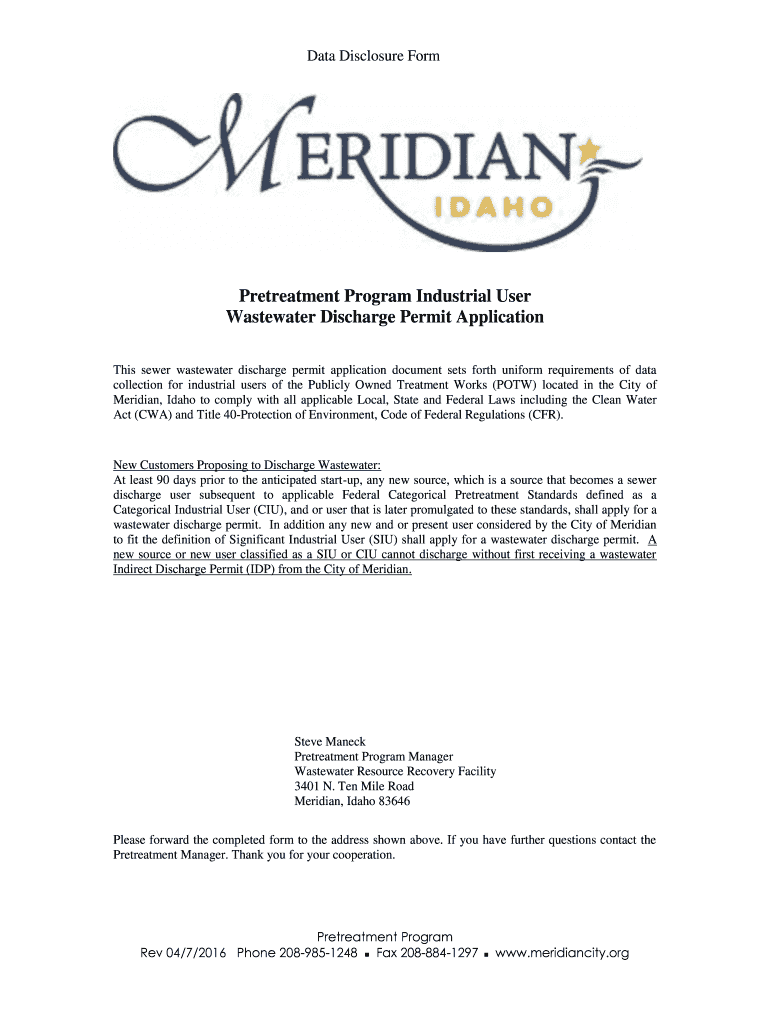
The Pretreatment Program Industrial User Wastewater Discharge form is a critical document used by industrial facilities to report and manage the discharge of wastewater into Publicly Owned Treatment Works (POTWs). This form ensures that the facility's discharge complies with local, state, and federal regulations, including the Clean Water Act. The process of pretreatment removes pollutants from industrial discharges that might harm the environment or disrupt POTWs operations.
Importance of Pretreatment
- Environmental Protection: Helps prevent contaminants from entering natural water bodies.
- Regulatory Compliance: Ensures adherence to established environmental standards.
- Operational Efficiency: Supports the smooth functioning of treatment works by reducing pollutant loads.
Key Components
- Pollutant Information: Requires detailed data on the types and quantities of pollutants released.
- Compliance Status: Includes sections to report how the facility meets pretreatment standards.
- Facility Description: Details about the processes involved in water usage and wastewater generation.
How to Obtain the Pretreatment Program Industrial User Wastewater Discharge
To access the form, industrial users must typically contact their local environmental agency or municipal authority responsible for wastewater management. The City of Meridian, for example, offers guidance for obtaining the necessary documentation to apply for a discharge permit.
Process Steps
- Identify the Jurisdiction: Determine which local authority governs the wastewater discharge permits.
- Acquire the Form: Contact the relevant agency to obtain the form directly, either through their website, email, or in-person visit.
- Understand Requirements: Review the guidelines provided by the agency to ensure compliance with submission protocols.
Examples
- City Websites: Many local governments offer digital downloads of the form.
- Agency Offices: Some agencies may require in-person visits to collect physical forms and seek additional information.
Steps to Complete the Pretreatment Program Industrial User Wastewater Discharge
Completing this form involves several detailed steps to ensure all necessary information is accurately captured and reported.
Step-by-Step Process
- Gather Required Information: Assemble data on wastewater characteristics, such as chemical composition and flow rate.
- Document Business Activities: Clearly describe the operations generating wastewater, including any pretreatment measures in use.
- Complete Sections: Fill out all segments of the form, ensuring no required field is left blank.
- Review for Accuracy: Double-check all entries for completeness and correctness to prevent delays or rejections.
- Submit the Form: Follow the specified submission process as per local regulations, which may include online submission, mail, or in-person delivery.
Practical Scenarios
- New Facilities: Should apply for the permit at least ninety days before operations begin.
- Existing Facilities: Must update their information regularly, especially after significant operational changes.
Key Elements of the Pretreatment Program Industrial User Wastewater Discharge
Understanding the core elements of the form is essential for proper completion and compliance.
Essential Sections
- Identification Information: Captures the business name, address, and relevant contact details.
- Discharge Data: Details on the volume and frequency of wastewater discharge.
- Pollutant Load: Requires disclosure of specific pollutants that the facility's discharge might carry.
- Pretreatment Systems: Information on methods utilized to treat the wastewater before discharge.
Additional Requirements
- Compliance Statements: Affirmation of adherence to all applicable wastewater regulations.
- Signature and Certification: Required by authorized personnel to validate the information provided.
Penalties for Non-Compliance
Non-compliance with the Pretreatment Program Industrial User Wastewater Discharge requirements can result in significant consequences for industrial users.
Potential Consequences
- Fines and Penalties: Monetary fines may be imposed for failing to meet compliance standards.
- Operational Restrictions: Repeated violations can lead to restrictions or suspensions of discharge permits.
- Legal Actions: Persistent non-compliance may result in lawsuits or enforced shutdowns.
Case Studies
- Example Situations: Manufacturing plants failing to report pollutant levels accurately have faced stiff penalties from regulatory bodies.
Legal Use of the Pretreatment Program Industrial User Wastewater Discharge
The legal framework governing the form is rooted in federal statutes and local regulations.
Regulatory Background
- Clean Water Act: Provides the primary legislative basis for regulating industrial discharges.
- Local Ordinances: May impose additional standards specific to the region or city.
Compliance Example
- City of Meridian: Requires strict adherence to disclosed limits and reporting requirements for industrial users.
Protective Measures
- Audits and Inspections: Industrial facilities are subject to routine checks to ensure conformity with discharge permits.
Who Typically Uses the Pretreatment Program Industrial User Wastewater Discharge
Various industrial entities are required to utilize this form to manage their wastewater discharge responsibly.


Common Users
- Manufacturing Plants: Large-scale operations producing significant wastewater.
- Food and Beverage Processors: Industries with specific waste byproducts requiring treatment.
- Chemical Manufacturers: Discharges from these facilities often include complex pollutants.

Benefits for Users
- Regulation Adherence: Ensures that operations comply with environmental laws.
- Environmental Stewardship: Supports practices that protect public water resources.
State-Specific Rules for the Pretreatment Program Industrial User Wastewater Discharge
While the overarching framework is consistent, individual states may have unique requirements.
Common Variations
- Thresholds for Pollutants: Varies by state, impacting how facilities set their pretreatment processes.
- Documentation Requirements: Local laws might dictate additional form fields or supporting documents.
Practical Implications
- Custom Compliance: Facilities must adjust their reporting and treatment strategies to align with state laws.
- Regional Enforcement: Understanding state-specific rules is crucial for avoiding penalties and ensuring smooth operations.