






Definition & Meaning
The "California, Approving a Cable System Franchise" form is a legal document that facilitates the authorization of a cable service provider to operate within a specific area in California. This form serves as a formal agreement between the local jurisdiction, such as a city or county, and a cable company. The aim is to define the terms under which the cable system operates, including service obligations, technical standards, and financial contributions. Such franchises are crucial as they ensure that cable services meet community needs while adhering to regulatory requirements.
Key Characteristics
- Legal Framework: Provides a framework under which cable providers operate, ensuring compliance with state and local regulations.
- Operational Terms: Details the obligations of the cable company concerning service quality, customer service, and technical maintenance.
- Community Needs: Aligns the services provided by cable companies with the needs and expectations of the community.
Steps to Complete the CALIFORNIA, APPROVING A CABLE SYSTEM FRANCHISE
Completing this form involves several key steps to ensure all legal and operational requirements are met.
Step-by-Step Process
- Initial Consultation: Engage with local government authorities to understand the specific requirements and expectations for the franchise.
- Documentation Preparation: Gather necessary documents including financial statements, service plans, technical specifications, and customer service protocols.
- Submission of Proposal: Submit a detailed proposal that outlines the services to be provided, technology to be used, and community benefits.
- Review and Negotiation: Participate in discussions with local authorities to finalize terms, addressing any concerns or adjustments needed.
- Approval and Formalization: Once agreed upon, the form is signed by both parties, cementing the franchise agreement.
Important Considerations
- Compliance with Regulations: Ensure adherence to both state and federal regulations governing cable services.
- Community Engagement: Demonstrate how the franchise will serve the community's specific needs, including educational and public access channels.
Key Elements of the CALIFORNIA, APPROVING A CABLE SYSTEM FRANCHISE
The franchise form includes several crucial components that dictate the terms and conditions of the cable provider's operations.
Main Components
- Service Area Definition: Specifies the geographical area covered by the franchise agreement.
- Duration: Outlines the length of the franchise term, often spanning multiple years.
- Financial Obligations: Details fees, taxes, and other financial contributions required from the cable provider.
- Performance Standards: Sets technical standards and service quality benchmarks to be maintained by the provider.
Examples of Clauses
- Renewal Terms: Conditions under which the franchise may be renewed at the end of its term.
- Termination Conditions: Scenarios and procedures for terminating the agreement before its scheduled end.
Legal Use of the CALIFORNIA, APPROVING A CABLE SYSTEM FRANCHISE
Franchise agreements are legally binding contracts that regulate the operations of cable providers.
Legal Framework
- Regulatory Compliance: Ensures cable providers adhere to laws such as the Federal Cable Communications Policy Act.
- Consumer Protection: Provides mechanisms to protect consumer rights, addressing issues like service failures and unfair practices.
Enforcement
- Local Authorities: Typically oversee compliance and have the power to enforce terms or address violations.
- Dispute Resolution: The form may include clauses detailing how disputes will be resolved, often stipulating mediation or arbitration processes.
Important Terms Related to CALIFORNIA, APPROVING A CABLE SYSTEM FRANCHISE
Understanding specific terms is essential for navigating the complexities of a cable franchise agreement.
Glossary of Terms
- Franchise Fee: A fee paid by the cable operator to the local government for the right to provide services.
- Access Channels: Channels dedicated for public, educational, and governmental programming.
- Build-Out Requirements: Obligations regarding the infrastructure development needed to deliver cable services.
Contextual Application
- PEG Channels: Public, Educational, and Government (PEG) channels are a community service aspect included in many agreements.
- Customer Service Standards: Define minimum acceptable levels of service, including response times and problem resolution procedures.
State-Specific Rules for the CALIFORNIA, APPROVING A CABLE SYSTEM FRANCHISE
California has specific regulations that govern cable system franchise agreements.
Notable State Regulations
- California Public Utilities Code: Provides guidelines for the establishment and operation of cable franchises in the state.
- Statewide Video Franchising: Allows for the creation of franchises at the state level, reducing the need for separate local agreements.
Local Variations
- City-Specific Requirements: Some municipalities may impose additional conditions based on local needs, such as infrastructure enhancements or additional service offerings.
- Environmental Considerations: Requirements may include measures to minimize environmental impact, such as the underground placement of cables.
Examples of Using the CALIFORNIA, APPROVING A CABLE SYSTEM FRANCHISE
Real-world scenarios demonstrate how the franchise form is applied in practice.
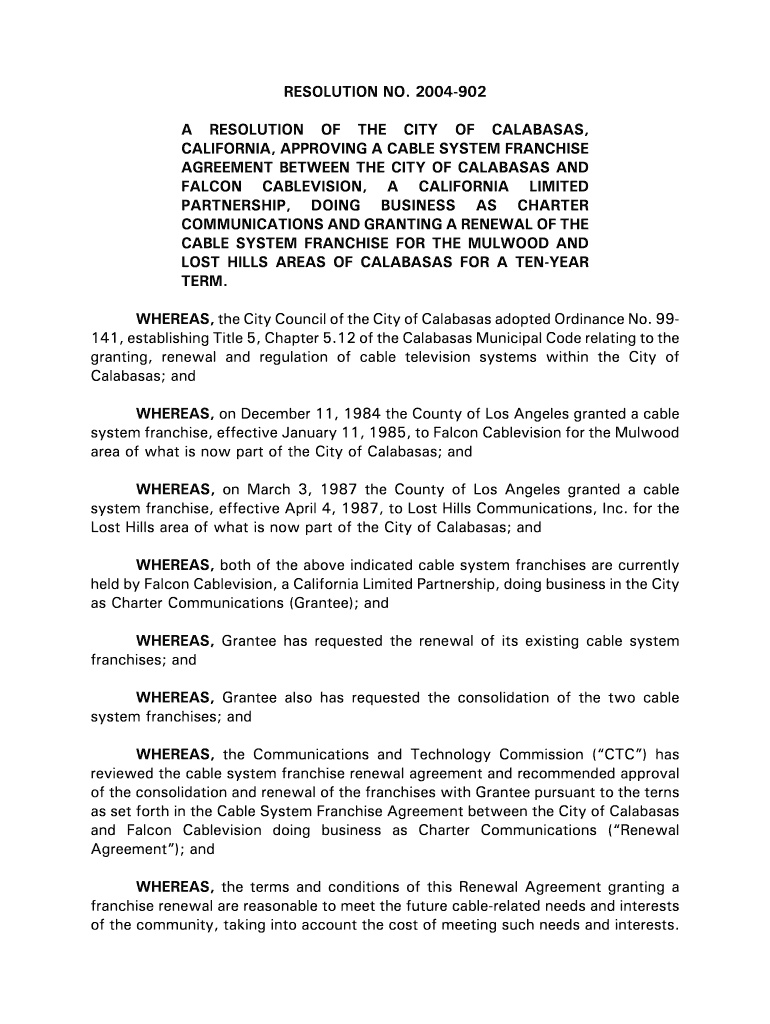
Case Study: Charter Communications
- Location: City of Calabasas
- Agreement: Renewal of franchise in Mulwood and Lost Hills areas for a ten-year term following Resolution No. 2004-902.
- Community Impact: Provided upgraded cable services aligned with community needs, reflecting recommendations from the Communications and Technology Commission.
Practical Scenarios
- Technological Upgrades: Providers may use the franchise agreement to outline plans for implementing fiber-optic technology.
- Community Programs: Agreements may include commitments to support local programming and educational initiatives through dedicated access channels.