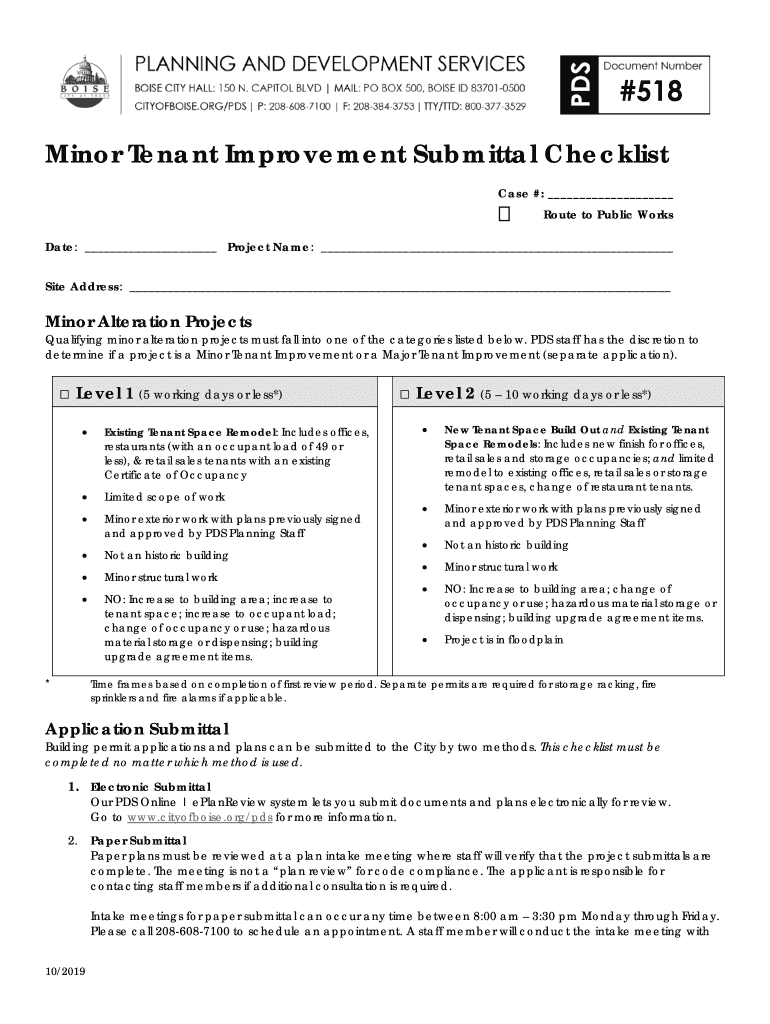







Definition and Purpose of the Minor Tenant Improvement Submittal Checklist
The Minor Tenant Improvement Submittal Checklist is an essential document used in the construction and leasing industry. It outlines the procedural requirements and documentation needed for obtaining a building permit for minor alterations or improvements to leased spaces. By categorizing projects into Level 1 and Level 2, based on complexity and timeframe, the checklist ensures clarity and efficiency in the permitting process. This structured approach helps streamline the submission process while ensuring compliance with building standards and regulations.
Project Classification
- Level 1 Projects: These projects typically involve simpler modifications that do not impact the structural integrity of the building. Examples may include cosmetic changes like painting or installing partition walls that do not bear load.
- Level 2 Projects: These require more detailed scrutiny as they might affect the building's structure or systems, such as reconfiguring plumbing or HVAC systems.
Importance of Classification
Understanding the classification can help determine the amount of documentation and the level of detail required for each project type, avoiding unnecessary delays in the permit approval process.
How to Use the Minor Tenant Improvement Submittal Checklist
Using the checklist effectively involves a series of steps that ensure thorough preparation and successful submission. Each step is crucial to comply with regulatory requirements and facilitate a smooth approval process.
Preliminary Assessment
- Hire a Licensed Design Professional: It’s crucial to engage a licensed architect or engineer who can accurately assess the scope of the project and complete the checklist.
- Evaluate Project Scope: The professional will help determine whether your project falls under Level 1 or Level 2, impacting the depth of documentation needed.
Checklist Completion
- Collect Required Documents: Gather architectural plans, structural calculations, and any other documents specified in the checklist.
- Review Compliance: Ensure that planned improvements comply with local building codes, energy codes, and accessibility standards.
- Finalize Application: Complete all sections of the checklist, obtaining necessary approvals from involved parties or agencies.
Submission Process
- Electronic Submission: Preferable for efficiency, many jurisdictions accept digital submissions through dedicated portals.
- Paper Submission: If necessary, ensure that physical documents are organized and clearly labeled.
Steps to Complete the Minor Tenant Improvement Submittal Checklist
Completing the checklist involves detailed attention to each section, ensuring all necessary information is accurately recorded and compliant with relevant laws.
Detailed Instructions
- Application Acceptance: Verify that all initial application details are correct and meet the jurisdiction’s requirements.
- Required Plans: Submit comprehensive design plans that include floor layouts, elevation drawings, and system specifications as needed.
- Structural Considerations: Provide detailed structural engineering reports if the project includes modifications impacting the building’s framework.
Submission Review
- Review by City Officials: After submission, city officials or designated departments will thoroughly review the checklist for compliance.
- Addressing Feedback: Be prepared to make adjustments or provide additional information if reviewers request revisions or further detail.
Required Documents for the Minor Tenant Improvement Submittal Checklist
Proper preparation of documents is crucial to minimize delays and ensures compliance with submitting requirements for minor tenant improvements.
Document Types
- Design Plans: These include architectural and engineering documents with precise measurements and specifications.
- Compliance Reports: Reports confirming adherence to energy codes and accessibility standards, essential for approval.
- Approval Records: Written approvals from fire, electrical, and plumbing departments if applicable to the project.
Legal Use of the Minor Tenant Improvement Submittal Checklist
The checklist serves as a legal instrument ensuring that tenant improvements meet existing building regulations, thereby mitigating risk for both tenants and landlords.
Compliance and Regulations
- Building Codes: Ensures alterations conform to safety standards, thereby minimizing potential legal disputes or violations.
- Permit Requirements: Secures the mandatory permit needed to legally conduct building improvements.
Consequences of Non-Compliance
Failure to complete and submit the checklist accurately can lead to delays in project initiation, potential fines, or penalties as per local jurisdiction regulations.
Key Elements of the Minor Tenant Improvement Submittal Checklist
A thorough understanding of the checklist's core components is vital for a successful building permit application.
Core Components
- Project Details: Basic information about the project, including address, scope of work, and classification (Level 1 or 2).
- Design Evaluations: Detailed evaluation of architectural and mechanical plans to ensure they fit within building safety standards.
- Approval Notices: Any pre-approvals from relevant authorities required prior to submission must be included.
Examples of Using the Minor Tenant Improvement Submittal Checklist
To illustrate the checklist's application, consider a real-world scenario where a business tenant plans to renovate an office space.
Scenario: Office Renovation
- Project Scope: Installation of new lighting fixtures and a partition wall in an office space.
- Checklist Completion: Includes electrical permits and compliance with ADA accessibility requirements.
- Outcome: Submission led to the timely acquisition of necessary permits, allowing the project to proceed without interruptions.
Form Submission Methods
Understanding the different methods available for submission is crucial for selecting the most efficient one for your project and jurisdiction.
Available Submission Methods
- Online Portals: Many jurisdictions offer online submission systems, providing a fast and efficient way to handle documentation and receive feedback.
- Mail Options: For jurisdictions that still accept paper submissions, ensure that all documents are securely packaged and tracked for delivery.
- In-Person Submissions: In some cases, delivering the application in person may be required or preferred, especially for obtaining immediate feedback or conformations.
In summary, the Minor Tenant Improvement Submittal Checklist serves as a comprehensive guide for managing tenant improvements effectively and legally. By adhering to its structured process, stakeholders can anticipate a smoother permit application journey and ultimately conduct renovations with the peace of mind that all legal and practical considerations have been addressed.