




01. Edit your massachusetts 6d certificate online
Type text, add images, blackout confidential details, add comments, highlights and more.

Type text, add images, blackout confidential details, add comments, highlights and more.

Draw your signature, type it, upload its image, or use your mobile device as a signature pad.

Send 6d certificate massachusetts pdf via email, link, or fax. You can also download it, export it or print it out.
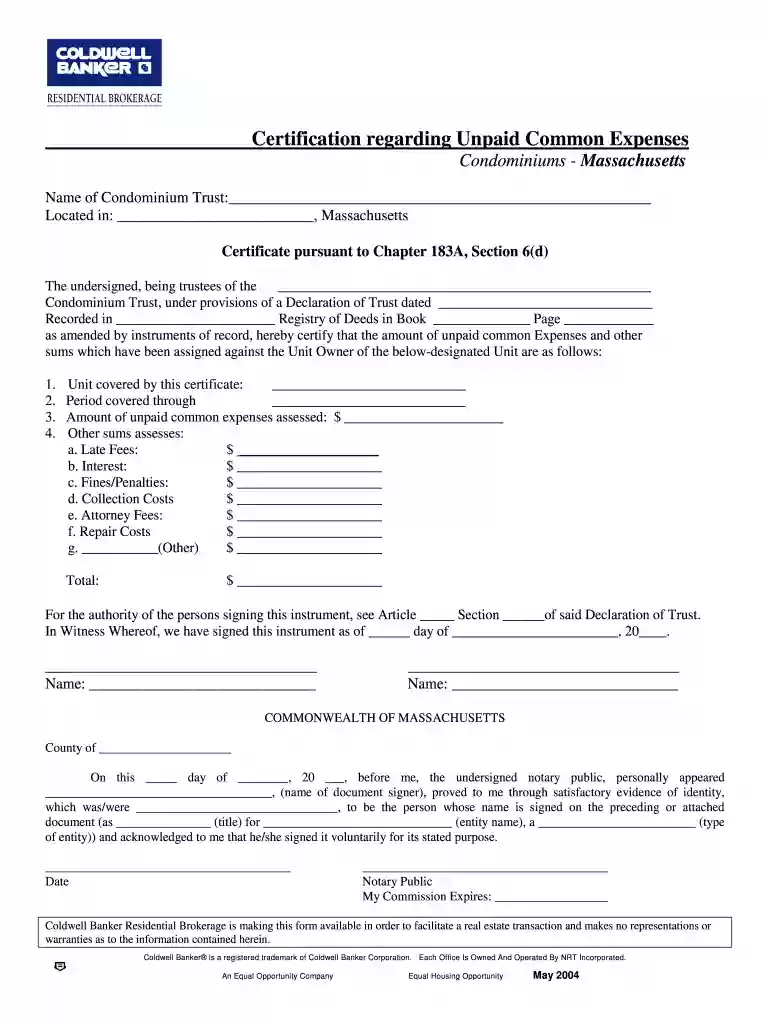
The 6D certificate in Massachusetts is a crucial document connected to real estate transactions, particularly concerning condominium units. It certifies that a unit owner has no outstanding common expenses owed to the condominium association. This certification is essential when a unit owner plans to sell or refinance their condominium, as it affirms that there are no financial encumbrances related to unpaid fees, fines, or other charges.
Common Elements: The 6D certificate typically includes various financial obligations such as:
Legal Importance: In the context of Massachusetts real estate law, the 6D certificate serves as an official record that protects both the seller and the buyer by ensuring transparency about the financial status of the condominium unit.
Acquiring a 6D certificate involves multiple steps to ensure accuracy and compliance with local regulations. Here’s a structured approach to guide you through the process:
Contact the Condominium Association: Reach out to your condo association or managing agent who typically processes requests for 6D certificates. Ensure you have your unit number and relevant personal details readily available.
Complete Necessary Forms: Some associations may require you to fill out a specific request form to initiate the issuance of a 6D certificate. This could include personal information and unit details.
Pay Applicable Fees: There may be a fee associated with issuing the 6D certificate. Make sure to inquire about the specific costs involved and the accepted payment methods.
Wait for Processing: The turnaround time can vary, but typically it is processed within a few business days. Be sure to follow up if there are any delays.
Receive Certification: Once processed, you will receive a PDF document stating that all dues are paid or detailing any outstanding balances.
Completing the 6D certificate form requires attention to detail to ensure all information is accurate. Below is a straightforward guide to assist you in filling out the form correctly.
Header Section:
Unit Owner Information:
Financial Summary:
Verification Section:
Final Review:
Understanding the key elements found in a 6D certificate is pivotal for all parties involved in a real estate transaction. These elements play a significant role in determining the financial standing of a condominium unit.
Identification of Unit: The certificate will feature the specific condominium unit identification, ensuring clarity regarding which unit the document pertains to.
Financial Assessment: A clear breakdown of all dues, including regular assessments and any special assessments, ensures transparency regarding the unit owner's financial obligations.
Certification Date: The date when the certificate is issued is vital, as it represents the current standing of the unit owner at that specific time.
Authorized Signatures: Legal validation is provided through signatures of designated representatives of the condominium's governing body, indicating that the information has been verified.
The 6D certificate serves several legal purposes in Massachusetts real estate transactions:
Verification of Financial Status: Real estate agents and buyers will use the certificate to verify that the seller has met all financial responsibilities to the condominium association, thus minimizing risks associated with outstanding fees.
Protection During Transactions: By providing a clean bill of financial health, the certificate protects buyers from inheriting unpaid debts connected to the condominium unit, ensuring a smoother closing process.
Regulatory Compliance: According to Massachusetts law, many lenders require a 6D certificate as part of the closing process, making it a crucial document for compliance with local regulations.
The application of the 6D certificate in real estate can be illustrated through various scenarios:
Selling a Condominium: When a unit owner intends to sell their property, they must provide a 6D certificate to demonstrate that all financial obligations to the condo association have been settled. This reassures potential buyers that there are no hidden fees or liabilities.
Refinancing a Loan: A homeowner looking to refinance their mortgage would also need to obtain a 6D certificate to present to their lender. This facilitates the validation process for the loan, reassuring the lending institution of the property’s financial status.
Legal Disputes: If disputes arise regarding common expenses, a 6D certificate can serve as evidence in legal contexts, clarifying whether specific dues have been paid or remain outstanding, affecting decisions in condominium-related litigation.
We've got more versions of the massachusetts 6d certificate form. Select the right massachusetts 6d certificate version from the list and start editing it straight away!
| Versions | Form popularity | Fillable & printable |
|---|---|---|
| 2004 | 4.9 Satisfied (426 Votes) |
At DocHub, your data security is our priority. We follow HIPAA, SOC2, GDPR, and other standards, so you can work on your documents with confidence.



Feb 27, 2009 CAVEAT: If a subsequent 6(d) Certificate alternative method of proving the succession of bank interests, a certificate of a Massachusetts.Read more
6D Certificate: The 6D certificate prevents owners from selling units upon which condominium fees are owed, protects buyers from assuming responsibility forRead more
Our calibration services and certificates document accuracy to ensure production quality and provide a quality system record of performance. c. PeriodicRead more


