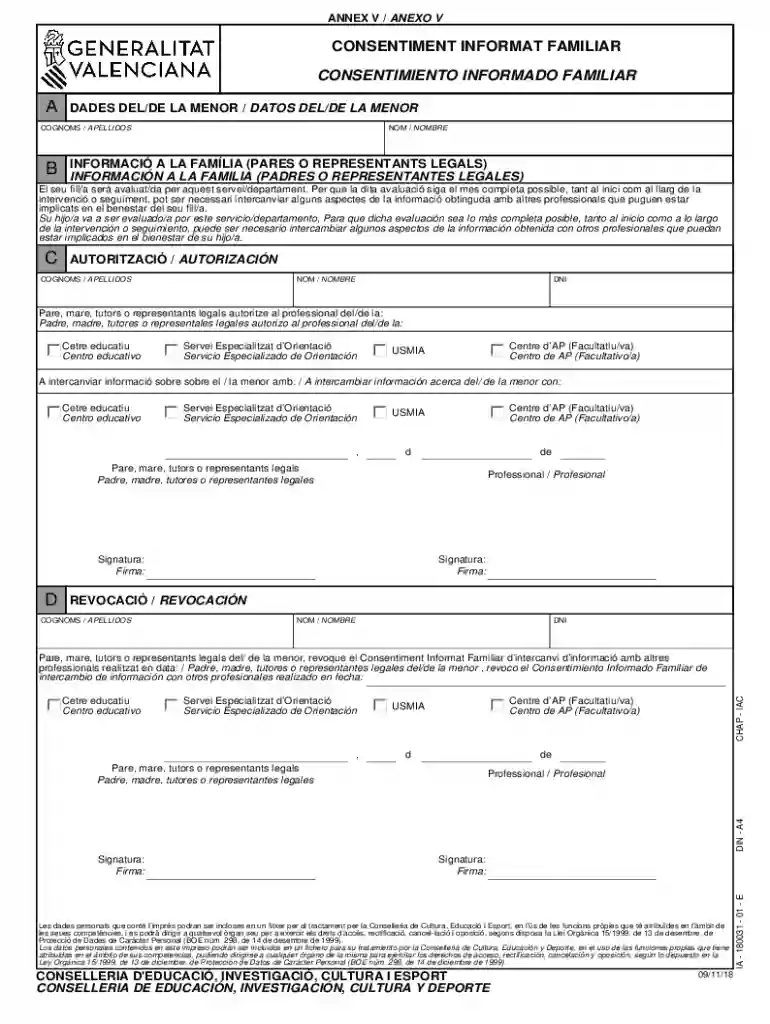
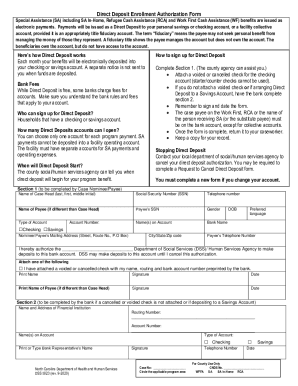
Informed Consent for Medication, F-24277Sp, Spanish 2026

Get Form
Informed Consent for Medication, F-24277Sp, Spanish Preview on Page 1

Here's how it works

01. Edit your form online
Type text, add images, blackout confidential details, add comments, highlights and more.

02. Sign it in a few clicks
Draw your signature, type it, upload its image, or use your mobile device as a signature pad.

03. Share your form with others
Send it via email, link, or fax. You can also download it, export it or print it out.

Definition & Meaning

The "Informed Consent for Medication, F-24277Sp, Spanish" is a formal document used to obtain consent from individuals or their legal guardians before administering medication. The form outlines the necessary information regarding the medication's purpose, potential side effects, and other critical details to ensure that the patient is fully aware of what the medication entails. This document is typically used in healthcare settings to adhere to legal and ethical standards, ensuring that patients have the needed information to make informed choices about their treatments.

How to Use the Informed Consent for Medication, F-24277Sp, Spanish

To utilize this form effectively, healthcare providers should present it to the patient or their guardian before administering the prescribed medication. The provider must explain the document's content, ensuring that the individual comprehends the extent and implications of the treatment. The patient or guardian should have the opportunity to ask questions and request clarification before signing the document. Once signed, the form should be stored securely in the patient's medical record to serve as a legal acknowledgment of consent.

How to Obtain the Informed Consent for Medication, F-24277Sp, Spanish

Obtaining the "Informed Consent for Medication, F-24277Sp, Spanish" involves accessing it through healthcare institutions or regulatory bodies that provide standard consent forms. Typically, healthcare facilities will have copies of the form available for new patients during the initial assessment or whenever a new medication regimen is proposed. Patients or caregivers can also request copies from their healthcare provider if not offered initially.

Steps to Complete the Informed Consent for Medication, F-24277Sp, Spanish

  1. Review the Document: Carefully read through the form to understand the medication's purpose and potential risks.
  2. Consult with Provider: Discuss any concerns or questions with the healthcare provider to clear any doubts before proceeding.
  3. Fill in Personal Information: Provide the required patient details, including name, date, and any other requested identification information.
  4. Signature: The patient or guardian should sign the form, confirming their consent and understanding of the medication's implications.
  5. Retain a Copy: Ensure that both the patient and the healthcare provider retain copies of the signed form for their records.

Why You Need Informed Consent for Medication, F-24277Sp, Spanish

Informed consent is crucial for protecting patient rights and facilitating transparent communication between healthcare providers and patients. The consent form ensures that patients are aware of what a treatment entails, making them active participants in their healthcare choices. This process not only upholds ethical and legal standards but also helps prevent misunderstandings or disputes regarding medical care.

Who Typically Uses the Informed Consent for Medication, F-24277Sp, Spanish

This form is predominantly used by healthcare providers, including doctors, nurses, and pharmacists, who prescribe or administer medication. Patients or their legal representatives are also primary users as they are required to provide consent. The form may be used in various settings, from hospitals and clinics to nursing homes and outpatient services, where medication administration is part of patient care.


decoration image ratings of Dochub

Key Elements of the Informed Consent for Medication, F-24277Sp, Spanish

  • Patient’s Personal Information: Includes necessary identification details of the person receiving the medication.
  • Description of Medication: Outlines the medication's name, dosage, and administration method.
  • Purpose of Treatment: Explains why the medication is being prescribed.
  • Potential Risks and Benefits: Details possible side effects and the anticipated positive outcomes of the medication.
  • Alternatives: Discusses any alternative treatments available.
  • Authorization and Signature: Space for the patient or guardian to sign, indicating understanding and consent.

Legal Use of the Informed Consent for Medication, F-24277Sp, Spanish

The use of informed consent forms like F-24277Sp is mandated by law to ensure that patients are adequately informed and voluntarily consent to medical treatments. These forms must comply with relevant state and federal regulations regarding patient rights and medical ethics. In the United States, these consent forms are often required to align with legislation that protects patient privacy and informed decision-making in healthcare practices.

Important Terms Related to Informed Consent for Medication, F-24277Sp, Spanish

  • Informed Consent: The process of providing comprehensive information to patients to enable informed decisions about their healthcare.
  • Authorization: Legal permission granted by the patient or guardian for medical treatment.
  • Legal Guardian: An individual authorized to make healthcare decisions on behalf of a minor or incapacitated adult.
  • Medication Administration: The act of providing the medication to the patient as prescribed.

Versions or Alternatives to the Informed Consent for Medication, F-24277Sp, Spanish

Various forms of informed consent exist, with variations based on specific treatments or medications administered. Alternative forms might address different languages or meet specific institutional or state regulatory requirements. These variations ensure that all patients, regardless of language or location, receive the necessary information to provide informed consent effectively.

be ready to get more

Complete this form in 5 minutes or less

Get form

Got questions?

We have answers to the most popular questions from our customers. If you can't find an answer to your question, please contact us.
Contact us
There are various types of consent, including explicit consent, implied consent, opt-in consent, and opt-out consent.
I have been informed of such risks, as well as the nature of the Procedure, the likelihood of achieving goals, the expected benefits or effects of such Procedure, including side effects and potential problems that might occur during recuperation, and the reasonable alternative methods of treatment and their risks and
A statement that the study involves research, an explanation of the purposes of the research and the expected duration of the subjects participation, a description of the procedures to be followed, and identification of any procedures which are experimental.
The primary types of informed consent weve covered include written, verbal, electronic, and implied consent. Each type serves specific research contexts and participant needs. Understanding Informed Consent is crucial for researchers to ensure participants are fully aware of the studys purpose, risks, and benefits.
Informed consent is a process in which a healthcare professional educates a patient about the risks, benefits, and alternatives of a given procedure or intervention. The history of informed consent in medicine is rooted in a broader evolution of ethical practices and legal standards surrounding patient autonomy.

Security and compliance

At DocHub, your data security is our priority. We follow HIPAA, SOC2, GDPR, and other standards, so you can work on your documents with confidence.
Learn more
ccpa2
pci-dss
gdpr-compliance
hipaa
soc-compliance
be ready to get more

Complete this form in 5 minutes or less

Get form

People also ask

Informed consent ensures that patients understand the risks, benefits, alternatives, and potential consequences of medical interventions, allowing them to weigh their options and participate actively in their treatment plans.

Related links